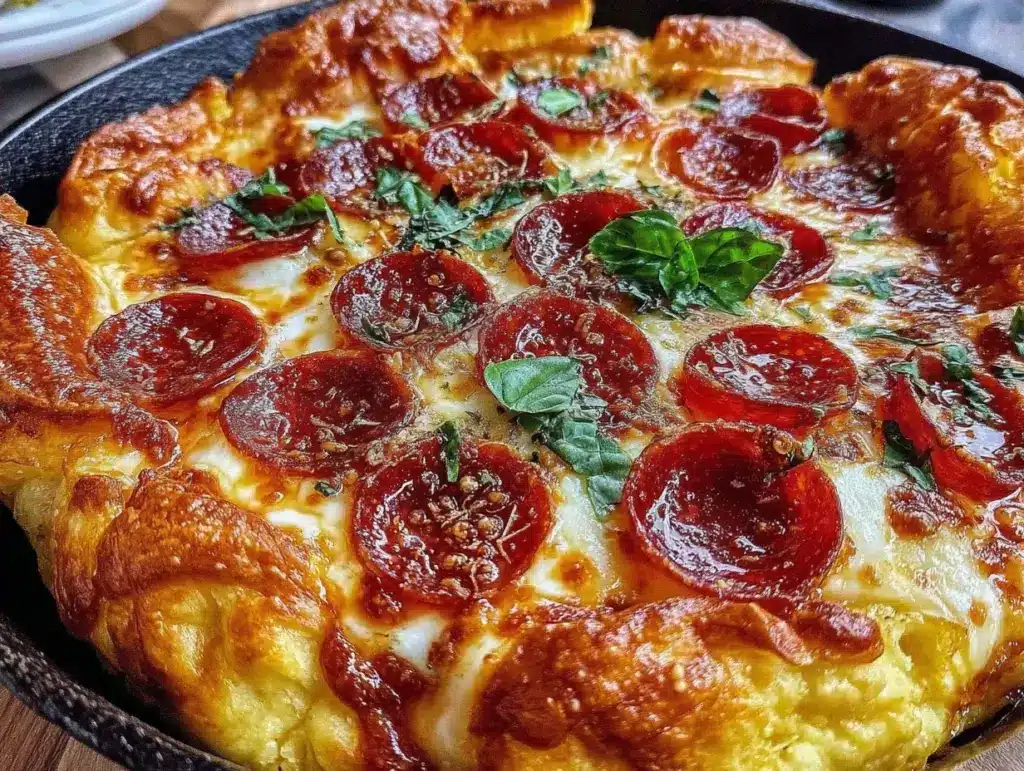
There is a specific kind of magic that happens when you pull a cast iron skillet out of a 450-degree oven. It’s not just about the food—it’s about the theater of it. The sizzle, the aroma of toasted garlic and melting cheese wafting through the house, and that undeniable visual of a deep-dish pizza that looks like it belongs on the cover of a cookbook rather than your Tuesday night dinner table.
For years, I was a traditional pizza person. Thin crust, crispy edges, maybe some fresh basil. But then I moved into a house with a drafty kitchen and a family that loved comfort food, and everything changed. I needed something that felt like a hug. Something that made my guests stop mid-conversation and stare at the table like, “Wait, you made THIS?”
That’s when I fell in love with this cast iron skillet deep dish pizza with pepperoni. It started as a way to use up leftover dough and some questionable cheese from the back of the fridge, but after the first batch, it became a permanent fixture in our weekend rotation. It’s heavy, it’s rich, and it’s incredibly satisfying. There’s nothing quite like digging a spoon into a golden, cheesy pie that’s still bubbling hot.
I’ve tested this recipe countless times—sometimes with sausage, sometimes with mushrooms, but the classic pepperoni version remains the king. It’s the dish that impresses every time, not because it’s complicated, but because it’s genuinely delicious. It’s the kind of meal that makes people stay at the table for an hour, arguing over who gets the last slice of crust.
If you’ve ever been intimidated by deep-dish pizza, thinking it requires a professional kitchen or hours of prep, let me stop you right there. This version is forgiving. It’s rustic. It’s designed to be made in the same pan you’ll serve it from. And once you taste that contrast between the buttery, flaky crust and the tangy, slow-simmered sauce, you’ll never go back to thin crust for a dinner party.
Why This Deep Dish Pizza Will Steal the Show
I don’t say this lightly, but this cast iron skillet deep dish pizza with pepperoni is the ultimate crowd-pleaser. It’s not just food; it’s an experience. Here’s why it has earned a permanent spot in my repertoire:
- The Crust is Everything — Most deep-dish recipes use a dough that’s more like cornbread or pastry. This one? It’s pillowy, buttery, and slightly flaky thanks to the olive oil in the dough. It holds up to the heavy toppings without getting soggy. I’ve had people ask for the crust recipe separately.
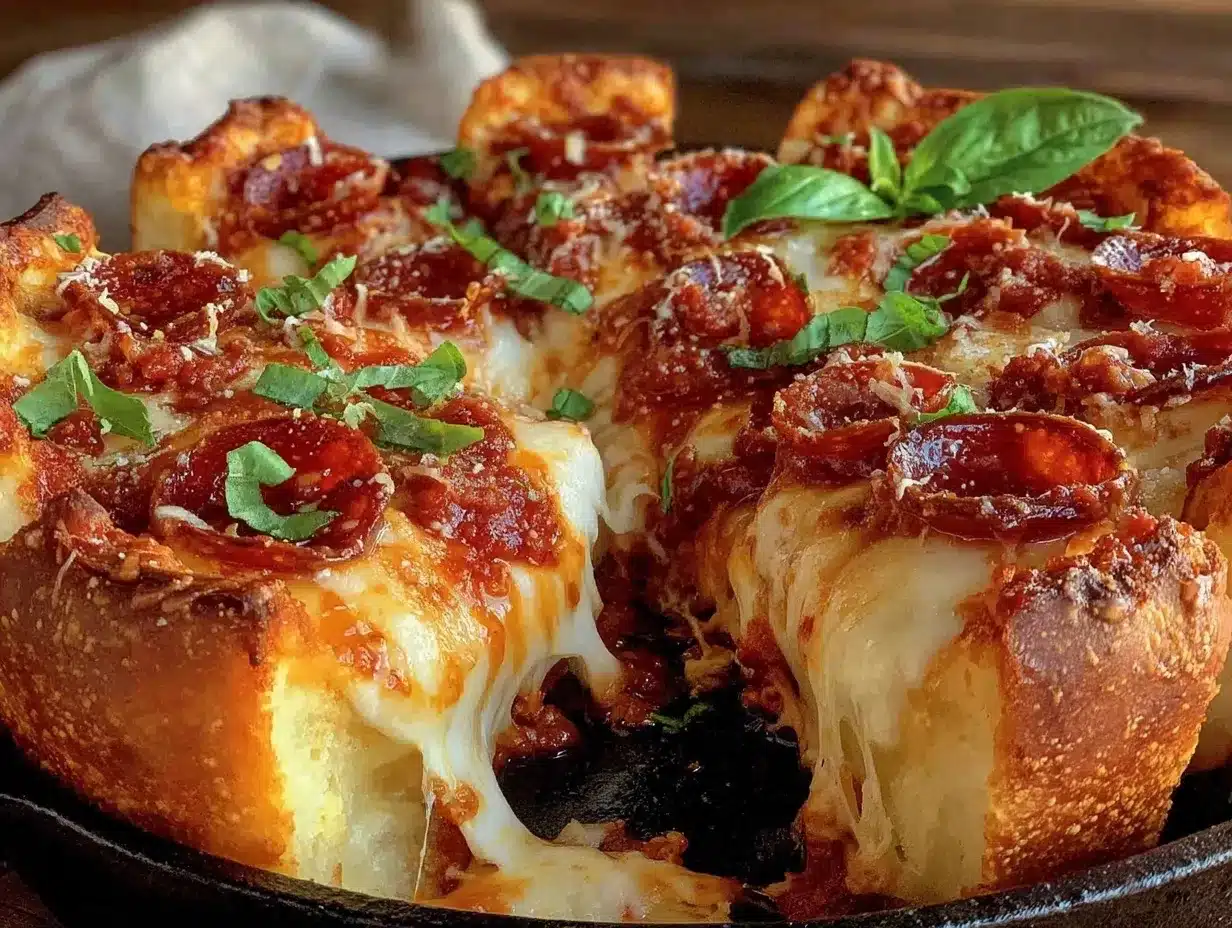
- Impeccable Cheese Pull — We’re talking about layers of mozzarella, provolone, and a little Parmesan. When you lift that slice, the cheese stretches for miles. It’s messy, it’s glorious, and it’s exactly what people want when they’re gathered around a table.
- Make-Ahead Friendly — Here’s the secret to a stress-free party: you can assemble this pizza the morning of. The dough rises in the fridge, the sauce simmers while you shop, and you just pop it in the oven an hour before guests arrive. You can actually host the party instead of being stuck in the kitchen.
- Shareable by Design — Deep dish is inherently communal. You don’t order individual slices; you cut the whole pie and pass it around. It forces people to interact, to reach for the same plate, to share stories. It’s the opposite of eating alone on the couch.
- Forgiving Technique — You don’t need a pizza stone or a peel. You just need a good cast iron skillet. If you’re uneven with the toppings, it doesn’t matter. The edges will caramelize and look rustic and beautiful. Perfection isn’t the goal here; flavor is.
This isn’t just dinner. It’s a celebration. Whether it’s a casual Friday night with friends or a Sunday gathering with family, this pizza sets the tone. It says, “I put effort into this, but I also know how to relax.” And that’s the best kind of hosting.
Ingredients You’ll Need for the Perfect Pie
Let’s talk about what goes into this cast iron skillet deep dish pizza with pepperoni. The ingredient list might look long, but most of it is pantry staples or freezer essentials. I’m particular about a few things, though, so pay attention to those.
For the Dough
High-protein bread flour (3 ½ cups / 440g) — I use King Arthur or Gold Medal bread flour. All-purpose works, but bread flour gives that chewy, sturdy structure needed to hold the heavy toppings. Don’t skip it if you want that authentic deep-dish texture.
Warm water (1 ½ cups / 350ml) — Make sure it’s around 105-110°F. Too hot, and you kill the yeast. Too cold, and it won’t rise. I keep a thermometer handy now because guessing led to many flat pizzas in the past.
Active dry yeast (2 ¼ teaspoons / 1 packet) — Standard packet size. If you’re using instant yeast, you can skip the proofing step, but active dry gives me that nice, reliable rise.
Granulated sugar (1 tablespoon) — Feeds the yeast and helps with browning. Honey works too if you want a slight sweetness, but sugar is traditional.
Kosher salt (1 ½ teaspoons) — Flavors the dough. If you use table salt, reduce to 1 teaspoon because it’s denser.
Extra virgin olive oil (3 tablespoons) — Adds richness and helps the crust stay tender. I use a good quality oil here because you’ll taste it in the crust.
For the Sauce
Canned crushed tomatoes (28-ounce can) — I use San Marzano tomatoes if I can find them. They’re sweeter and less acidic. If you only have diced, pulse them in a blender for a few seconds. Avoid fresh tomatoes; they’re too watery for this.
Garlic (4 cloves, minced) — Fresh only. Jarred garlic has a sulfurous taste that clashes with the sweet tomatoes.
Dried oregano (1 teaspoon) — Essential for that classic pizza flavor. Don’t use basil here; it’s better added fresh at the end or in the cheese layer.
Red pepper flakes (½ teaspoon) — Just a pinch to balance the sweetness. Adjust to your heat tolerance.
Olive oil (1 tablespoon) — For sautéing the garlic.
For the Toppings
Low-moisture mozzarella cheese (4 cups / 450g, shredded) — This is crucial. Do not use fresh mozzarella balls. They release too much water and will make your pizza soupy. Buy the block and shred it yourself; pre-shredded has anti-caking agents that prevent smooth melting.
Provolone cheese (1 cup / 115g, sliced or shredded) — Adds a sharp, smoky depth that mozzarella lacks. I like to layer the provolone slices for better coverage.
Pepperoni (1 package / 6-8 ounces, sliced) — Use the thin, dry-cured style, not the thick deli slices. They crisp up in the oven and release delicious oil. If you can’t find pepperoni, Italian sausage works great too.
Grated Parmesan cheese (½ cup / 50g) — For the top layer. Adds a salty, nutty finish.
Fresh basil (a few leaves, torn) — Optional, but adds a pop of color and freshness right before serving.
Equipment You’ll Need
You don’t need a fancy setup for this cast iron skillet deep dish pizza with pepperoni. In fact, the right tools make it easier, not harder.
12-inch Cast Iron Skillet — This is non-negotiable. It needs to be pre-seasoned and oven-safe. Lodge is my go-to brand, but any heavy skillet works. The iron retains heat perfectly, ensuring the bottom crust gets crispy.
Stand Mixer or Hand Mixer — Kneading this dough by hand is doable but tiring. A stand mixer with a dough hook saves your arms. If you’re mixing by hand, be prepared for a 10-minute kneading session.
Pizza Peel or Large Baking Sheet — Not for baking, but for transferring the assembled pizza into the oven if your skillet handle is awkward. Honestly, most of the time I just lift the skillet with oven mitts, but a peel helps if you’re nervous.
Sharp Chef’s Knife — For slicing the pepperoni and chopping garlic. A dull knife will crush the pepperoni instead of cutting it cleanly.
Wooden Spoon or Silicone Spatula — For stirring the sauce and spreading the cheese.
Measuring Cups and Spoons — Precision matters in baking, especially with the dough.
Oven Thermometer — My oven runs hot, so I always verify the temperature. If your oven is off, your pizza will either burn or stay raw.
How to Make It: Step-by-Step
Alright, let’s get cooking. This process takes about 2 hours total, mostly due to rising time, but active work is less than 45 minutes. I walk you through exactly how I do it, including the little tricks that ensure success.
Step 1: Make the Dough (15 minutes)
In the bowl of a stand mixer, combine the warm water, sugar, and yeast. Let it sit for 5-10 minutes until it becomes foamy. This proves the yeast is alive. If it doesn’t foam, start over with new yeast.
Add the flour, salt, and olive oil. Mix on low speed until a shaggy dough forms, then increase to medium speed and knead for 5-7 minutes until smooth and elastic. The dough should pass the “windowpane test”—stretch a small piece thin enough to see light through it without tearing.
Transfer the dough to an oiled bowl, cover with plastic wrap or a damp towel, and let it rise in a warm place for 1-1.5 hours, or until doubled in size.
Step 2: Prepare the Sauce (10 minutes)
While the dough rises, make the sauce. Heat olive oil in a small saucepan over medium heat. Add the minced garlic and red pepper flakes, sautéing for 1 minute until fragrant. Be careful not to burn the garlic.
Stir in the crushed tomatoes, oregano, salt, and pepper. Bring to a simmer, then reduce heat to low. Cook for 15-20 minutes, stirring occasionally, until slightly thickened. The sauce should be thick enough to spread but still pourable. Taste and adjust seasoning. Let it cool completely before using.
Step 3: Assemble the Pizza (20 minutes)
Preheat your oven to 450°F (230°C). Place your 12-inch cast iron skillet in the oven to heat up while the dough rises. This helps get the crust crispy from the start.
Once the dough has risen, punch it down and divide it in half if you want two smaller pizzas, or keep it whole for one large skillet pizza. Roll or press the dough into the heated skillet. It should stretch to cover the bottom and halfway up the sides. Don’t worry if it’s not perfect; the edges will puff up.
Drizzle the bottom of the dough with a little olive oil. Then, start layering. First, half of the mozzarella cheese. Then, half of the pepperoni slices. Add the remaining mozzarella, then the rest of the pepperoni. Finally, top with the provolone and the cooled tomato sauce. Spread the sauce carefully, leaving a small border around the edge.
Step 4: Bake the Pizza (25-30 minutes)
Remove the skillet from the oven (carefully, it’s hot!) and place it on a baking sheet for stability. Sprinkle the grated Parmesan cheese over the top.
Bake for 25-30 minutes. The crust should be golden brown, and the cheese should be bubbling vigorously. If the top is browning too quickly, tent it loosely with aluminum foil.
Step 5: Rest and Serve (10 minutes)
Remove the skillet from the oven and let the pizza rest for 10 minutes. This is crucial. If you cut it immediately, the cheese will slide out, and the layers will collapse. Resting allows the cheese to set and the flavors to meld.
Slice with a sharp knife or pizza cutter. Serve warm, garnished with fresh basil if desired. This cast iron skillet deep dish pizza with pepperoni is best enjoyed straight from the pan, passing slices around the table.
Expert Tips for Success
Here’s everything I’ve learned from making this dozens of times. These tips will save you from my early mistakes.
Don’t Skimp on the Cheese Layering — The key to deep-dish pizza is the structure. Cheese acts as a barrier between the dough and the sauce, preventing sogginess. Always layer cheese, toppings, cheese, then sauce.
Cool the Sauce Completely — Putting hot sauce on raw dough will start cooking the bottom before it’s in the oven, leading to a gummy texture. Patience pays off here.
Use Low-Moisture Mozzarella — I cannot stress this enough. Fresh mozzarella is delicious on thin crust, but it’s a disaster here. It releases too much water. Low-moisture block cheese is your friend.
Preheat the Skillet — Putting the dough into a cold skillet results in a pale, soft bottom. Heating the skillet first ensures a crispy, golden crust immediately.
Let It Rest — I know it’s tempting to cut into that bubbling cheese, but waiting 10 minutes makes a huge difference in presentation and texture. The pizza will hold its shape better, and the slices will be cleaner.
Control the Heat — If your oven runs hot, check the pizza at 25 minutes. If it’s not golden, extend by 2-3 minutes. Overcooked cheese turns rubbery.
Variations and Substitutions
Once you’ve mastered the basic version, here’s how you can mix it up. I’ve tried all of these, and they’re all winners.
Sausage and Mushroom — Swap pepperoni for Italian sausage (cooked and crumbled) and add sliced mushrooms. The earthiness of the mushrooms pairs beautifully with the sausage.
Veggie Supreme — Load it up with bell peppers, onions, black olives, and spinach. Use the same cheese layers, but reduce the sauce slightly so it’s not too wet.
BBQ Chicken — Use shredded rotisserie chicken, swap the tomato sauce for BBQ sauce, and add red onions and cilantro after baking. It’s a completely different vibe but just as delicious.
White Pizza — Skip the tomato sauce entirely. Use a garlic-infused olive oil base, ricotta cheese dollops, and mozzarella. Top with spinach and bacon. It’s rich and decadent.
Gluten-Free Option — Use a gluten-free pizza dough blend. Note that GF dough is often more fragile, so handle it gently and consider using a parchment-lined skillet.
Serving and Storage
This cast iron skillet deep dish pizza with pepperoni is best served immediately, but leftovers are possible (if you can resist them).
How to Serve — Serve straight from the skillet. It looks rustic and impressive. Pair it with a simple green salad to cut through the richness. A light Pinot Grigio or a crisp IPA works well as a drink pairing.
Storage — Store leftovers in an airtight container in the refrigerator for up to 3 days. The crust will soften, but the flavors remain strong.
Reheating — The best way to reheat is in a skillet over medium-low heat, covered, for 5-7 minutes. This restores the crispiness of the crust. Avoid the microwave, as it makes the crust chewy and the cheese rubbery. If you must use the microwave, do it for 30-second intervals and follow up with a quick sear in a dry pan.
Freezing — You can freeze the assembled, unbaked pizza. Wrap it tightly in plastic and foil, then freeze for up to 1 month. Thaw in the fridge overnight before baking. Do not freeze the baked pizza, as the texture will suffer.
Nutrition Information
I’m not a nutritionist, but here’s the breakdown if you’re tracking. Keep in mind that this is a rich, indulgent dish, so portion control is key.
Per Serving (based on 8 slices):
- Calories: 450
- Protein: 22g
- Carbs: 40g
- Fiber: 2g
- Sugar: 5g
- Fat: 22g
- Saturated Fat: 10g
- Cholesterol: 45mg
- Sodium: 650mg
This pizza is higher in calories due to the cheese and dough, but it’s also filling. The protein from the cheese and pepperoni helps keep you satisfied. If you’re watching sodium, use low-sodium pepperoni and reduce the salt in the dough.
Final Thoughts
So, that’s my go-to cast iron skillet deep dish pizza with pepperoni. It’s not just a recipe; it’s a weekend ritual. It’s the dish that turns a regular night into a special occasion. I’ve made this for birthdays, game nights, and lazy Sundays, and it never fails to impress.
Make it yours. Add your favorite toppings, adjust the spice level, or experiment with different cheeses. The best recipes are the ones you adapt to your taste. And if you make this, I’d love to hear how it turns out. Drop a comment below with your variations or questions.
Happy cooking! I hope your kitchen smells as amazing as mine does right now.
Frequently Asked Questions
Can I use store-bought dough?
Absolutely. Many people do! Just make sure it’s high-quality dough, preferably from a local pizzeria or a good grocery store. Roll it out to fit your skillet. Note that homemade dough has a better texture, but store-bought is a great time-saver.
Why is my pizza soggy?
This usually happens if the sauce is too wet or if you used fresh mozzarella. Always cool the sauce completely and use low-moisture mozzarella. Also, ensure your skillet is preheated to help crisp the bottom crust.
Can I make this ahead of time?
Yes! You can assemble the pizza the night before and refrigerate it. Let it sit at room temperature for 30 minutes before baking. Alternatively, you can freeze the assembled, unbaked pizza for up to a month.
What kind of pepperoni should I use?
Use thin, dry-cured pepperoni. It crisps up in the oven and releases flavorful oil. Thick deli slices won’t cook properly and can be chewy.
How do I store leftovers?
Store in an airtight container in the fridge for up to 3 days. Reheat in a skillet for best results, or in the oven at 350°F for 10 minutes.
Can I add other vegetables?
Yes! Sautéed mushrooms, bell peppers, onions, and spinach work great. Just make sure to cook watery vegetables first to remove excess moisture.
What wine goes with deep-dish pizza?
A crisp Pinot Grigio or a light Chianti pairs well with the richness of the cheese and the acidity of the tomato sauce. For beer, a lager or IPA is a classic choice.
Pin This Recipe!
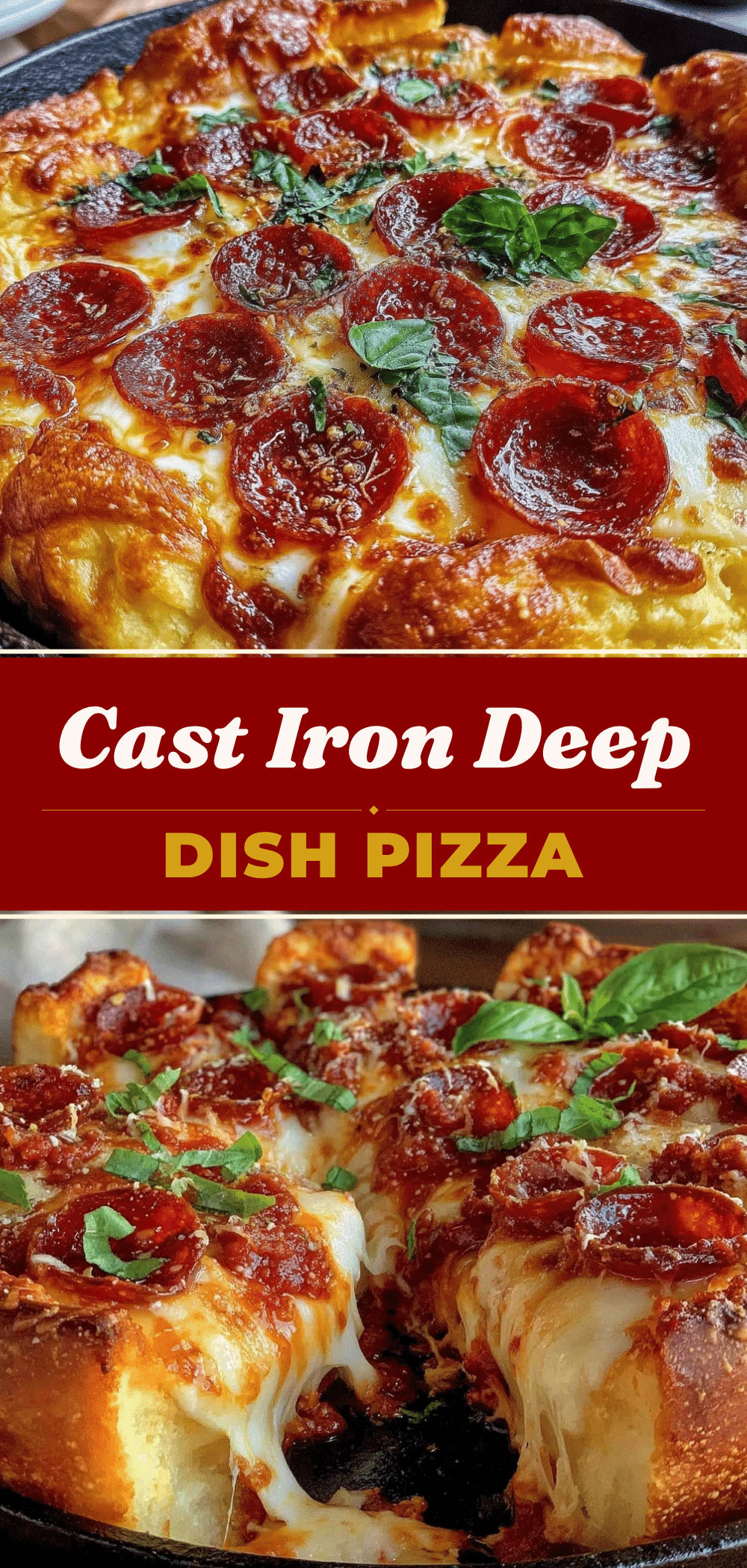

Cast Iron Skillet Deep Dish Pizza with Pepperoni
- Total Time: 2 hours
- Yield: 8 servings 1x
Description
A rich, comforting deep-dish pizza baked in a cast iron skillet, featuring a buttery flaky crust, layers of mozzarella and provolone cheese, and tangy tomato sauce topped with crispy pepperoni.
Ingredients
- 3 ½ cups (440g) high-protein bread flour
- 1 ½ cups (350ml) warm water (105-110°F)
- 2 ¼ teaspoons (1 packet) active dry yeast
- 1 tablespoon granulated sugar
- 1 ½ teaspoons kosher salt
- 3 tablespoons extra virgin olive oil (for dough)
- 28-ounce can crushed tomatoes (San Marzano preferred)
- 4 cloves garlic, minced
- 1 teaspoon dried oregano
- ½ teaspoon red pepper flakes
- 1 tablespoon olive oil (for sauce)
- 4 cups (450g) low-moisture mozzarella cheese, shredded
- 1 cup (115g) provolone cheese, sliced or shredded
- 6–8 ounces pepperoni, sliced (thin, dry-cured style)
- ½ cup (50g) grated Parmesan cheese
- Fresh basil leaves, torn (optional)
Instructions
- Make the dough: In a stand mixer, combine warm water, sugar, and yeast. Let sit for 5-10 minutes until foamy.
- Add flour, salt, and olive oil. Mix on low until shaggy, then knead on medium for 5-7 minutes until smooth and elastic.
- Transfer dough to an oiled bowl, cover, and let rise in a warm place for 1-1.5 hours until doubled in size.
- Prepare the sauce: While dough rises, heat olive oil in a saucepan. Sauté garlic and red pepper flakes for 1 minute.
- Add crushed tomatoes, oregano, salt, and pepper. Simmer on low for 15-20 minutes until thickened. Cool completely.
- Preheat oven to 450°F (230°C). Place a 12-inch cast iron skillet in the oven to heat up.
- Punch down risen dough and press into the hot skillet, stretching to cover the bottom and halfway up the sides.
- Drizzle bottom with olive oil. Layer half the mozzarella, half the pepperoni, remaining mozzarella, remaining pepperoni, provolone, and finally the cooled tomato sauce.
- Sprinkle with Parmesan cheese.
- Bake for 25-30 minutes until crust is golden brown and cheese is bubbling. Tent with foil if browning too quickly.
- Remove from oven and let rest for 10 minutes before slicing to allow cheese to set.
- Serve warm, garnished with fresh basil if desired.
Notes
Use low-moisture mozzarella to prevent a soggy pizza. Cool the sauce completely before assembling to avoid cooking the dough prematurely. Preheating the skillet ensures a crispy crust. Let the pizza rest for 10 minutes after baking to allow layers to set.
- Prep Time: 45 minutes
- Cook Time: 30 minutes
- Category: Main Course
- Cuisine: Italian
Nutrition
- Serving Size: 1 slice (1/8 of the
- Calories: 450
- Sugar: 5
- Sodium: 650
- Fat: 22
- Saturated Fat: 10
- Carbohydrates: 40
- Fiber: 2
- Protein: 22
Keywords: deep dish pizza, cast iron skillet pizza, pepperoni pizza, weekend dinner, comfort food, homemade pizza dough, Italian cuisine


