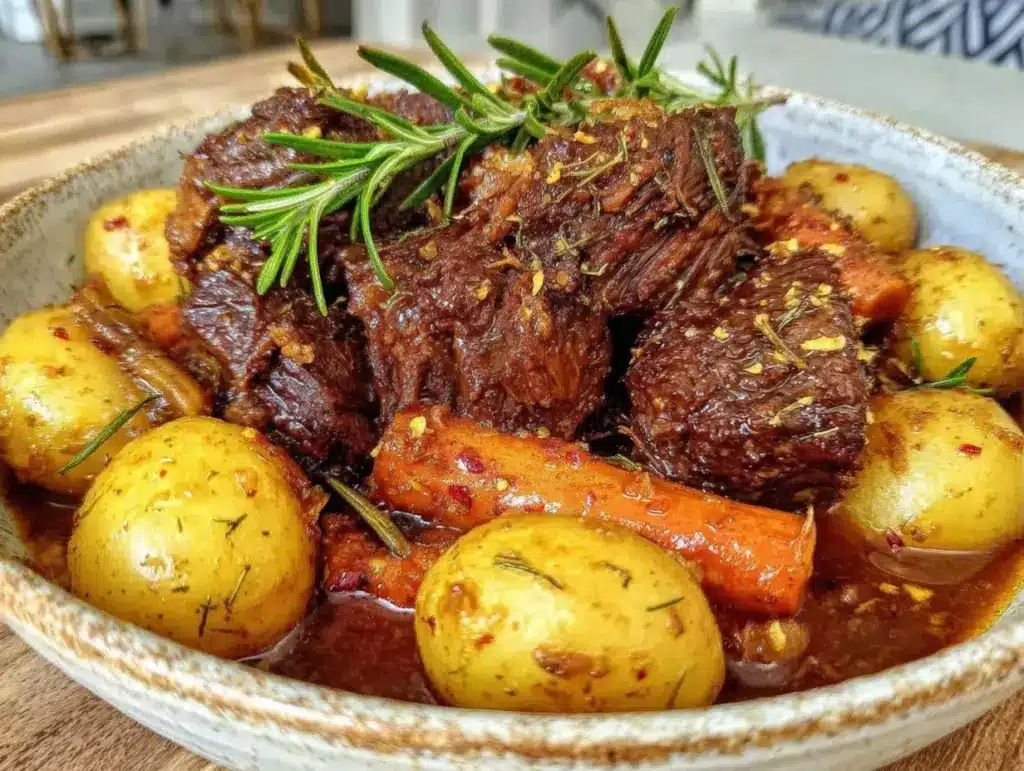
I still remember the first time I made this pot roast for a dinner party. I was nervous, obviously. I had just moved into a house that smelled like old paint and potential, and I wanted to prove I could host. I’d picked up a chuck roast that looked like a brick, threw it in my cast-iron Dutch oven, and walked away. Thirty minutes later, my guests walked in, and before they even took off their coats, they stopped. The smell hit them first—that deep, savory, beefy aroma that seems to wrap around the whole house like a warm blanket.
One friend actually closed her eyes and said, “Is that… is that heaven?” It wasn’t heaven. It was just beef, carrots, potatoes, and a little bit of patience. But it felt like magic. That night, the roast fell apart so easily that we didn’t need knives. We just scooped it up with crusty bread, and the gravy pooled on our plates like dark gold. We didn’t talk much. We just ate. And honestly, that’s the best kind of evening.
Since then, I’ve made this classic beef pot roast with carrots and potatoes probably a hundred times. Some nights it’s for the whole family when the kids are hangry. Other times, it’s the centerpiece of a cozy Saturday where we linger at the table for hours. It’s become my go-to for those days when I want to feed people something that feels indulgent but doesn’t require me to stand over a stove all day. The secret isn’t fancy technique; it’s low and slow. It’s giving the meat time to break down until it’s tender, and letting the vegetables soak up every drop of flavor. If you’re looking for a dinner that feels like a hug from the inside out, this is it.
Why You’ll Love This Recipe
There’s a reason this dish has survived decades of cooking trends and still sits firmly at the top of the dinner rotation. It’s not just about convenience (though who doesn’t love coming home to a house that smells amazing?). It’s about the result. Here’s why this classic beef pot roast with carrots and potatoes has completely won over my household:
- Set It and Forget It Magic — Seriously. I throw everything in the pot, set the timer, and go about my day. When I come back, dinner is ready. I’ve cooked this while folding laundry, answering emails, and even napping. It requires zero babysitting.
- Tender Meat That Falls Apart — The goal here is fork-tender beef. We’re talking meat that shreds with the slightest pressure. No chewing required. It’s the kind of texture that makes you feel like you’re eating at a high-end comfort food bistro, but it cost you less than $20.
- Vegetables That Actually Taste Good — I know, I know. Some people hate mushy carrots in pot roast. But when you cook them slowly in the beef broth, they become sweet, caramelized, and savory. They’re not an afterthought; they’re a highlight. My picky eater kids actually ask for the carrots now.
- Gravy That’s Already There — No separate sauce to make. The juices from the meat, the wine, and the vegetables reduce down into a rich, dark gravy that coats everything perfectly. It’s free, delicious gravy. Why would you make anything else?
- Perfect for Leftovers — This tastes even better the next day. I’ve been known to eat this for lunch four days in a row. The flavors meld together overnight, making the beef even more tender and the sauce even richer. It’s the ultimate meal-prep hack.
This isn’t just dinner. It’s a comfort blanket on a plate. It’s the dish you make when you want to treat your family to something special without the stress. It’s shareable, hearty, and deeply satisfying. Once you try it, you’ll understand why it’s a classic for a reason.
Ingredients You’ll Need
Let’s talk about what goes into the pot. I’m particular about a few things here, not because I’m fancy, but because I’ve learned what makes the difference between “okay” and “oh my god, make this again.” This looks like a straightforward list, but the quality of these few items matters.
For the Roast:
Beef Chuck Roast (3-4 lbs / 1.5-2 kg) — This is non-negotiable. Chuck roast has the perfect amount of fat and connective tissue. Leaner cuts like sirloin will dry out. Look for a roast with good marbling (those white flecks of fat). It’s what keeps the meat juicy during the long cook. I usually buy a boneless chuck roast, but a bone-in one adds even more flavor if you have the room.
Salt and Black Pepper — Generous amounts. I use coarse kosher salt and freshly cracked black pepper. You want to season the outside of the meat heavily before searing. This creates that crusty, flavorful exterior.
Olive Oil (2 tablespoons) — I use regular olive oil for searing because it has a higher smoke point than extra virgin. You want a nice sear, not burnt oil. Canola or vegetable oil works too if that’s what you have.
For the Base and Aromatics:
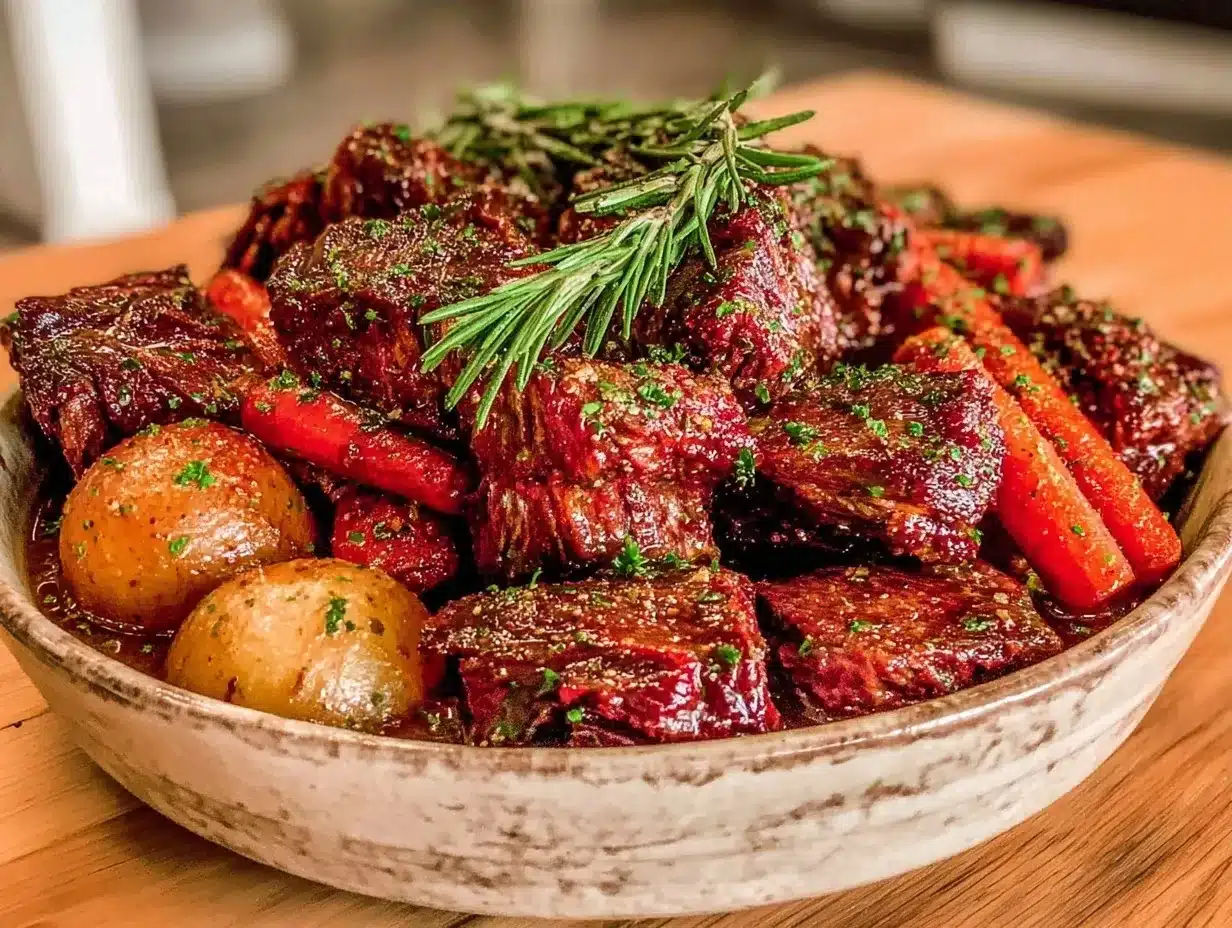
Yellow Onions (2 medium, chopped / about 300g) — Onions are the backbone of the sauce. I chop them into large chunks so they don’t disintegrate completely. They’ll soften into sweetness. Sweet onions work too, but yellow gives that classic savory depth.
Garlic (6 cloves, minced / about 2 tablespoons) — Don’t skimp. Garlic is the soul of this dish. Fresh garlic only. I know it’s tempting to use jarred, but fresh minced garlic has a brightness that jarred just can’t match. If you’re being lazy, buy pre-peeled cloves, but mince them yourself.
Carrots (1 pound / 450g, peeled and cut into large chunks) — Use large, thick chunks. If you cut them too small, they’ll turn to mush. I leave some skin on for a rustic look, but peel them if you prefer. Orange carrots are sweeter and hold up better than purple ones.
Red Potatoes (1.5 pounds / 700g, quartered) — Red potatoes are my choice because they stay firm and don’t fall apart as easily as russets. You want them to hold their shape. Yukon Golds work too if you like a creamier texture.
For the Liquid and Flavor:
Beef Broth (2 cups / 480ml) — Use low-sodium broth so you can control the salt level. Good quality broth makes a huge difference. I use a brand like Swanson or Pacific. If you can’t find good broth, use water with a bouillon cube, but broth is better.
Red Wine (1 cup / 240ml) — This is the secret weapon. It adds depth, acidity, and richness. I use a dry red like Cabernet Sauvignon or Merlot. Don’t use cooking wine. And no, you don’t need to spend a fortune. Use a bottle you’d actually drink. If you don’t drink wine, use extra beef broth with a tablespoon of balsamic vinegar for acidity.
Tomato Paste (2 tablespoons) — This adds umami and helps thicken the sauce. It’s not for tomato flavor; it’s for depth. Sauté it with the onions for a minute to cook out the raw taste.
Worcestershire Sauce (1 tablespoon) — A splash of this adds that savory, tangy kick. It’s a pantry staple for a reason.
Fresh Herbs (2 sprigs rosemary, 3 sprigs thyme) — Fresh herbs are best. If you only have dried, use 1 teaspoon of each. Tuck the sprigs into the pot; you’ll remove them before serving. They infuse the meat with that earthy, piney flavor.
Bay Leaves (2 leaves) — Add them in, take them out. They add a subtle background note. Don’t skip them.
Optional Add-ins:
Parsnips (1 cup, chopped) — If you like carrots, you’ll like parsnips. They add a nice earthy sweetness. I sometimes swap half the carrots for parsnips.
Celery (2 stalks, chopped) — Adds a savory crunch if you like it. I usually add it with the onions.
Equipment Needed
You don’t need anything fancy for this. Here’s what I actually use:
Large Dutch Oven or Slow Cooker — I prefer a heavy-bottomed Dutch oven (like a Le Creuset or Lodge) for the searing and slow cooking. It distributes heat evenly. But honestly? A good slow cooker works just as well and is easier for cleanup. If using a slow cooker, I still like to sear the meat in a skillet first for flavor.
Large Skillet — If your pot isn’t big enough to sear the meat in batches, use a skillet. You need high heat for a good crust.
Sharp Chef’s Knife — For chopping onions, carrots, and garlic. A dull knife is dangerous and frustrating. I use my Wüsthof for everything.
Wooden Spoon or Silicone Spatula — For stirring. Metal spoons can scratch non-stick surfaces, but they’re fine for cast iron.
Measuring Cups and Spoons — Standard stuff. I have a set from the dollar store that works fine.
Aluminum Foil — For covering the pot if you’re using an oven, or for wrapping leftovers.
How to Make It: Step-by-Step
Alright, let’s make this! I’m walking you through exactly how I do it. It’s simple, but there are a few tricks to get it perfect.
Step 1: Prep Your Ingredients (10 minutes)
Chop your onions, carrots, and potatoes. Mince your garlic. Measure out your broth and wine. Having everything ready before you start cooking makes the process smooth. Pat the roast dry with paper towels. This is crucial for a good sear.
Step 2: Sear the Roast (5-8 minutes)
Heat your olive oil in your Dutch oven or skillet over medium-high heat. Season the roast generously with salt and pepper. When the oil is shimmering, add the roast. Sear it for 3-4 minutes per side, until it’s deeply browned. Don’t rush this! The brown crust (Maillard reaction) is where the flavor is. Work in batches if your pot is small. Remove the meat and set it aside on a plate.
Step 3: Sauté the Aromatics (5 minutes)
Reduce the heat to medium. Add the chopped onions to the same pot. Cook for 3-4 minutes until softened. Add the garlic and tomato paste. Stir constantly for 1 minute. The tomato paste should darken slightly. Scrape up any brown bits from the bottom of the pot—those are flavor gold.
Step 4: Deglaze and Build the Sauce (3 minutes)
Pour in the red wine. Let it simmer for 2 minutes, scraping the bottom again. The alcohol will cook off, leaving behind the rich flavor. Add the beef broth, Worcestershire sauce, rosemary, thyme, and bay leaves. Stir to combine.
Step 5: Assemble the Pot (2 minutes)
Place the seared roast back into the pot. Nestle it into the liquid. Add the carrots and potatoes around the meat. They should be partially submerged. If they’re sticking out, add a little more broth or water. Tuck the herb sprigs under the meat.
Step 6: The Long Cook (3-4 hours)
If using an oven: Cover the pot with the lid. Place it in a 325°F (165°C) oven. Cook for 3-4 hours, until the meat is fork-tender. Check it after 3 hours.
If using a slow cooker: Transfer everything to the slow cooker. Cook on Low for 8-9 hours or High for 4-5 hours. Low and slow is best for tenderness.
The meat is done when you can pierce it easily with a fork and it starts to pull apart. The vegetables should be tender but not mushy.
Step 7: Rest and Serve (5 minutes)
Remove the pot from heat. Take out the herb sprigs and bay leaves. If you want a thicker gravy, remove the meat and vegetables, then simmer the liquid on the stove for 10 minutes until reduced. Or, mix 1 tablespoon of cornstarch with 1 tablespoon of cold water and stir it into the simmering liquid. Let it thicken for 2 minutes. Slice or shred the meat. Serve it with the vegetables and ladle the gravy over the top.
Expert Tips & Tricks
Here’s everything I’ve learned from making this dozens of times. These tips will save you from my mistakes.
- Don’t Skip the Sear — I know it’s an extra step. But searing the meat adds a depth of flavor that you can’t get by just boiling it. It’s non-negotiable for the best classic beef pot roast with carrots and potatoes.
- Cut Vegetables Uniformly — If your carrot chunks are tiny and your potatoes are huge, they’ll cook at different rates. Try to keep them all roughly the same size so everything is done at the same time.
- Use a Good Wine — If you don’t like wine, use broth with a splash of vinegar. But wine really does make a difference. It balances the richness of the beef.
- Don’t Overcrowd the Pot — If you’re searing in batches, don’t put too much meat in at once. It will steam instead of sear. You want a crust, not a gray boil.
- Let It Rest — After cooking, let the pot sit for 10-15 minutes before serving. This allows the juices to redistribute and the flavors to meld. It’s tempting to dig in immediately, but patience pays off.
Common Mistakes:
- Mushy Vegetables — If you’re using a slow cooker, add the potatoes and carrots in the last 2 hours of cooking. They cook faster than the meat. In the oven, they’re fine to cook the whole time if they’re large chunks.
- Dry Meat — This usually happens if you use a lean cut. Stick to chuck roast. And don’t overcook it. Once it’s tender, it’s done. Keep cooking it and it’ll get dry.
- Watery Gravy — If your sauce is thin, simmer it uncovered after removing the meat. Or use a cornstarch slurry. Don’t just serve it watery.
Variations & Substitutions
Once you’ve nailed the basic version, here’s how you can mix it up. I’ve tried all of these.
Mushroom Lover’s — Add 8oz of sliced cremini mushrooms with the onions. They absorb the beefy flavor like a sponge. Delicious.
Herb-Crusted — Mix dried thyme, rosemary, and garlic powder, then rub it onto the roast before searing. Adds a nice crust flavor.
Spicy Kick — Add a teaspoon of red pepper flakes or a dash of hot sauce to the liquid. It adds a subtle heat that cuts through the richness.
Gluten-Free — This recipe is naturally gluten-free if you use gluten-free broth and wine. Check your Worcestershire sauce, as some brands contain gluten. Use a GF brand.
Low-Carb — Skip the potatoes. Add extra carrots and maybe some turnips. It’s still hearty and flavorful without the starch.
Dairy-Free — This recipe is naturally dairy-free. No butter or cream involved.
Serving & Storage
This pot roast is perfect for a cozy family dinner or a weekend gathering. Serve it with crusty bread to soak up the gravy, or over mashed potatoes if you want to go all out. A simple green salad with a vinaigrette balances the richness perfectly.
Storage: Let the leftovers cool completely, then store in an airtight container in the fridge for up to 4 days. The flavors get even better after a day or two.
Reheating: Reheat gently on the stove over low heat, adding a splash of broth if it’s too thick. You can also microwave it, but add a little water to prevent drying out. Avoid high heat, which can make the meat tough.
Freezing: This freezes well for up to 3 months. Freeze the meat and vegetables separately from the gravy for best texture. Thaw in the fridge overnight and reheat gently.
Nutrition Information
I’m not a nutritionist, but here’s the breakdown if you’re tracking. This is comfort food, so it’s hearty!
- Calories: 450 per serving
- Protein: 35g
- Carbs: 25g
- Fat: 22g
- Fiber: 4g
It’s a good source of protein and iron from the beef. The vegetables add fiber and vitamins. It’s a balanced, satisfying meal. Just watch the portion size if you’re watching calories, as the gravy is rich.
Final Thoughts
So that’s my classic beef pot roast with carrots and potatoes! It’s my answer to “what’s for dinner?” when I want something that feels special but requires minimal effort. It’s the dish that brings people together. Whether it’s a weeknight family meal or a weekend dinner party, this roast delivers. It’s tender, flavorful, and deeply comforting. Make it yours! Add your favorite vegetables, swap the wine for broth, or tweak the herbs. The best recipes are the ones you adapt to your taste. If you make this, I’d love to hear how it turns out. Drop a comment and let me know! Happy cooking!
Frequently Asked Questions
Can I use a different cut of beef?
You can, but chuck roast is best. It has the right amount of fat and connective tissue to stay tender during long cooking. Sirloin or round roast will be leaner and potentially drier. If you must use those, reduce the cooking time and check frequently.
Why is my pot roast tough?
It probably wasn’t cooked long enough. Chuck roast needs time to break down. If it’s tough, keep cooking it. It should be fork-tender. If it’s been cooked for hours and is still tough, the cut might have been too lean. Next time, stick with chuck.
Can I make this in an Instant Pot?
Yes! Sear the meat in the Instant Pot, then add the vegetables and liquid. Cook on High Pressure for 60-75 minutes, then natural release for 15 minutes. It’s faster, but the texture might be slightly different than slow cooking.
Can I freeze leftovers?
Absolutely. Freeze in airtight containers for up to 3 months. Thaw in the fridge overnight and reheat gently. The meat holds up well to freezing.
What wine should I use?
A dry red like Cabernet Sauvignon, Merlot, or Pinot Noir works best. Avoid sweet wines or cooking wines. Use a bottle you’d enjoy drinking. The alcohol cooks off, leaving only the flavor.
Can I add other vegetables?
Sure! Parsnips, turnips, and celery work great. Just keep in mind that some vegetables cook faster than others. Add delicate veggies like peas or zucchini at the end.
Pin This Recipe!
Classic Beef Pot Roast: Best Slow Cooker Dinner for Family
- Total Time: 4 hours 10 minutes
- Yield: 6 servings 1x
Description
A tender, fork-tender beef chuck roast slow-cooked with carrots, potatoes, and aromatics in a rich red wine and beef broth gravy. This set-it-and-forget-it meal is perfect for family dinners and leftovers.
Ingredients
- 3–4 lbs beef chuck roast (boneless preferred)
- Coarse kosher salt
- Freshly cracked black pepper
- 2 tablespoons olive oil
- 2 medium yellow onions, chopped into large chunks
- 6 cloves garlic, minced
- 1 pound carrots, peeled and cut into large chunks
- 1.5 pounds red potatoes, quartered
- 2 cups low-sodium beef broth
- 1 cup dry red wine (Cabernet Sauvignon or Merlot)
- 2 tablespoons tomato paste
- 1 tablespoon Worcestershire sauce
- 2 sprigs fresh rosemary
- 3 sprigs fresh thyme
- 2 bay leaves
- Optional: 1 cup parsnips, chopped
- Optional: 2 stalks celery, chopped
Instructions
- Prep ingredients: Chop onions, carrots, and potatoes. Mince garlic. Measure broth and wine. Pat the roast dry with paper towels.
- Sear the roast: Heat olive oil in a Dutch oven or skillet over medium-high heat. Season roast generously with salt and pepper. Sear for 3-4 minutes per side until deeply browned. Remove meat and set aside.
- Sauté aromatics: Reduce heat to medium. Add onions to the pot and cook for 3-4 minutes until softened. Add garlic and tomato paste, stirring constantly for 1 minute. Scrape up brown bits from the bottom.
- Deglaze and build sauce: Pour in red wine and simmer for 2 minutes. Add beef broth, Worcestershire sauce, rosemary, thyme, and bay leaves. Stir to combine.
- Assemble the pot: Return the seared roast to the pot. Nestle it into the liquid. Add carrots and potatoes around the meat, ensuring they are partially submerged. Tuck herb sprigs under the meat.
- Cook: Option A (Oven): Cover and cook at 325°F (165°C) for 3-4 hours until fork-tender. Option B (Slow Cooker): Transfer to slow cooker and cook on Low for 8-9 hours or High for 4-5 hours.
- Rest and serve: Remove herb sprigs and bay leaves. If desired, thicken the gravy by simmering the liquid or using a cornstarch slurry. Slice or shred the meat and serve with vegetables and gravy.
Notes
Do not skip the sear for maximum flavor. Cut vegetables uniformly to ensure even cooking. If using a slow cooker, add potatoes and carrots in the last 2 hours to prevent mushiness. Let the roast rest for 10-15 minutes before serving to allow juices to redistribute. This dish freezes well for up to 3 months.
- Prep Time: 10 minutes
- Cook Time: 3-4 hours (Oven) or 4-9 hours (Slow Cooker)
- Category: Main Course
- Cuisine: American
Nutrition
- Serving Size: 1 slice of roast wit
- Calories: 450
- Sugar: 6
- Sodium: 650
- Fat: 22
- Saturated Fat: 8
- Carbohydrates: 25
- Fiber: 4
- Protein: 35
Keywords: beef pot roast, slow cooker dinner, chuck roast, comfort food, family dinner, carrots and potatoes, red wine gravy


