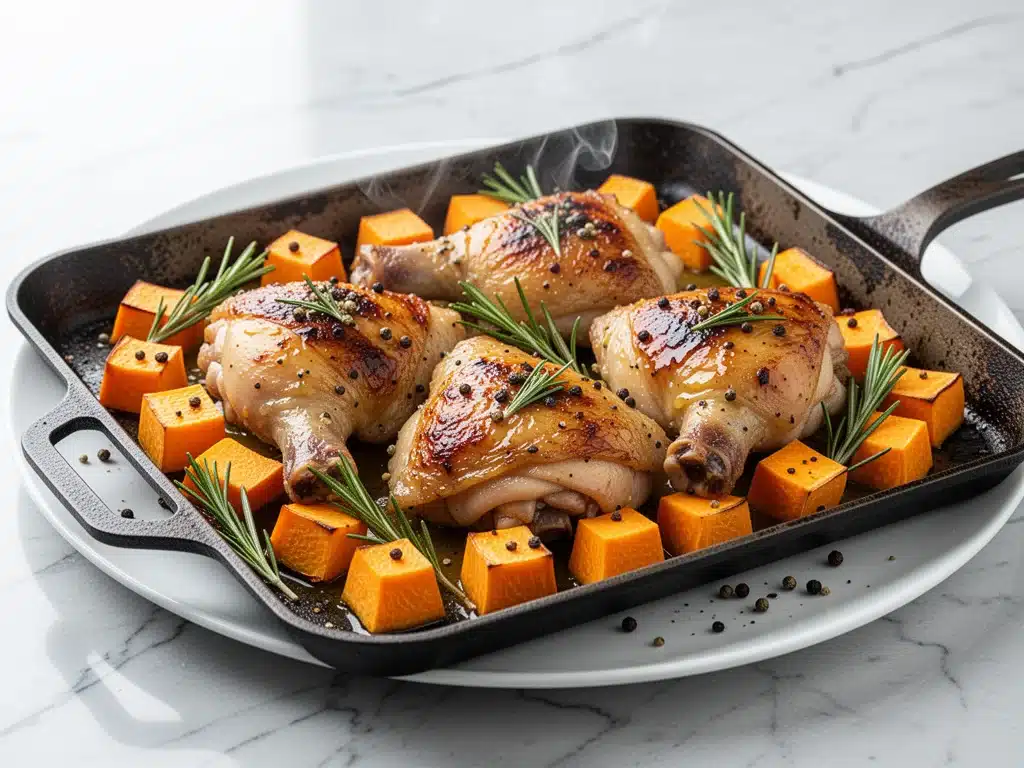
Last November, I was standing in my kitchen at 6:30 PM, staring at a pile of dirty pots from lunch and a half-empty fridge, feeling that specific brand of weeknight dread. You know the one. The sun is already down, my kids are hangry, and I’m mentally calculating if ordering takeout is worth the guilt and the $40 hit to the budget. I wanted something warm, something that smelled like autumn, but I absolutely did not have the energy to chop vegetables, sear meat, and clean up a mountain of dishes.
That was the day I finally committed to sheet pan dinners. Not just any sheet pan dinner, but Fall Sheet Pan Maple Dijon Chicken Thighs. I’d seen the recipe a hundred times, but I always assumed it would be too sweet or the chicken would end up dry. I was wrong. So wrong. I made this fall sheet pan maple dijon chicken thighs recipe three times in one week. Three. Because my family kept asking for it, and I was secretly relieved I didn’t have to think about dinner for a few nights.
There is something deeply satisfying about throwing everything onto one baking sheet and walking away. The kitchen fills up with the smell of caramelizing maple syrup and tangy mustard. By the time you smell it, dinner is basically done. It’s the kind of meal that feels like a hug from the inside out. Perfect for those crisp October evenings when you want comfort food without the effort.
I’ve tweaked the ratios over the last month—more maple, less mustard, some added herbs—to get it exactly right. And honestly? It’s become my go-to for busy weeknights. It’s juicy, it’s flavorful, and cleanup takes about thirty seconds. If you’re tired of the weeknight grind, you need to try this.
Why You’ll Love This Recipe
I’ve tried a lot of quick chicken dinners, but this fall sheet pan maple dijon chicken thighs recipe stands out for a few specific reasons. It’s not just “easy”—it’s genuinely delicious in a way that feels like you spent hours on it.
Stupid Simple Prep — Seriously, if you can toss ingredients in a bowl, you can make this. I don’t even marinate the chicken beforehand. I just drizzle the sauce over everything and stir it up on the pan. It takes about 5 minutes of active work. I’ve made this while helping my middle child with math homework because it requires zero attention.
One Pan, Zero Stress — This is the holy grail of weeknight cooking. One baking sheet. One mixing bowl. That’s it. No searing in a skillet, no boiling potatoes, no saucepan to scrub. Just throw it in the oven, wait 25 minutes, and scrape the pan. My husband handles the cleanup because he knows how much I love the one-pan aspect.
Flavor That Actually Pops — Some sheet pan meals taste bland because the sauce evaporates. Not this one. The Dijon mustard cuts through the sweetness of the maple syrup, creating this incredible tangy-sweet glaze that clings to the chicken. It’s savory, it’s rich, and it’s got that fall spice vibe without needing a bunch of complicated spices.
Juicy Chicken Every Time — I used to stick to chicken breasts because they’re “lean,” but I’ve learned that thighs are just better for this. They stay moist in the oven, and the skin gets crispy in the maple glaze. It’s a texture game-changer. If you’re worried about dryness, this recipe solves that problem permanently.
Family-Tested — My picky eater son, who usually only eats bread and cheese, asked for seconds of the veggies. I wasn’t even mad. The glaze makes the carrots and potatoes taste like a treat rather than a chore. This is the kind of meal that actually gets eaten and enjoyed.
Ingredients You’ll Need
Here’s the best part: you probably have most of this already in your pantry and fridge. I’m particular about a few things here, but mostly, this is simple, accessible food.
Chicken Thighs (2 pounds / 900g) — Boneless, skinless thighs are my preference. They’re forgiving and stay juicy. If you can find bone-in, skin-on thighs, that’s even better for crispiness, but you’ll need to adjust cooking time. I always buy the family pack and freeze half for later.
Maple Syrup (3 tablespoons / 45ml) — Not pancake syrup. Real maple syrup. Grade A or Grade B both work, but Grade B has a stronger flavor that stands up to the mustard. This is the sweet backbone of the dish.
Dijon Mustard (2 tablespoons / 30g) — I use the classic French Dijon. It adds that sharp, tangy kick that balances the sweet maple. Grey Poupon or Maille are my go-to brands. Don’t use yellow mustard—it’s too vinegary and will throw off the flavor.
Garlic (4 cloves, minced / about 2 tablespoons) — Fresh garlic is non-negotiable here. Jarred garlic has a metallic aftertaste that clashes with the delicate maple. Minced it fine so it distributes evenly. I keep a bag of pre-peeled cloves in the fridge for lazy nights, but fresh is best.
Butter (2 tablespoons / 30g) — Unsalted butter adds richness and helps the glaze brown. If you’re dairy-free, you can swap this for olive oil, but the butter really makes the sauce glossy.
Dried Thyme (1 teaspoon) — Thyme is the perfect herb for fall chicken. It’s earthy and subtle. If you have fresh thyme, use 3 sprigs and strip the leaves off. Dried is fine and easier to keep stocked.
Salt and Black Pepper — Kosher salt is best for seasoning meat. Use about 1 teaspoon of salt and plenty of freshly cracked black pepper. Don’t be shy with the pepper; it adds warmth.
Vegetables (The Mix-Ins) — I like a mix of carrots and baby potatoes. They roast nicely in the same timeframe as the chicken.
**Baby Potatoes** (1 pound / 450g) — Halved or quartered. Yukon Gold or red potatoes work best. They get creamy inside and crispy outside.
**Carrots** (3 medium, chopped into 1-inch chunks) — Sweet and sturdy. They caramelize beautifully in the maple glaze.
**Broccoli Florets** (1 head, chopped) — I add these in the last 10 minutes so they don’t get soggy. They add a nice green crunch.
Optional Add-ins:
**Onions** — Red onion wedges add a nice bite. I usually throw in half a red onion.
**Sweet Potatoes** — Swap regular potatoes for sweet potatoes for extra fall flavor. They cook slightly faster, so cut them smaller.
Equipment Needed
You don’t need fancy equipment for this. Here’s what I actually use.
Large Sheet Pan — I use a half-sheet pan (18×13 inches). It’s the standard size for home ovens. Make sure it’s rimmed so the juices don’t spill over. I have two, so I can double the recipe if I’m meal prepping.
Mixing Bowl — A large bowl to toss the chicken and veggies with the sauce. Glass or ceramic works fine. I use a 4-quart bowl.
Measuring Spoons and Cups — Standard stuff. Dollar store versions work perfectly.
Pastry Brush or Spoon — To drizzle the sauce over the chicken. I usually just use a spoon for this one since I’m tossing everything anyway.
Cutting Board and Knife — For prepping the veggies. Sharp knife makes chopping potatoes much safer and faster.
Parchment Paper or Foil — I line my pan with parchment paper for zero cleanup. It’s worth the extra second. If you don’t have it, foil works, but grease the foil well with butter or oil.
How to Make It: Step-by-Step
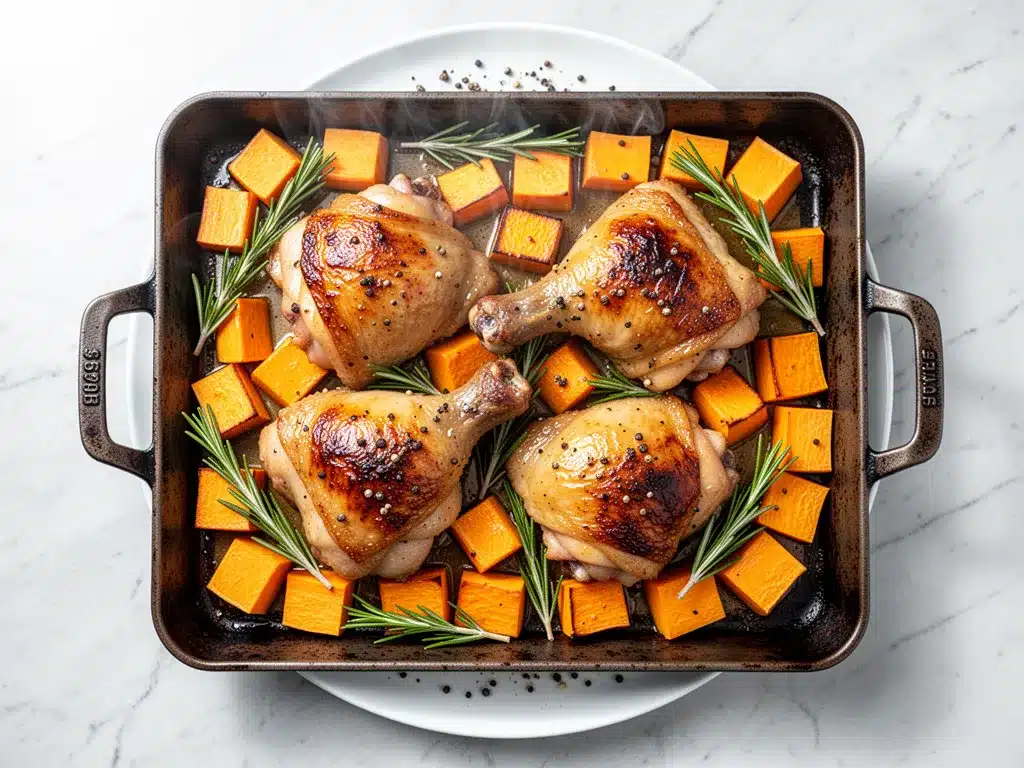
Alright, let’s make this! I’m walking you through exactly how I do it, including the little tricks I’ve picked up to ensure your chicken is juicy and your veggies are perfectly roasted.
Step 1: Prep Your Oven and Pan (5 minutes)
Preheat your oven to 400°F (200°C). This high heat is crucial for getting that caramelized glaze on the chicken without drying it out. Line your large sheet pan with parchment paper or foil. I prefer parchment because cleanup is instant.
Step 2: Prep the Vegetables (5 minutes)
Wash and chop your potatoes and carrots. Cut the potatoes into uniform half-inch chunks so they cook evenly. Chop the carrots into similar-sized pieces. If you’re using broccoli, cut it into florets. Toss the potatoes and carrots directly onto the prepared sheet pan. Drizzle them with a little olive oil and sprinkle with salt and pepper. Toss to coat.
Step 3: Make the Maple Dijon Glaze (2 minutes)
In your mixing bowl, combine the maple syrup, Dijon mustard, melted butter, minced garlic, dried thyme, salt, and black pepper. Whisk it together until it’s smooth and emulsified. It should look like a glossy, tan-colored sauce. Taste it—it should be sweet and tangy. Adjust mustard if you want it more zesty.
Step 4: Coat the Chicken
Add the chicken thighs to the bowl with the glaze. Toss them until they’re fully coated. Make sure every piece has a good layer of sauce. This is where the flavor happens. The chicken needs to be well-coated so it doesn’t dry out in the oven.
Step 5: Arrange on the Pan
Take the glazed chicken thighs and arrange them on the sheet pan, on top of or around the vegetables. Try to keep them in a single layer. Don’t crowd them! If you pile the chicken on top of itself, it will steam instead of roast, and you won’t get that nice browning. Leave some space between pieces.
Step 6: Roast the Chicken and Veggies (25-30 minutes)
Place the sheet pan in the preheated oven. Roast for 20 minutes. Then, take the pan out and check the chicken. Use a meat thermometer if you have one—it should read 165°F (74°C) at the thickest part. If it’s close, flip the chicken and add the broccoli florets to the pan. Roast for another 5-10 minutes until the broccoli is tender-crisp and the chicken is cooked through.
Step 7: Broil for Color (Optional but Recommended)
If you want that deep, caramelized look, switch your oven to broil for the last 1-2 minutes. Watch it like a hawk! The sugar in the maple syrup can burn quickly. You’re looking for bubbly, golden-brown edges. Remove from oven immediately once it hits that color.
Step 8: Serve
Let the chicken rest for 5 minutes before serving. This helps the juices redistribute. Serve straight from the pan for that rustic, family-style vibe. Garnish with fresh parsley or extra thyme if you have it.
Total Time: About 35 minutes (10 minutes prep, 25 minutes cooking)
Expert Tips & Tricks
Here’s everything I’ve learned from making this dozens of times. These tips will save you from my early mistakes.
Don’t Skip the Thermometer
Chicken thighs are forgiving, but overcooking them still makes them tough. A meat thermometer is your best friend. Pull them at 165°F. If you don’t have one, cut into the thickest piece—the juices should run clear, not pink.
Uniform Cuts Matter
When chopping potatoes and carrots, try to keep them the same size. If you have huge chunks and tiny pieces, the small ones will turn to mush before the big ones are cooked. Uniformity = even cooking.
The Broil Step is Key
I know it’s tempting to skip the broil, but the sugar in the maple syrup needs high heat to caramelize. Without it, the chicken just looks wet. That final minute under the broiler makes all the difference for texture and flavor.
Add Broccoli Late
Broccoli cooks much faster than potatoes and carrots. If you put it in at the beginning, it’ll be mushy and sulfurous (in a bad way). Add it in the last 10 minutes of roasting for a bright green, crunchy finish.
Leftover Glaze
If you have extra glaze in the bowl after tossing the chicken, don’t pour it down the sink! Brush it over the veggies halfway through cooking for extra flavor. Or save it to drizzle over the finished dish.
Common Mistakes:
Mistake: Chicken is dry. Fix: You likely overcooked it or used breast meat. Stick to thighs, and check the temp early.
Mistake: Veggies are burnt. Fix: Your oven runs hot. Check them at 20 minutes. If they’re browning too fast, cover loosely with foil.
Variations & Substitutions
Once you’ve nailed the basic version, here’s how you can mix it up. I’ve tried all of these.
Spicy Maple Dijon
Add ½ teaspoon of cayenne pepper or red pepper flakes to the glaze. It adds a nice heat that cuts through the sweetness. Great for those who like a kick.
Honey Garlic Version
Swap the Dijon mustard for 2 tablespoons of honey and 1 teaspoon of garlic powder. It’s sweeter and milder. Kids usually prefer this version.
Apple and Sausage
Swap the vegetables for sliced apples and pre-cooked sausage links. The apples caramelize beautifully with the maple. This feels more like a holiday meal.
Vegan Option
Use maple syrup, olive oil, and nutritional yeast instead of butter. Swap chicken for firm tofu cubes or chickpeas. Toss everything in the glaze and roast at 400°F. Tofu gets crispy and delicious.
Gluten-Free
This recipe is naturally gluten-free as long as you check your Dijon mustard (most are) and use certified GF maple syrup. Serve with rice or quinoa instead of potatoes for a GF side.
Other Proteins:
**Chicken Breasts** — Cut into bite-sized pieces. Cook time reduces to 15-18 minutes. Watch closely!
**Pork Chops** — Thick-cut chops work great with this glaze. Cook for 20-25 minutes.
**Salmon Fillets — Add salmon in the last 12 minutes. It pairs surprisingly well with maple and Dijon.
Serving & Storage
How to Serve:
I usually serve this straight from the skillet at the dinner table—it looks rustic and stays warm. But here are other ways I’ve enjoyed it:
- With Mashed Potatoes: Use the pan drippings as a gravy over creamy mashed potatoes.
- Over Rice: Serve the chicken and veggies over fluffy white rice to soak up the sauce.
- With Green Beans: Steamed green beans with lemon zest are a perfect light side.
- In a Wrap: Shred the chicken and put it in a tortilla with coleslaw for a quick lunch.
Storage Instructions:
Refrigerator: Store in an airtight container for up to 4 days. The flavors actually meld together and get better after a day or two.
Reheating: Best method: Reheat in a skillet over medium-low heat with a splash of water or chicken broth to loosen the glaze. Microwave works too, but add a splash of water and cover with a damp paper towel to keep it moist.
Freezing: This doesn’t freeze well because the veggies get mushy and the sauce can separate. It’s best eaten fresh or stored in the fridge for a few days.
Nutrition Information
I’m not a nutritionist, but here’s the breakdown if you’re tracking. Note that this varies based on the exact size of chicken thighs and veggies used.
Per Serving (based on 4 servings):
- Calories: 450
- Protein: 35g
- Carbs: 30g
- Fiber: 4g
- Sugar: 18g (from maple and veggies)
- Fat: 20g
- Saturated Fat: 6g
- Sodium: 320mg
What’s Good:
High in protein, good source of Vitamin A from carrots, and contains healthy fats from the chicken skin. The maple syrup adds natural sugar, but it’s balanced by the savory mustard and veggies.
What to Know:
Higher in sodium if you add extra salt. The maple syrup adds sugar, so watch portions if you’re cutting sugar. But honestly, it’s way better than processed takeout.
Final Thoughts
So that’s my fall sheet pan maple dijon chicken thighs recipe! I’ve probably talked your ear off at this point, but when you make a recipe this often, you have a lot to say about it.
This has saved weeknight dinners more times than I can count. It’s my answer to “what’s for dinner” when I’m tired, don’t want takeout, and still want something that tastes really good. My kids are happy, my husband’s happy, and I’m happy because I’m not stressed about cooking.
Make it yours! Try different add-ins, swap in your favorite vegetables, adjust the garlic (though more is always better in my opinion). The best recipes are the ones you adapt to your family’s tastes.
If you make this, drop a comment and let me know what you think! I love hearing how recipes turn out in your kitchen. And if something doesn’t work, tell me that too—I’m here to help troubleshoot.
Happy cooking! And I hope your kitchen smells half as good as mine does right now.
Frequently Asked Questions
Q: Can I use chicken breasts instead of thighs?
A: You can, but they cook much faster and dry out easily. If you use breasts, cut them into bite-sized pieces and reduce the cooking time to 15-18 minutes. Keep a close eye on them so they don’t turn into rubber. Thighs are just more forgiving for this glaze.
Q: Why did my sauce burn?
A: The maple syrup has a high sugar content, which burns at high temperatures. If you broiled it too long or if your oven runs hot, it can scorch. Make sure to watch the broiler step closely—it only takes 1-2 minutes. If you see it browning too fast, lower the rack in the oven.
Q: Can I make this ahead of time?
A: You can prep the veggies and make the glaze ahead of time. Store them in the fridge separately. When you’re ready to cook, toss the chicken in the glaze and assemble the pan. It saves about 10 minutes of active prep time.
Q: What other veggies can I use?
A: Almost any sturdy vegetable works. Brussels sprouts, sweet potatoes, butternut squash, and red onions are all great. Just make sure to cut them into similar sizes so they cook evenly. Delicate veggies like zucchini will get too mushy.
Q: Is this recipe spicy?
A: Not at all. The Dijon mustard adds a tangy kick, but it’s not hot. If you want heat, add red pepper flakes or cayenne to the glaze. Otherwise, it’s perfectly mild and family-friendly.
Q: Can I freeze the leftovers?
A: I wouldn’t recommend it. The potatoes and carrots tend to get soft and watery when frozen and reheated. It’s best enjoyed fresh or stored in the fridge for up to 4 days.
Q: How do I get the chicken skin crispy?
A: If you use skin-on thighs, make sure to pat them dry before adding to the pan. Moisture is the enemy of crispiness. Also, don’t overcrowd the pan. Air circulation helps the skin crisp up.
Pin This Recipe!
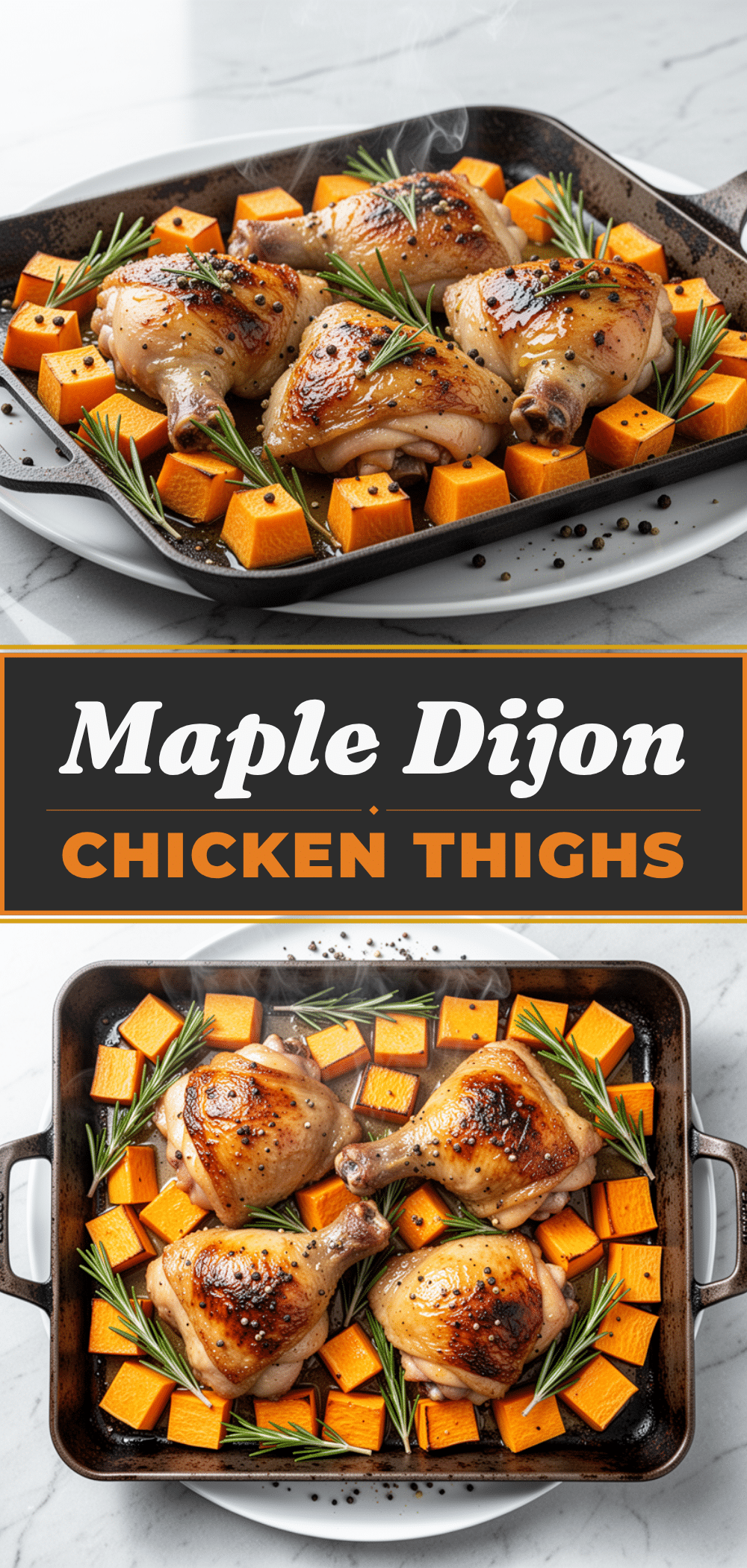
Fall Sheet Pan Maple Dijon Chicken Thighs
- Total Time: 35 minutes
- Yield: 4 servings 1x
Description
A quick and flavorful weeknight meal featuring juicy chicken thighs and roasted vegetables coated in a tangy-sweet maple Dijon glaze, all cooked on one sheet pan for easy cleanup.
Ingredients
- 2 pounds boneless, skinless chicken thighs
- 3 tablespoons real maple syrup
- 2 tablespoons Dijon mustard
- 4 cloves garlic, minced
- 2 tablespoons unsalted butter, melted
- 1 teaspoon dried thyme
- 1 teaspoon kosher salt
- Freshly cracked black pepper
- 1 pound baby potatoes, halved or quartered
- 3 medium carrots, chopped into 1-inch chunks
- 1 head broccoli, cut into florets
- Olive oil (for tossing vegetables)
Instructions
- Preheat oven to 400°F (200°C). Line a large rimmed sheet pan with parchment paper or foil.
- Wash and chop potatoes and carrots into uniform half-inch chunks. Chop broccoli into florets.
- Toss potatoes and carrots with a little olive oil, salt, and pepper, then spread them on the prepared sheet pan.
- In a large mixing bowl, whisk together maple syrup, Dijon mustard, melted butter, minced garlic, dried thyme, salt, and black pepper until smooth.
- Add chicken thighs to the bowl and toss to coat evenly in the glaze.
- Arrange the glazed chicken thighs on the sheet pan in a single layer, ensuring they are not crowded.
- Roast in the preheated oven for 20 minutes.
- Remove pan from oven. Check chicken temperature (should be 165°F). Flip chicken and add broccoli florets to the pan.
- Return to oven and roast for another 5-10 minutes until broccoli is tender-crisp and chicken is cooked through.
- Optional: Broil for 1-2 minutes to caramelize the glaze, watching closely to prevent burning.
- Let chicken rest for 5 minutes before serving.
Notes
Ensure vegetables are cut into uniform sizes for even cooking. Add broccoli in the last 10 minutes to prevent it from becoming mushy. Use a meat thermometer to ensure chicken reaches 165°F. If using skin-on thighs, pat them dry for crispier skin. This recipe is naturally gluten-free if using certified GF maple syrup and checking mustard labels.
- Prep Time: 10 minutes
- Cook Time: 25 minutes
- Category: Main Course
- Cuisine: American
Nutrition
- Serving Size: 1 chicken thigh with
- Calories: 450
- Sugar: 18
- Sodium: 320
- Fat: 20
- Saturated Fat: 6
- Carbohydrates: 30
- Fiber: 4
- Protein: 35
Keywords: sheet pan dinner, maple dijon chicken, weeknight meals, easy chicken recipe, fall recipes, one pan meal, healthy dinner


