
Three years ago, I was stuck in a dinner rut so deep I think my neighbors started judging me by the sound of my trash can. Every Tuesday and Thursday, it was the same ritual: stare into the fridge, sigh heavily, open the delivery app, and order something greasy and expensive. I wasn’t hungry for the food, exactly. I was just tired. Tired of cooking, tired of deciding, and tired of feeling like my weeknight meals were an afterthought.
Then, one particularly exhausting Tuesday, I found a piece of salmon in the freezer that I’d forgotten about. It was a bit freezer-burned on the edges, but it was still good. I didn’t have time to marinate it. I didn’t have time to chop a million vegetables or clean three different pans. I just had 30 minutes, a lemon that was starting to dry out in the crisper drawer, and a jar of pepper I’d bought on a whim.
I threw the salmon on a sheet pan, squeezed the lemon over it, cracked a generous amount of black pepper on top, and shoved it in the oven. When I pulled it out, the kitchen smelled like a fancy seafood restaurant, not a tired person’s kitchen. The flesh was flaky, the edges were caramelized, and the lemon-pepper crust had created this incredible zesty crunch that I couldn’t stop eating with my fork.
That was the night my life changed. Not dramatically, but quietly. I realized I didn’t need complicated techniques or expensive ingredients to feel like I was treating myself to a good meal. I just needed to stop overthinking it. That single sheet pan of Baked Lemon Pepper Salmon became my lifeline. It’s the recipe I make when I’m exhausted, when I have guests over unexpectedly, or when I just want to feel like a competent adult who knows what they’re doing.
I’ve made this salmon version at least fifty times since that Tuesday. I’ve tweaked the lemon-to-pepper ratio, tested different oven temperatures, and even tried swapping the lemon for lime (don’t, stick with lemon). But the core magic remains the same: it’s fast, it’s healthy, and it tastes like you put in actual effort. If you’re looking for a reliable weeknight dinner that doesn’t require a degree in culinary arts, this is it. It’s simple, it’s bright, and it’s going to save your dinner routine.
Why You’ll Love This Baked Lemon Pepper Salmon
There are a dozen reasons I keep coming back to this recipe, but they all boil down to one thing: it works. Every. Single. Time. Here’s why this baked lemon pepper salmon deserves a permanent spot in your weekly rotation.
- Zero Stress Cleanup — Seriously, this is a sheet pan dinner. You line your pan with foil or parchment paper (I prefer foil for easy cleanup), toss the ingredients on, bake, and done. You have exactly one pan to wash. No sautéing, no stirring, no standing over the stove watching for splatters. I’ve made this while helping my kids with homework because my hands were free.
- Lightning Fast — From preheating the oven to plating the dinner, you’re looking at 30 minutes flat. That’s 10 minutes of active prep and 20 minutes of hands-off baking. I get home from work at 6:30, and I have a hot, healthy dinner on the table by 7:00. It’s faster than waiting for a delivery driver who’s “three stops away.”
- Pantry-Friendly Ingredients — You probably have 90% of these ingredients already. Salmon (frozen or fresh), lemons, butter, garlic powder, black pepper, and salt. That’s it. No obscure spices you’ll use once and forget. It’s cooking with what you already own.
- Healthy Without Being Boring — This isn’t that sad, dry chicken breast vibe we all know too well. Salmon is naturally rich and moist. The lemon cuts through the richness, and the pepper adds a nice kick. It feels indulgent, but it’s packed with protein and omega-3s. My kids ask for seconds, which is the ultimate test.
- Meal Prep Friendly — This reheats surprisingly well. I often double the batch on Sunday, store it in the fridge, and reheat it for lunch during the week. It doesn’t get rubbery like some fish does. In fact, I think it tastes even better on day two, as the flavors meld together.
This recipe has saved my weeknights more times than I can count. It’s my answer to “what’s for dinner” when I have zero energy but still want to eat something that makes me feel good. No stress, no mess, just delicious food.
Ingredients You’ll Need
Here’s the best part: this recipe is incredibly forgiving. You don’t need fancy, hard-to-find ingredients. I’m particular about two things here—the quality of the salmon and the freshness of the lemon—but everything else is basic pantry staples. Let’s break it down.
For the Salmon
Salmon Fillets (1.5 pounds / 680g) — This is your star. I recommend wild-caught Alaskan salmon if you can find it and afford it; it has a firmer texture and cleaner taste. But frozen wild salmon? That’s my secret weapon. It’s cheaper, sustainable, and thaws quickly. Just make sure you thaw it completely before cooking. Atlantic salmon works too, but it’s fattier and softer, so handle it gently.
Fresh Lemons (2 large) — Do not use bottled lemon juice. Please. I’ve made this mistake, and the flavor is flat and metallic. You need fresh lemons for that bright, citrusy punch. I squeeze half for the juice and use the other half for the zest. If your lemons are small, get three. You want plenty of acid to balance the rich fish.
Unsalted Butter (4 tablespoons / 60g) — Melted butter helps the spices stick to the fish and adds a rich, velvety mouthfeel. I use unsalted so I can control the sodium. If you’re dairy-free, olive oil works, but you lose that buttery richness. It’s still good, just different.
Garlic Powder (1 teaspoon) — Not fresh garlic. Fresh garlic burns in the oven at high heat and turns bitter. Garlic powder infuses the fish with that savory flavor without the risk of burning. If you must use fresh, mince it super fine and mix it into the butter, but powder is safer and more consistent.
For the Seasoning

Black Pepper (1-2 teaspoons, freshly cracked) — This is where the “pepper” in lemon pepper comes from. I use a good amount—about a teaspoon for mild, two for spicy. Freshly cracked is non-negotiable here. Pre-ground pepper tastes dusty. Crack it fresh right before you season the fish. It makes a huge difference.
Kosher Salt (1 teaspoon) — Or sea salt. Kosher salt is easier to pinch and distribute evenly. If you use table salt, use half the amount because it’s denser. Seasoning generously is key because salmon is mild and needs that boost.
Optional Add-ins — I like to toss some asparagus or broccoli florets on the same pan. They roast alongside the salmon and absorb all the lemony butter goodness. It’s an easy way to get your veggies in without extra effort. Cherry tomatoes also work beautifully, bursting in the oven and creating a little sauce.
Personal Tip — I always pat the salmon dry with paper towels before seasoning. Wet fish steams instead of roasts. If you skip this step, your salmon might come out looking a bit gray and steamed. Dry fish = crispy, caramelized edges. Trust me.
Equipment Needed
You don’t need fancy gadgets for this. Here’s what I actually use in my kitchen. If you don’t have these exact items, don’t worry—there are easy alternatives.
Sheet Pan — A standard 13×18 inch rimmed baking sheet is perfect. I use a heavy-duty aluminum one because it conducts heat evenly. If your pan is thin, you might get hot spots, so keep an eye on it. Any size works as long as the salmon fits in a single layer.
Foil or Parchment Paper — I line my pan with foil and spray it with non-stick cooking spray. Why foil? Because it catches the butter and lemon juice, which caramelize and create a delicious crust on the pan. Cleanup is a breeze—just crumple up the foil and toss it. Parchment works too, but it doesn’t get that crispy edge on the bottom.
Small Bowl — For mixing the melted butter, lemon juice, and spices. A small ramekin or even a large mug works fine. You just need something to whisk it all together before pouring over the fish.
Zester or Microplane — For getting that lemon zest. A regular grater works, but a microplane gives you fine, fluffy zest that melts into the butter. If you don’t have one, just use a vegetable peeler to remove thin strips of the peel, then finely chop them. Avoid the white pith—it’s bitter.
Spatula — A wide, thin spatula is ideal for transferring the salmon to your plate. Fish is fragile, and you want to keep those beautiful fillets intact. A regular spoon works in a pinch, but be gentle.
Oven — Obviously. Preheat it to 400°F (200°C). This is a hot oven, which cooks the salmon quickly and keeps it moist. Lower temps can dry it out.
How to Make It: Step-by-Step
Alright, let’s make this! I’m walking you through exactly how I do it, including the little tricks I’ve picked up over dozens of attempts. It’s simple, but the details matter.
Step 1: Prep Your Oven and Pan (5 minutes)
Preheat your oven to 400°F (200°C). While it’s heating, line a large baking sheet with aluminum foil. Spray the foil generously with non-stick cooking spray. This step is crucial for easy cleanup and preventing sticking. If you’re worried about the lemon juice leaking, make sure the foil has high edges. I usually fold the edges up slightly to create a little rim.
Step 2: Prepare the Salmon (5 minutes)
Take your salmon fillets out of the fridge or freezer. If frozen, make sure they’re completely thawed. Pat them dry with paper towels. This is the most important step for texture. Remove any pin bones by pulling them out with tweezers if you haven’t already. Place the fillets on the prepared baking sheet in a single layer. Leave a little space between them so they roast instead of steam.
Step 3: Make the Lemon Pepper Butter (3 minutes)
In a small bowl, melt the butter. I use the microwave for 30-45 seconds, just until liquid. Add the fresh lemon juice and lemon zest. Whisk them together. Then add the garlic powder, black pepper, and kosher salt. Whisk again until well combined. The mixture should look emulsified and fragrant. If it looks separated, just whisk a bit more. The zest should be evenly distributed.
Step 4: Season the Salmon (2 minutes)
Pour the lemon pepper butter mixture evenly over the salmon fillets. Use a spoon to drizzle it over the top, making sure every part of the fish is coated. Don’t be shy with the seasoning. If you have extra mixture, save it for basting later. You can also rub it gently into the sides of the fillets. The goal is a uniform layer of flavor.
Step 5: Bake (12-15 minutes)
Place the baking sheet in the preheated oven. Bake for 12-15 minutes. The exact time depends on the thickness of your fillets. A general rule: cook for 4-5 minutes per half-inch of thickness. The salmon is done when it flakes easily with a fork and reaches an internal temperature of 145°F (63°C). It should be opaque and pink, not translucent. If it’s still a bit translucent in the center, give it another 2-3 minutes.
Step 6: Baste and Rest (2 minutes)
Optional but recommended: halfway through baking, pull the pan out and baste the salmon with the juices from the pan. This keeps the top moist and adds extra flavor. Once done, remove the pan from the oven and let the salmon rest for 2-3 minutes. This allows the juices to redistribute. If you cut into it immediately, the juices run out, and the fish dries up. Patience pays off.
Step 7: Serve
Transfer the salmon to plates. Spoon any remaining pan juices over the top. Garnish with fresh parsley or extra lemon wedges if you like. Serve immediately while it’s hot and flaky.
Total Time: About 30 minutes (5 minutes prep, 15 minutes cook, 5 minutes rest)
Built-in Troubleshooting
- Soggy Salmon? You didn’t pat it dry enough, or you overcrowded the pan. Dry the fish thoroughly and give it space.
- Dry Salmon? You overcooked it. Salmon continues to cook after it’s out of the oven. Pull it when it’s just barely opaque in the center.
- Bitter Taste? You included the white pith from the lemon peel. Zest only the yellow part.
Expert Tips & Tricks
Here’s everything I’ve learned from making this dozens of times. These tips will save you from my mistakes and guarantee restaurant-quality results.
Don’t Skip the Pat-Dry Step — I know it seems minor, but moisture is the enemy of caramelization. Wet salmon steams. Dry salmon roasts. Use paper towels. Be thorough. Your taste buds will thank you.
Use Freshly Cracked Pepper — Pre-ground pepper loses its potency quickly. Crack it fresh for that sharp, aromatic kick. It’s the “pepper” in lemon pepper, so it matters.
Check Temperature Early — Ovens vary. Start checking your salmon at 10 minutes. If it’s thick, it might need 15. If it’s thin, 10 might be enough. Use a meat thermometer if you have one—145°F is the safe temp, but many chefs pull it at 135°F for medium-rare, as it carries over.
Save the Pan Juices — That buttery, lemony liquid in the pan is liquid gold. Don’t pour it down the drain. Spoon it over the fish when you serve. It’s pure flavor.
Room Temperature Salmon — If you have time, let the salmon sit out for 15 minutes before cooking. Cold salmon hitting a hot oven cooks unevenly. Room temp fish cooks more evenly.
Pro Trick: Add Herbs — Fresh dill or parsley added after baking brightens the dish. I keep a small pot of parsley on my counter for this exact purpose.
Variations & Substitutions
Once you’ve nailed the basic version, here’s how you can mix it up. I’ve tried all of these, and they all work.
Spicy Lemon Pepper — Add ½ teaspoon of cayenne pepper or red pepper flakes to the butter mixture. Gives it a nice heat that pairs well with the citrus. Great if you like a kick.
Honey Glazed — Add 1 tablespoon of honey to the butter mixture. It caramelizes in the oven and creates a sticky-sweet glaze. My kids love this version.
Herb-Infused — Add 1 teaspoon of dried dill or 1 tablespoon of fresh chopped parsley to the butter. Adds a fresh, grassy note that complements the lemon.
Veggie-Loaded Sheet Pan — Toss asparagus, broccoli, or green beans on the pan with the salmon. They’ll roast in the lemon butter. Adjust cooking time slightly for veggies (they might need 5 extra minutes).
Gluten-Free — This recipe is naturally gluten-free. Just make sure your spices don’t have added flour (rare, but check labels).
Dairy-Free — Swap butter for olive oil or dairy-free butter. The flavor changes slightly, but it’s still delicious. Olive oil works beautifully with lemon.
Alternative Fish — This method works for trout, cod, or halibut. Adjust cooking time based on thickness. Thicker cuts need more time.
Serving & Storage
How to serve and store your baked lemon pepper salmon for maximum enjoyment.
How to Serve — I usually serve this with simple sides that let the salmon shine. Quinoa or rice works great for soaking up the juices. Roasted asparagus or steamed broccoli is classic. A simple green salad with lemon vinaigrette is also perfect. I often serve it with crusty bread for dipping in the pan juices.
Side Dish Ideas — Garlic mashed potatoes, roasted sweet potatoes, or a crisp cucumber salad. I also like to serve it with keto crispy air fryer chicken wings for a fun party spread, though that’s a bit of a departure from the light vibe of this fish!
Storage Instructions — Store leftovers in an airtight container in the fridge for up to 3 days. The salmon will hold up well, but the texture might soften slightly.
Reheating — Best method: Reheat gently in a 300°F oven for 10 minutes, or in a skillet over low heat with a splash of water. Microwave method: Heat in 30-second intervals, covering with a damp paper towel to prevent drying out. Avoid high heat, which makes fish rubbery.
Freezing — You can freeze cooked salmon for up to 2 months. Thaw in the fridge overnight. Note that the texture may change slightly, becoming a bit drier. It’s still good for salads or pasta, but not as nice for eating straight.
Pro Tip — If you’re meal prepping, make the salmon on Sunday and store it separately from your grains or veggies. Combine them when reheating to keep textures distinct.
Nutrition Information
I’m not a nutritionist, but here’s the breakdown if you’re tracking. This is per serving (based on 4 servings).
Per Serving:
- Calories: 320
- Protein: 34g
- Carbs: 2g
- Fiber: 0g
- Sugar: 1g
- Fat: 19g
- Saturated Fat: 8g
- Cholesterol: 95mg
- Sodium: 380mg
What’s Good: High protein, low carb, rich in omega-3s. Great for heart health and muscle repair.
What to Know: Higher in fat from the butter and salmon. Moderate sodium. If you’re watching sodium, use less salt and low-sodium broth if adding veggies.
My Take: This is healthy, nutrient-dense food. It’s not “diet” food, but it’s clean and wholesome. I enjoy it as a main protein without feeling guilty.
Final Thoughts
So that’s my go-to baked lemon pepper salmon! I’ve probably talked your ear off at this point, but when you make a recipe this often, you have a lot to say about it. This has saved weeknight dinners more times than I can count. It’s my answer to “what’s for dinner” when I’m tired, don’t want takeout, and still want something that tastes really good. My kids are happy, my husband’s happy, and I’m happy because I’m not stressed about cooking.
Make it yours! Try different add-ins, swap in your favorite vegetables, adjust the lemon (though more is always better in my opinion). The best recipes are the ones you adapt to your family’s tastes. If you make this, drop a comment and let me know what you think! I love hearing how recipes turn out in your kitchen. And if something doesn’t work, tell me that too—I’m here to help troubleshoot.
Happy cooking! And I hope your kitchen smells half as good as mine does right now.
Frequently Asked Questions
Can I use frozen salmon?
Yes! In fact, frozen wild salmon is often fresher than “fresh” salmon that’s been sitting on a truck for days. Just make sure it’s completely thawed before cooking. Thaw it in the fridge overnight or in a bowl of cold water. Pat it dry thoroughly to avoid steaming.
How do I know when the salmon is done?
The easiest way is the fork test. Gently twist a fork into the thickest part of the fillet. If it flakes easily and is opaque throughout, it’s done. For precision, use a meat thermometer. The internal temperature should reach 145°F (63°C). Pull it at 140°F if you prefer it slightly medium, as it will carry over.
Can I add vegetables to the same pan?
Absolutely. Asparagus and broccoli are my go-tos. Toss them with a little olive oil, salt, and pepper, and place them on the pan. They’ll roast in the lemon butter. You might need to add them 5 minutes before the salmon if they’re thick, or just throw them in at the same time if they’re thin. It’s a great way to get a full meal in one pan.
Why did my salmon come out dry?
Most likely, you overcooked it. Salmon cooks very quickly. Check it early. Also, make sure you didn’t skip patting it dry. Moisture prevents proper browning and can lead to uneven cooking. If it’s already dry, serve it with a sauce or mash it into salads.
Can I substitute the lemon?
Lime works well too, especially if you like a more tart flavor. Orange juice can work but is sweeter. Avoid vinegar-based substitutes as they change the flavor profile too much. Lemon is the classic for a reason—it balances the richness perfectly.
How long does this last in the fridge?
Up to 3 days in an airtight container. After that, the fish might start to smell “fishy.” Always trust your nose. If it smells off, toss it.
Is this recipe keto-friendly?
Yes, it’s naturally low-carb and keto-friendly. Just make sure you’re not adding sugar to the glaze if you try the honey version. Stick to the basic lemon pepper or spicy version for strict keto. Pair it with low-carb veggies like asparagus or cauliflower.
Pin This Recipe!

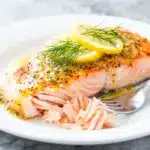
Baked Lemon Pepper Salmon: Easy 30-Minute Weeknight Dinner
- Total Time: 30 minutes
- Yield: 4 servings 1x
Description
A fast, healthy, and stress-free sheet pan dinner featuring flaky salmon coated in a zesty lemon and black pepper butter sauce. Perfect for busy weeknights with minimal cleanup.
Ingredients
- 1.5 pounds salmon fillets (wild-caught Alaskan or frozen, thawed)
- 2 large fresh lemons (juice and zest)
- 4 tablespoons unsalted butter (melted)
- 1 teaspoon garlic powder
- 1–2 teaspoons freshly cracked black pepper
- 1 teaspoon kosher salt
- Non-stick cooking spray
Instructions
- Preheat oven to 400°F (200°C). Line a large rimmed baking sheet with aluminum foil and spray with non-stick cooking spray.
- Pat salmon fillets completely dry with paper towels to ensure caramelization. Remove any pin bones if present. Place fillets on the prepared baking sheet in a single layer.
- In a small bowl, melt the butter. Whisk in the fresh lemon juice, lemon zest, garlic powder, black pepper, and kosher salt until emulsified.
- Pour the lemon pepper butter mixture evenly over the salmon fillets, ensuring every part is coated. Save any extra mixture for basting.
- Bake for 12-15 minutes, or until the salmon flakes easily with a fork and reaches an internal temperature of 145°F (63°C).
- Optional: Halfway through baking, baste the salmon with pan juices. Remove from oven and let rest for 2-3 minutes before serving.
- Serve immediately, spooning remaining pan juices over the top. Garnish with fresh parsley or lemon wedges if desired.
Notes
Patting the salmon dry is crucial for texture; wet fish steams instead of roasting. Use freshly cracked pepper for best flavor. Avoid the white pith of the lemon as it is bitter. Salmon continues to cook after removal from the oven, so pull it when just barely opaque in the center.
- Prep Time: 10 minutes
- Cook Time: 20 minutes
- Category: Main Course
- Cuisine: American
Nutrition
- Serving Size: 1 fillet per serving
- Calories: 320
- Sugar: 1
- Sodium: 380
- Fat: 19
- Saturated Fat: 8
- Carbohydrates: 2
- Protein: 34
Keywords: baked salmon, lemon pepper salmon, sheet pan dinner, weeknight dinner, healthy seafood, quick recipes, gluten-free, keto-friendly


