
Last Tuesday, I was staring at the delivery app on my phone, thumb hovering over “Place Order.” It was one of those nights where I had exactly zero energy to cook but a desperate craving for something bold, spicy, and carb-heavy. You know the type. I was about to order from my usual spot—the one that promises “authentic Szechuan flavor” but delivers lukewarm, greasy noodles that taste like they’ve been sitting under a heat lamp since noon.
Then I stopped. I looked at my pantry. I had beef. I had noodles. I had chili crisp, soy sauce, and a jar of Szechuan peppercorns I’d bought three years ago and forgotten about. I thought, how hard can it actually be to make Szechuan beef noodles better than takeout?
Turns out, it’s not just possible. It’s faster. And honestly? It tastes a million times better.
That night, I threw together what I thought would be a mediocre stir-fry. Ten minutes later, the smell of toasted chili oil and searing beef had my husband walking into the kitchen with his eyes closed, taking deep breaths like he was trying to memorize the scent. He took one bite, looked at me, and said, “Why are we ordering out anymore?”
That’s the thing about homemade Szechuan beef noodles. Takeout is convenient, sure. But it’s usually cooked in a wok that hasn’t been properly seasoned since the Reagan administration, using beef that’s been sitting in a walk-in freezer for weeks. When you make this at home, you control the heat, the freshness of the meat, and that crucial numbing spice that makes your lips tingle. It’s not just dinner. It’s an experience.
I’ve made this recipe at least a dozen times in the last six months. I’ve tweaked the sauce ratios, tested different cuts of beef, and figured out the exact timing so the noodles don’t get mushy. This isn’t just a recipe; it’s my new go-to when I want restaurant-quality food without the restaurant price tag or the three-hour wait. If you’re tired of soggy takeout noodles, stick around. I’m going to show you how to make the best spicy Szechuan beef noodles of your life.
Why You’ll Love This Recipe
Look, I get it. Cooking after work is hard. But this Szechuan beef noodles better than takeout recipe is the exception to the rule. It’s not complicated, and it doesn’t require a degree in culinary arts. Here’s why this has replaced every takeout order in our house:
- Lightning Fast — Seriously, this is a 15-minute meal. I’m not talking about prep time. I mean from the moment you turn on the stove to the moment you’re digging in. I make this on weeknights when I’m starving and impatient. If you can chop a scallion, you can make this.
- Restaurant-Quality Heat — Takeout spice is usually just generic “hot.” This sauce uses a combination of chili crisp, fresh chilies, and Szechuan peppercorns. It’s complex, aromatic, and gives you that signature “ma la” (numbing and spicy) sensation that keeps you coming back for more.
- Uses Up Leftovers — I often use leftover roast chicken or steak in this, but fresh beef works best. It’s a great way to use up any veggies hiding in your crisper drawer. I’ve thrown in bok choy, snap peas, and even leftover broccoli. It all works.
- Customizable Spice Level — Hate spice? Use less chili oil. Love it? Add extra fresh chilies and more Szechuan pepper. This recipe bends to your heat tolerance. My kids take it mild with extra beef, and I take it dangerously hot.
- Budget-Smart — Ordering two bowls of takeout noodles can run you $30-40. Making this feeds four people for under $20, and the leftovers are amazing for lunch the next day. The sauce actually tastes better on day two.
This is my answer to “what’s for dinner” when I want something exciting but don’t have hours to spend in the kitchen. It’s bold, it’s fast, and it’s genuinely delicious. Trust me, once you try homemade, you’ll never look at a takeout menu the same way again.
Ingredients You’ll Need
Here’s the best part: you probably have most of the flavor-building ingredients already. The key here is quality. Since this dish relies on a few bold flavors, using good products makes a huge difference. I’m particular about three things: the chili crisp, the beef cut, and the noodles. Let’s break it down.
For the Beef and Noodles
Beef Sirloin or Flank Steak (1 pound / 450g) — This is crucial. Do not use stew meat. You need a tender cut that cooks fast. Sirloin is my go-to because it’s lean but tender. Flank steak is also great if you slice it against the grain. Look for beef that’s bright red, not brown. Freshness matters here.
Udon Noodles or Rice Noodles (2 packages / approx. 400g) — I love thick udon noodles for their chewy texture. They hold the sauce beautifully. If you prefer lighter noodles, rice noodles work well too, but they get soft quickly, so don’t overcook them. Avoid thin spaghetti; it doesn’t have the right mouthfeel for this dish.
Vegetable Oil (2 tablespoons) — You need an oil with a high smoke point for stir-frying. Peanut oil is traditional and adds a nice nutty flavor, but canola or avocado oil works fine. Don’t use olive oil; it’ll burn and taste bitter.
For the Szechuan Sauce

Chili Crisp (Lao Gan Ma or similar) (3 tablespoons) — This is the star. It’s not just chili oil; it has crispy bits of garlic, soybeans, and chili flakes. It adds texture and deep flavor. If you can’t find it, you can mix chili oil with some finely chopped fried shallots, but chili crisp is best. I keep a jar in my pantry at all times.
Szechuan Peppercorns (1 teaspoon, toasted and ground) — This is what gives it that authentic numbing sensation. You can buy them whole and toast them in a dry pan for 30 seconds, then grind them in a spice grinder or mortar and pestle. If you absolutely can’t find them, you can skip them, but you’ll miss the authentic “ma la” kick. It’s worth the hunt.
Soy Sauce (3 tablespoons) — Use regular soy sauce, not low-sodium, because you want that salty umami punch. If you only have low-sodium, reduce the amount slightly.
Oyster Sauce (2 tablespoons) — This adds sweetness and depth. It’s a staple in Chinese cooking. If you’re vegetarian, substitute with vegetarian oyster sauce or mushroom sauce.
Rice Vinegar (1 tablespoon) — Just a splash to balance the heat and richness. Don’t skip it; it brightens the whole dish.
Sesame Oil (1 teaspoon) — Toasted sesame oil. Add this at the end, not during cooking. It’s potent and fragrant.
For the Aromatics and Veggies
Fresh Ginger (1 tablespoon, minced) — Fresh ginger is non-negotiable. Powdered ginger tastes dusty and won’t give you that fresh, spicy kick. Peel it and mince it finely.
Garlic (4 cloves, minced) — Yes, four cloves. Garlic is the backbone of this sauce. Don’t be shy. Fresh only—no jarred garlic for this one.
Fresh Chilies (2-3, sliced) — I use Thai bird’s eye chilies for serious heat, or jalapeños if you want milder spice. Slice them thinly. If you’re sensitive to heat, remove the seeds. But real talk? The seeds are where the flavor lives. Keep them if you can handle it.
Green Onions (4 stalks, chopped) — Separate the white parts (cook them early) from the green parts (use as garnish). They add a fresh, oniony bite that cuts through the rich sauce.
Optional Add-ins — I love adding crisp vegetables like bok choy, snap peas, or baby corn. They add texture and make the meal feel more substantial. Just make sure they’re cut into bite-sized pieces so they cook quickly.
Equipment Needed
You don’t need fancy equipment for this. Here’s what I actually use, and what you can swap if needed.
Large Wok or Skillet — A 12-inch wok is ideal because it allows for high-heat stir-frying and easy tossing. But a large cast-iron skillet or stainless steel skillet works perfectly fine. The key is surface area; you don’t want the beef crowded in the pan, or it’ll steam instead of sear.
Sharp Knife — For slicing the beef thinly and mincing the aromatics. A dull knife is dangerous and makes uneven slices, which cook unevenly. I use my chef’s knife for everything here.
Cutting Board — Any size works. I use a large plastic one for easy cleanup.
Wooden Spoon or Spatula — For stirring and tossing. Silicone works too. Avoid metal if you’re using a non-stick pan.
Small Bowls — For pre-measuring your sauce ingredients. This is a fast-cooking dish, so you don’t want to be measuring while the beef is burning. Have everything ready before you start.
Colander — For draining the noodles. Or just use the lid to drain if you’re being lazy, but a colander is easier.
Small Pan or Dry Skillet — For toasting the Szechuan peppercorns. This step is easy to forget, but it unlocks the flavor. Just toast them for 30-60 seconds until fragrant, then grind.
How to Make It: Step-by-Step
Alright, let’s make this! I’m walking you through exactly how I do it, including the little tricks I’ve picked up over the years. This process is straightforward, but timing is everything.
Step 1: Prep the Beef (5 minutes)
Take your beef out of the fridge and let it sit for 10 minutes while you prep the other ingredients. This brings it closer to room temperature, so it cooks more evenly. Slice the beef thinly against the grain. This is crucial for tender beef. If you slice with the grain, the meat will be chewy and tough. Look for the direction the muscle fibers run, and cut perpendicular to them. Place the sliced beef in a bowl.
Step 2: Make the Sauce (3 minutes)
In a small bowl, whisk together the soy sauce, oyster sauce, rice vinegar, sesame oil, and half of the chili crisp. Set aside. This ensures the sauce is ready to go when you need it. Stir-frying moves fast, and you don’t want to be fumbling with jars while your garlic burns.
Step 3: Cook the Noodles (8-10 minutes)
Bring a large pot of salted water to a boil. Cook the noodles according to package directions. If using udon, they usually take 3-5 minutes. If using rice noodles, they’re often just soaked in hot water, so check the package. IMPORTANT: Before draining, reserve ½ cup of the starchy noodle water. This is magic for thickening the sauce later. Drain the noodles and rinse them under cold water to stop the cooking. Toss with a teaspoon of oil to prevent sticking.
Step 4: Toast the Peppercorns (1 minute)
While the noodles cook, heat a small dry skillet over medium-low heat. Add the Szechuan peppercorns. Toast them for 30-60 seconds, shaking the pan constantly, until they’re fragrant and start to pop. Be careful not to burn them—they’ll turn bitter. Let them cool, then grind them coarsely in a spice grinder or mortar and pestle. Set aside.
Step 5: Sear the Beef (3-4 minutes)
Heat your wok or large skillet over high heat until it’s smoking hot. Add the vegetable oil. Once the oil shimmers, add the beef in a single layer. Don’t crowd the pan! Cook in batches if necessary. Let the beef sear for 1-2 minutes without moving it, then flip and cook for another minute. You want a nice brown crust, not gray meat. Remove the beef from the pan and set aside on a plate.
Step 6: Stir-Fry the Aromatics (2 minutes)
In the same wok, add a little more oil if needed. Lower the heat to medium. Add the white parts of the green onions, minced garlic, and minced ginger. Stir-fry for 30 seconds until fragrant. Add the fresh chilies and cook for another 30 seconds. Now, add the remaining chili crisp and the ground Szechuan peppercorns. Stir for 15 seconds to release the oils. This is where the house will start smelling incredible.
Step 7: Combine and Sauce (2 minutes)
Return the seared beef to the wok. Pour in the sauce mixture. Toss everything together for 1 minute until the beef is coated and heated through. Add the cooked noodles and toss vigorously. If the sauce looks too thick, add a splash of the reserved noodle water. It helps the sauce cling to the noodles. Cook for another minute until everything is hot and glossy.
Step 8: Serve
Serve immediately in shallow bowls. Top with the green parts of the green onions, extra chili crisp, and a sprinkle of toasted sesame seeds if you have them. Eat while it’s hot and steamy.
Total Time: About 20 minutes (5 minutes prep, 15 minutes cooking)
Expert Tips & Tricks
Here’s everything I’ve learned from making this dozens of times. These tips will save you from my mistakes.
Slice Against the Grain
I cannot stress this enough. If you don’t slice the beef against the grain, it will be chewy. Period. Look at the direction the fibers run, and cut perpendicular to them. Thin slices cook faster and absorb more sauce. If the beef is too hard to slice, freeze it for 20 minutes first to firm it up.
High Heat is Your Friend
Stir-frying requires high heat. If your pan isn’t hot enough, the beef will steam in its own juices and become tough. Get that pan smoking hot before adding the oil. If you’re using a home stove, it might not get as hot as a restaurant wok, so don’t overcrowd the pan. Cook in batches if you have to.
Don’t Skip the Noodle Water
That starchy water is liquid gold. It helps emulsify the sauce and makes it cling to the noodles instead of pooling at the bottom of the bowl. Add it a splash at a time until you reach the perfect consistency.
Toast Your Peppercorns
Raw Szechuan peppercorns have a mild flavor. Toasting them unlocks that citrusy, numbing aroma. It takes 30 seconds, but it makes a huge difference in the final flavor profile.
Common Mistakes (and how to avoid them)
- Mistake: Beef is tough and chewy. Fix: You sliced with the grain or overcooked it. Slice against the grain and sear quickly.
- Mistake: Sauce is too thin. Fix: You didn’t let it simmer enough or didn’t use the noodle water. Simmer the sauce for an extra minute to reduce.
- Mistake: Noodles are mushy. Fix: You overcooked them or didn’t rinse them. Cook al dente, rinse in cold water, and toss with oil.
- Mistake: Dish is too spicy. Fix: Next time, reduce the fresh chilies and use less chili crisp. You can always add more heat, but you can’t take it away.
Variations & Substitutions
Once you’ve nailed the basic version, here’s how you can mix it up. I’ve tried all of these, and they all work.
Chicken Version
Use chicken thigh instead of beef. Chicken thighs stay juicy and tender. Slice them thinly and cook them the same way. This is a great option if you’re serving picky eaters.
Vegetarian/Vegan
Skip the beef and use firm tofu or tempeh. Press the tofu first to remove moisture, then pan-fry it until crispy. Substitute oyster sauce with vegetarian oyster sauce or mushroom stir-fry sauce. Use vegetable broth if you need extra liquid.
Mushroom Lover’s
Add 8oz of sliced shiitake or cremini mushrooms when you sauté the aromatics. Cook them until they’re golden brown. They add an earthy, meaty texture that works surprisingly well.
Lighter Version
Use zucchini noodles (zoodles) instead of udon noodles. Reduce the oil by half. It’s lighter but still flavorful. I won’t lie—it’s not the same texture, but it works if you’re watching carbs.
Different Proteins
- Shrimp — Cook for 2-3 minutes only. Add them at the end so they don’t overcook.
- Pork — Use pork loin or tenderloin. Slice thinly and cook like the beef.
- Duck — If you’re feeling fancy, shredded duck breast works amazing with these flavors.
Serving & Storage
How to Serve: I usually serve this straight from the wok into shallow bowls. It looks rustic and stays warm. Add a side of steamed bok choy or a simple cucumber salad to balance the heat.
Side Dishes: I love serving this with garlic fried rice, steamed broccoli, or a simple green salad with sesame dressing. It’s a heavy dish, so light sides work best.
Storage: Store leftovers in an airtight container in the fridge for up to 3 days. The noodles will absorb the sauce, so they might look dry when you take them out. That’s normal.
Reheating: Best method: Add a splash of water or broth to a skillet, add the noodles, and heat over medium-low, stirring frequently. The liquid rehydrates the noodles and loosens the sauce. Microwave works too, but add a splash of water first and heat in 30-second intervals, stirring between. Never reheat without liquid—it’ll turn into a brick.
Freezing: I don’t recommend freezing this. The noodles get mushy when thawed, and the beef can become tough. It’s best eaten fresh or within 3 days.
Nutrition Information
I’m not a nutritionist, but here’s the breakdown if you’re tracking. This is per serving (based on 4 servings).
| Nutrient | Amount |
|---|---|
| Calories | 450 |
| Protein | 30g |
| Carbs | 55g |
| Fiber | 3g |
| Fat | 15g |
| Sodium | 900mg |
What’s Good: High protein from the beef. Decent fiber if you add veggies. You control the sodium by choosing low-sodium soy sauce.
What to Know: Higher in sodium due to soy sauce and oyster sauce. Contains gluten (noodles, soy sauce). Can be made gluten-free with tamari and rice noodles.
My Take: This is comfort food. It’s not a diet salad. But it’s way better than takeout, costs less, and you know exactly what’s in it. When I want to make it lighter, I use more veggies and less oil. But usually? I just enjoy a reasonable portion and savor every bite.
Final Thoughts
So that’s my go-to Szechuan beef noodles better than takeout! I’ve probably talked your ear off at this point, but when you make a recipe this often, you have a lot to say about it.
This has saved weeknight dinners more times than I can count. It’s my answer to “what’s for dinner” when I’m tired, don’t want takeout, and still want something that tastes really good. My kids are happy, my husband’s happy, and I’m happy because I’m not stressed about cooking.
Make it yours! Try different add-ins, swap in your favorite vegetables, adjust the garlic (though more is always better in my opinion). The best recipes are the ones you adapt to your family’s tastes.
If you make this, drop a comment and let me know what you think! I love hearing how recipes turn out in your kitchen. And if something doesn’t work, tell me that too—I’m here to help troubleshoot.
Happy cooking! And I hope your kitchen smells half as good as mine does right now.
Frequently Asked Questions
Q: Can I use beef strips from the deli counter?
A: You can, but they’re often pre-sliced thick and might be tougher. For the best texture, buy a whole piece of sirloin or flank steak and slice it yourself against the grain. It’s worth the extra two minutes.
Q: My sauce is too spicy—what can I do?
A: If it’s already cooked, add more noodles or vegetables to dilute the heat. Next time, reduce the amount of chili crisp and fresh chilies. You can also add a teaspoon of sugar to balance the heat slightly.
Q: Can I make this ahead for a dinner party?
A: Sort of. You can prep the beef and slice the vegetables ahead of time. Make the sauce in advance. But cook the noodles and stir-fry the beef right before serving. The noodles get soggy if they sit in the sauce too long. I do this all the time for parties—it saves stress.
Q: Why did my beef turn out tough?
A: Two reasons: you sliced with the grain, or you overcooked it. Slice against the grain for tenderness, and sear the beef quickly over high heat. It should only take 2-3 minutes total. If it’s gray, it’s overcooked.
Q: Can I use regular chili powder instead of chili crisp?
A: It’s not the same. Chili crisp has texture and fermented flavors. Chili powder is just dry spice. If you must, mix chili powder with some fried garlic bits and oil, but chili crisp is really the best option. I recommend Lao Gan Ma or a similar brand.
Q: How do I store leftovers without them getting dry?
A: Store the noodles and sauce together in an airtight container. When reheating, always add a splash of water or broth to rehydrate the noodles. They’ll absorb the sauce in the fridge, so they need that extra liquid to come back to life.
Q: Is Szechuan pepper the same as black pepper?
A: No, not at all. Szechuan peppercorns are citrusy and numbing (ma la). Black pepper is just spicy. You can’t substitute one for the other if you want authentic flavor. But if you can’t find Szechuan peppercorns, you can skip them—the dish will still be delicious, just less authentic.
Pin This Recipe!

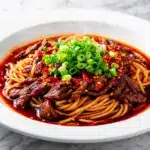
Szechuan Beef Noodles: 15-Min Easy Takeout
- Total Time: 20 minutes
- Yield: 4 servings 1x
Description
A lightning-fast, restaurant-quality Szechuan beef noodle stir-fry that delivers bold, numbing spice and tender beef in under 20 minutes, beating takeout in both flavor and cost.
Ingredients
- 1 pound (450g) Beef Sirloin or Flank Steak, sliced thinly against the grain
- 2 packages (approx. 400g) Udon Noodles or Rice Noodles
- 2 tablespoons Vegetable Oil (divided)
- 3 tablespoons Chili Crisp (Lao Gan Ma or similar)
- 1 teaspoon Szechuan Peppercorns, toasted and ground
- 3 tablespoons Soy Sauce
- 2 tablespoons Oyster Sauce
- 1 tablespoon Rice Vinegar
- 1 teaspoon Toasted Sesame Oil
- 1 tablespoon Fresh Ginger, minced
- 4 cloves Garlic, minced
- 2–3 Fresh Chilies (Thai bird’s eye or jalapeño), sliced
- 4 stalks Green Onions, chopped (white and green parts separated)
Instructions
- Prep the beef: Let beef sit for 10 minutes to reach room temperature. Slice thinly against the grain and place in a bowl.
- Make the sauce: In a small bowl, whisk together soy sauce, oyster sauce, rice vinegar, sesame oil, and half of the chili crisp. Set aside.
- Cook the noodles: Boil noodles in salted water according to package directions. Reserve ½ cup of starchy noodle water before draining. Rinse noodles under cold water and toss with a teaspoon of oil to prevent sticking.
- Toast the peppercorns: While noodles cook, toast Szechuan peppercorns in a dry skillet over medium-low heat for 30-60 seconds until fragrant. Let cool and grind coarsely.
- Sear the beef: Heat a wok or large skillet over high heat until smoking. Add oil and sear beef in a single layer (cook in batches if necessary) for 1-2 minutes per side until browned. Remove beef and set aside.
- Stir-fry aromatics: In the same wok, add a little more oil if needed. Lower heat to medium. Add white parts of green onions, garlic, and ginger. Stir-fry for 30 seconds. Add fresh chilies and cook for another 30 seconds. Add remaining chili crisp and ground Szechuan peppercorns, stirring for 15 seconds.
- Combine and sauce: Return beef to the wok. Pour in sauce mixture and toss for 1 minute. Add cooked noodles and toss vigorously. Add reserved noodle water if sauce is too thick. Cook for another minute until hot and glossy.
- Serve: Serve immediately in shallow bowls, topped with green parts of green onions, extra chili crisp, and toasted sesame seeds.
Notes
[‘Slice beef against the grain to ensure tenderness.’, ‘Toast Szechuan peppercorns to unlock their numbing aroma.’, ‘Reserve starchy noodle water to help emulsify and thicken the sauce.’, ‘Do not overcrowd the pan when searing beef to ensure a good crust.’, ‘Sauce tastes better on day two; leftovers keep well in the fridge for up to 3 days.’, ‘Reheat with a splash of water or broth to prevent noodles from becoming dry or mushy.’]
- Prep Time: 5 minutes
- Cook Time: 15 minutes
- Category: Main Course
- Cuisine: Chinese
Nutrition
- Serving Size: 1 bowl
- Calories: 450
- Sodium: 900
- Fat: 15
- Carbohydrates: 55
- Fiber: 3
- Protein: 30
Keywords: Szechuan beef noodles, spicy noodles, quick dinner, takeout alternative, stir fry, beef noodles, ma la, chili crisp, weeknight dinner


