
I still remember the exact moment I realized I was done ordering delivery. It was a Tuesday, around 8:30 PM, and I was staring at my phone, thumb hovering over the “Place Order” button for the third time that week. I was tired. My brain was mush. I wanted that specific, addictive combination of chewy rice noodles, charred vegetables, and a sauce so spicy and savory it made my nose run. But then I looked at the total—$28.50 for food that would arrive lukewarm in a greasy plastic container. I closed the app.
Instead, I went to my pantry. I had chicken breasts, some sad-looking basil, and a bottle of oyster sauce that had been sitting there since 2022. I figured, “How hard can it be?”
Turns out, it’s harder than you think if you don’t know the secrets. My first attempt was a disaster. The noodles were gummy. The sauce was watery. And the “spicy” part? Non-existent. I ate it anyway because hunger is a powerful motivator, but I vowed never to make it again.
Fast forward to last month. I was craving that same Thai street food vibe, but I wanted to do it right. I spent three weekends testing different brands of rice noodles, adjusting the chili levels, and figuring out the perfect balance of fish sauce, soy sauce, and oyster sauce. The result? These spicy drunken noodles with chicken are genuinely better than takeout. They’re faster, cheaper, and they actually taste like something made with love (and a serious amount of garlic).
Here’s the thing about drunken noodles—known in Thailand as Pad Kee Mao—they aren’t actually about getting drunk. The name comes from the idea that you eat them so fast, in such large quantities, while drinking beer after a night out, that you’re “drunk” on the food. But honestly? You can make them any night of the week. They’re my new go-to when I need dinner to be ready in 20 minutes but taste like I spent hours in the kitchen.
Why You’ll Love This Spicy Drunken Noodles with Chicken Recipe
There are about a dozen reasons I keep coming back to this recipe, but let’s be real—you’re here because you want flavor without the hassle. Here’s why this spicy drunken noodles with chicken has completely taken over my weeknight rotation:
- Stupid Simple Technique — Seriously, if you can stir-fry, you can make this. The sauce comes together in one bowl in 30 seconds. The chicken cooks in minutes. There’s no complex knife work or fancy techniques required.
- Lightning Fast — From chopping to cleaning up, this is a 20-minute meal. I make this on nights when I get home from work exhausted and don’t want to think about cooking. It’s faster than waiting for a delivery driver.
- Customizable Heat — This is the best part. You control the spice. Want mild? Skip the chilies. Want to cry? Add extra bird’s eye chilies. I keep a jar of dried red chilies in my pantry specifically for this dish so I can dial it up or down.
- Pantry-Friendly Sauces — You probably already have 80% of the sauce ingredients. Oyster sauce, soy sauce, fish sauce, sugar, and garlic. If you have these, you’re halfway there. I don’t buy takeout anymore because I realize I have all the tools right here.
- Texture Perfection — Getting chewy, tender rice noodles right is tricky, but I’ve cracked the code. No more mushy, clumpy noodles. Just silky, separate strands that soak up the sauce perfectly.
- Better Than Delivery — It costs about $4 to make this for two people. That’s less than the tip on a $30 delivery order. And the food is hot, fresh, and loaded with real vegetables.
This is my answer to “what’s for dinner” when I’m too tired to cook but refuse to eat cereal. It’s reliable, delicious, and makes your kitchen smell like a Thai restaurant.
Ingredients You’ll Need
Here’s the best part: you probably have most of this already. The beauty of this spicy drunken noodles with chicken is that it relies on bold, simple flavors rather than a long list of exotic spices. However, a few specific ingredients make or break this dish.
For the Protein and Veggies
Boneless, skinless chicken breasts (1.5 lbs / 680g) — I slice these thinly against the grain. This ensures tender bites that cook quickly. Thighs work too if you prefer juicier meat, but breast is what I usually have on hand.
Rice noodles (8 oz / 225g) — Look for wide, flat rice noodles, often labeled as “Pad Thai” noodles or “wide rice sticks.” Do not use vermicelli (thin noodles) or spaghetti. The width is crucial for holding the heavy sauce. I buy the ones in the vacuum-sealed packages in the Asian aisle.
Garlic (6-8 cloves, minced) — Yes, that many. Don’t skimp. Garlic is the backbone of this dish. Fresh only. If you use jarred garlic, the flavor is just not there. I mince it fine so it distributes evenly.
Fresh bird’s eye chilies (2-4, sliced) — Or substitute with red jalapeños if you can’t find bird’s eye. These are tiny and incredibly hot. Slice them thinly. Remove the seeds if you want less heat, but keep them in if you want that authentic kick. This is where you customize the spice level.
Green onions (4 stalks, chopped) — I use both the white and green parts. The whites go in early for flavor, the greens go in at the end for color. They add a nice fresh bite.
Broccoli florets (1 cup) — Or snap peas, bell peppers, or carrots. I like broccoli because it holds up well to high heat and adds a nice crunch. Chop them small so they cook fast.
For the Sauce

Oyster sauce (3 tablespoons) — This is non-negotiable. It adds that deep, savory umami flavor. I use the standard Lee Kum Kee brand. If you’re vegetarian, use mushroom stir-fry sauce.
Soy sauce (2 tablespoons) — Regular soy sauce works fine. I use low-sodium so I can control the saltiness, especially since oyster sauce is already salty.
Fish sauce (1 tablespoon) — This adds depth and saltiness. It smells strong raw, but it cooks out. If you hate fish sauce, you can skip it, but I highly recommend trying it. It’s the secret ingredient that makes it taste like restaurant food.
Sugar (1 tablespoon) — Brown sugar or white sugar both work. Sugar balances the heat and salt. It’s essential for that sweet-savory-spicy profile.
Water (2 tablespoons) — Helps thin the sauce slightly so it coats the noodles evenly without being too thick.
For the Finish
Fresh Thai basil (1 cup, loosely packed) — This is the other non-negotiable. Regular sweet basil is okay in a pinch, but Thai basil has a licorice-like anise flavor that is authentic to the dish. If you can’t find it, I’ve also made this with fall maple pecan cold brew as a pairing, but you’ll miss out on the true flavor profile. Look for it in the produce section; it usually comes in plastic punnets.
Vegetable oil (2 tablespoons) — For stir-frying. I use canola or avocado oil because they have high smoke points.
White pepper (½ teaspoon) — Optional, but adds a different kind of heat than the chilies. It’s earthy and warm. I keep a jar in my spice rack specifically for Asian cooking.
Equipment Needed
You don’t need fancy equipment for this. Here’s what I actually use. The most important tool is heat retention.
Wok or Large Skillet — I use a carbon steel wok because it heats up fast and has high sides to prevent splatter. If you don’t have a wok, a large 12-inch cast iron skillet or stainless steel pan works perfectly. You need surface area so the noodles don’t steam.
Heavy-bottomed pan — If using a skillet, make sure the bottom is thick. Thin pans get hot spots and burn the garlic instantly.
Tongs or Spatula — I prefer tongs for tossing noodles. It’s easier to lift and turn them without breaking them. A wide spatula works too.
Small bowl — For mixing the sauce ahead of time. You don’t want to be measuring sauces while the chicken is burning.
Strainer — For draining the noodles after soaking.
Cutting board and sharp knife — For slicing chicken and chopping veggies. Sharp knife is key for clean cuts.
Measuring spoons — For the sauce. Precision helps, especially with the fish sauce.
How to Make It: Step-by-Step
Alright, let’s make this! I’m walking you through exactly how I do it, including the little tricks I’ve picked up to avoid the mushy noodle disaster I mentioned earlier.
Step 1: Prep the Noodles (5 minutes)
This is the most critical step. Do not boil your rice noodles like pasta. Boiling makes them gummy and sticky. Instead, bring a large pot of water to a boil, turn off the heat, and add the noodles. Let them soak in the hot water for 5-7 minutes. They should be soft and pliable but still have a little bite (al dente). Drain them and rinse briefly with cool water to stop the cooking. Toss them with a tiny bit of oil to prevent sticking. Set aside. Trust me on this method—it’s the secret to perfect texture.
Step 2: Mix the Sauce (2 minutes)
In a small bowl, whisk together the oyster sauce, soy sauce, fish sauce, sugar, water, and white pepper. Stir until the sugar is dissolved. Taste it—it should be salty, slightly sweet, and savory. If it tastes bland, add a bit more soy sauce. Set this aside. You’ll be adding it all at once later.
Step 3: Slice and Season the Chicken (3 minutes)
Slice the chicken breasts thinly against the grain. This makes them tender. If you like, you can marinate them for 10 minutes in 1 teaspoon of soy sauce and 1 teaspoon of cornstarch, but it’s not strictly necessary if you cook them fast. I usually skip the cornstarch for a cleaner flavor, but it does help keep the chicken juicy.
Step 4: Stir-Fry the Chicken (3-4 minutes)
Heat your wok or skillet over high heat until it’s smoking hot. Add the vegetable oil. Once the oil shimmers, add the chicken in a single layer. Don’t crowd the pan! If you have a small pan, cook the chicken in batches. Let it sear for 1-2 minutes without moving it to get some char. Then flip and cook until just done. Remove the chicken from the pan and set aside on a plate. Do not clean the pan—leave those flavorful bits in there.
Step 5: Aromatics and Veggies (2 minutes)
Reduce the heat to medium-high. Add a splash more oil if needed. Add the garlic and sliced chilies. Stir-fry for 30 seconds until fragrant. Be careful not to burn the garlic—it turns bitter instantly. Add the broccoli (or other hard veggies) and stir-fry for 1-2 minutes until they start to soften but still have crunch. Add the green onion whites here.
Step 6: Combine and Sauce (3 minutes)
Return the cooked chicken to the pan. Add the drained noodles. Pour the sauce mixture over everything. Using tongs, toss everything together vigorously. You want the noodles to soak up the sauce and the chicken to distribute evenly. The noodles will look dry at first, but keep tossing. Add a splash of water if the sauce is too thick. Cook for another 1-2 minutes until the noodles are hot and coated.
Step 7: Finish with Basil (1 minute)
Turn off the heat. Toss in the fresh Thai basil leaves. The residual heat will wilt them perfectly, releasing their aroma. Give it one final toss. Taste and adjust salt or sugar if needed. Serve immediately while it’s hot and steaming.
Expert Tips & Tricks
Here’s everything I’ve learned from making this dozens of times. These tips will save you from my mistakes.
Soak, Don’t Boil
I cannot stress this enough. Boiling rice noodles is the #1 mistake people make. They turn into mush. Soaking in hot water gives you that perfect chewy texture. If your noodles are still too hard after soaking, soak for another 2 minutes. They should be flexible, not brittle.
High Heat is Your Friend
Stir-frying requires high heat. If your pan isn’t hot enough, the food will steam in its own juices. You want that “wok hei” (breath of the wok) flavor, which comes from quick cooking at high temps. If you’re using a glass top stove, be careful, but don’t lower the heat too much.
Prep Everything First
Once you start cooking, things move fast. You have maybe 10 minutes of active cooking. Have your sauce mixed, veggies chopped, and chicken sliced before you turn on the burner. I call this “mise en place,” but really it’s just “don’t panic.” I keep my spiced brown sugar chai latte ready to go in the background while I prep, so I’m not stressed.
Fresh Basil at the End
Don’t cook the basil with the noodles. Add it off the heat. If you cook it, it turns black and loses its fresh flavor. It should be vibrant green and aromatic.
Don’t Overcrowd the Pan
If you put too much chicken in at once, it steams instead of sears. You want browned, flavorful chicken. Cook in batches if necessary. It takes an extra minute but makes a huge difference in taste.
Variations & Substitutions
Once you’ve nailed the basic version, here’s how you can mix it up. I’ve tried all of these.
Shrimp Drunken Noodles
Swap the chicken for large shrimp. Shrimp cooks even faster—just 2-3 minutes. Add them in step 4 with the veggies. They pair beautifully with the spicy sauce.
Vegetarian Version
Skip the chicken and fish sauce. Use mushroom stir-fry sauce instead of oyster sauce, and skip the fish sauce or use a vegan fish sauce alternative. Add extra tofu or mushrooms for protein. It’s just as satisfying.
Extra Veggie Loaded
Add snap peas, bell peppers, carrots, or bok choy. I love adding snap peas for crunch. Just make sure to add hard veggies before soft ones. This is a great way to use up leftover veggies from your fridge.
Milder Version
Skip the bird’s eye chilies and use mild red pepper flakes instead. Or just use one jalapeño without seeds. The flavor is still amazing, just less spicy. Good for kids or heat-sensitive palates.
Gluten-Free
Rice noodles are naturally gluten-free. Just make sure your oyster sauce and soy sauce are GF (or use tamari). Many oyster sauces contain wheat, so check the label. I use Kikkoman tamari for a GF soy sauce substitute.
Serving & Storage
How to Serve
I usually serve this straight from the wok on large plates. It looks rustic and inviting. I like to add a fried egg on top for extra richness and protein. The runny yolk mixes with the spicy sauce—it’s heaven. I also serve it with a side of cucumber salad or simple greens to balance the heaviness.
Side Dishes
– Cucumber salad with rice vinegar and sesame oil
– Steamed jasmine rice (if you want extra carbs)
– A light soup like egg drop soup
Storage
Refrigerator: Store leftovers in an airtight container for up to 3 days. The noodles will absorb more sauce and get softer, which some people actually prefer the next day.
Reheating: Reheat in a skillet over medium heat with a splash of water. This helps rehydrate the noodles and loosens the sauce. Microwave works too, but add a splash of water and cover it to steam them. They won’t be as good as fresh, but they’re still tasty.
Freezing: I don’t recommend freezing this dish. The noodles tend to get mushy and separate when thawed. It’s best eaten fresh.
Nutrition Information
I’m not a nutritionist, but here’s the breakdown if you’re tracking. This is a calorie-dense dish due to the noodles and oil, but it’s balanced with protein and veggies.
Per Serving (based on 4 servings):
| Nutrient | Amount |
|---|---|
| Calories | 450 |
| Protein | 25g |
| Carbs | 55g |
| Fiber | 3g |
| Fat | 12g |
| Sodium | 800mg |
What’s Good:
– High protein from chicken
– Contains vegetables
– No refined flour (rice noodles are GF and lighter than wheat)
What to Know:
– Higher sodium from sauces
– Moderate carbs from noodles
– Can reduce oil and sauce to lower calories
My Take:
“Look, this is comfort food. It’s spicy, savory, and filling. It’s not a diet recipe. But it’s way better than takeout, and you control the ingredients. When I want to make it lighter, I use less oil and add more veggies. But usually? I just enjoy a reasonable portion and don’t overthink it.”
Final Thoughts
So that’s my spicy drunken noodles with chicken! I’ve probably talked your ear off at this point, but when you make a recipe this often, you have a lot to say about it.
This has saved weeknight dinners more times than I can count. It’s my answer to “what’s for dinner” when I’m tired, don’t want takeout, and still want something that tastes really good. My family is happy, my neighbors smell it through the walls, and I’m happy because I’m not stressed about cooking.
Make it yours! Try different add-ins, swap in your favorite vegetables, adjust the garlic (though more is always better in my opinion). The best recipes are the ones you adapt to your family’s tastes. If you’re looking for a sweet treat to go with your spicy dinner, maybe try some no-bake chocolate peanut butter energy balls for dessert. They’re easy and don’t require baking.
If you make this, drop a comment and let me know what you think! I love hearing how recipes turn out in your kitchen. And if something doesn’t work, tell me that too—I’m here to help troubleshoot.
Happy cooking! And I hope your kitchen smells half as good as mine does right now.
Frequently Asked Questions
Q: Can I use regular spaghetti instead of rice noodles?
A: You can, but it won’t be authentic. Spaghetti has a different texture and flavor. Rice noodles are chewy and neutral, which absorbs the sauce better. If you must use spaghetti, cook it al dente and rinse with cold water. It’ll still be tasty, just not “drunken noodles.”
Q: Why did my noodles turn out gummy?
A: You probably boiled them. Rice noodles turn to mush when boiled. Soak them in hot water instead. Also, make sure you rinse them with cool water after soaking to stop the cooking process.
Q: Can I make this ahead for a dinner party?
A: Sort of. Prep all the ingredients (chicken, veggies, sauce) ahead of time. Store them in separate containers. When guests arrive, just stir-fry everything. It only takes 15 minutes. Don’t cook the noodles ahead—they’ll stick together.
Q: How spicy are these noodles?
A: It depends on the chilies. Bird’s eye chilies are very hot. If you’re sensitive to spice, use mild red pepper flakes or one jalapeño without seeds. You can always add more heat at the table with chili oil or sriracha.
Q: Can I use tofu instead of chicken?
A: Absolutely. Press the tofu first to remove moisture, then cube it. Fry it until crispy before adding the veggies. It absorbs the sauce nicely and adds great texture.
Q: What kind of fish sauce should I use?
A: I use Red Boat or Squid Brand. They’re clean-tasting and not overly fishy. Avoid the cheapest brands if you can—they often have a strong, unpleasant odor. A little goes a long way.
Q: Can I freeze this dish?
A: I don’t recommend it. The rice noodles don’t freeze well. They become soft and mushy when thawed. It’s best eaten fresh or stored in the fridge for up to 3 days.
Pin This Recipe!

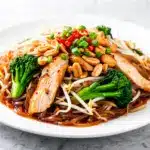
Spicy Drunken Noodles: Best Takeout Alternative
- Total Time: 20 minutes
- Yield: 4 servings 1x
Description
A faster, cheaper, and tastier homemade version of Thai street food Pad Kee Mao. These spicy drunken noodles with chicken are ready in 20 minutes, customizable in heat, and use simple pantry ingredients for an authentic flavor profile.
Ingredients
- 1.5 lbs boneless, skinless chicken breasts, sliced thinly against the grain
- 8 oz wide flat rice noodles (Pad Thai noodles or wide rice sticks)
- 6–8 cloves garlic, minced
- 2–4 fresh bird’s eye chilies, sliced (or red jalapeños)
- 4 stalks green onions, chopped
- 1 cup broccoli florets (or snap peas, bell peppers, carrots)
- 3 tablespoons oyster sauce
- 2 tablespoons soy sauce (low-sodium recommended)
- 1 tablespoon fish sauce
- 1 tablespoon sugar (brown or white)
- 2 tablespoons water
- 1 cup fresh Thai basil leaves, loosely packed
- 2 tablespoons vegetable oil (canola or avocado)
- ½ teaspoon white pepper (optional)
Instructions
- Soak rice noodles in a pot of boiling water (heat turned off) for 5-7 minutes until soft and pliable but still al dente. Drain, rinse with cool water, toss with a tiny bit of oil, and set aside.
- In a small bowl, whisk together oyster sauce, soy sauce, fish sauce, sugar, water, and white pepper until sugar is dissolved. Set aside.
- Slice chicken breasts thinly against the grain. Optionally marinate in 1 tsp soy sauce and 1 tsp cornstarch for 10 minutes, though this is optional.
- Heat a wok or large skillet over high heat until smoking hot. Add vegetable oil. Once shimmering, add chicken in a single layer (cook in batches if necessary). Sear for 1-2 minutes without moving, then flip and cook until just done. Remove chicken and set aside.
- Reduce heat to medium-high. Add a splash of oil if needed. Add garlic and sliced chilies; stir-fry for 30 seconds until fragrant. Add broccoli and green onion whites; stir-fry for 1-2 minutes until softened but still crunchy.
- Return chicken to the pan. Add drained noodles and pour the sauce mixture over everything. Toss vigorously with tongs until noodles are coated and hot, about 1-2 minutes. Add a splash of water if sauce is too thick.
- Turn off heat. Toss in fresh Thai basil leaves. The residual heat will wilt them. Give one final toss, taste for adjustments, and serve immediately.
Notes
Do not boil rice noodles; soak them in hot water to prevent mushiness. Ensure high heat for proper stir-frying to achieve ‘wok hei’. Add basil off the heat to preserve flavor and color. For a vegetarian version, swap chicken for tofu and use mushroom stir-fry sauce instead of oyster sauce, and omit fish sauce.
- Prep Time: 10 minutes
- Cook Time: 10 minutes
- Category: Main Course
- Cuisine: Thai
Nutrition
- Serving Size: 1 plate per serving
- Calories: 450
- Sugar: 8
- Sodium: 800
- Fat: 12
- Saturated Fat: 3
- Carbohydrates: 55
- Fiber: 3
- Protein: 25
Keywords: drunken noodles, pad kee mao, spicy noodles, thai food, chicken noodles, quick dinner, weeknight meals, homemade takeout, stir fry, rice noodles


