Last October, I hosted what I thought would be a casual weekend brunch. You know the type: mimosas, a spread of pastries, and zero stress. I had bought three different types of gluten-free bread from the grocery store, confident that my guests wouldn’t mind the slightly crumbly texture. Big mistake.
Halfway through the morning, my friend Sarah (who is gluten intolerant) looked at the store-bought loaf, sighed, and said, “I love you, but this tastes like cardboard.” It wasn’t mean-spirited. It was just the sad truth about most gluten-free baking. It’s dry. It’s dense. It lacks that satisfying, moist pull of real bread.
I felt terrible. I wanted everyone to feel included, not like they were getting the “special” version. So, I ran to the kitchen and whipped up what I now call my miracle loaf: Gluten-Free Blueberry Banana Bread with Almond Flour. It wasn’t in my recipe box yet. I just threw together what I had—ripe bananas, a bag of frozen blueberries, and almond flour because I’d been trying to eat lower-carb.
When I pulled it out of the oven, the smell alone changed the mood in the room. It smelled like a bakery, not a health food store. I cut a slice for Sarah. She took one bite, stopped chewing, and looked at me with wide eyes. “Is this… gluten-free?”
When I nodded, she ate the whole slice in silence. Then my husband took a piece. Then my sister. Within twenty minutes, the store-bought loaves were forgotten. Everyone was fighting over the almond flour loaf. That was the moment I knew I had to perfect this recipe. I’ve tested it dozens of times since then, tweaking the ratio of bananas to flour and figuring out how to keep those blueberries from sinking to the bottom. Now, this gluten-free blueberry banana bread is the reason people ask me for my secrets. It’s moist, it’s rich, and it genuinely tastes like indulgence, not compromise.
Why This Almond Flour Loaf Is a Game-Changer
There is something deeply satisfying about making something that people think is impossible. This loaf isn’t just “good for gluten-free.” It’s just good. Period. Here’s why I keep coming back to it, and why your guests won’t be able to resist it.
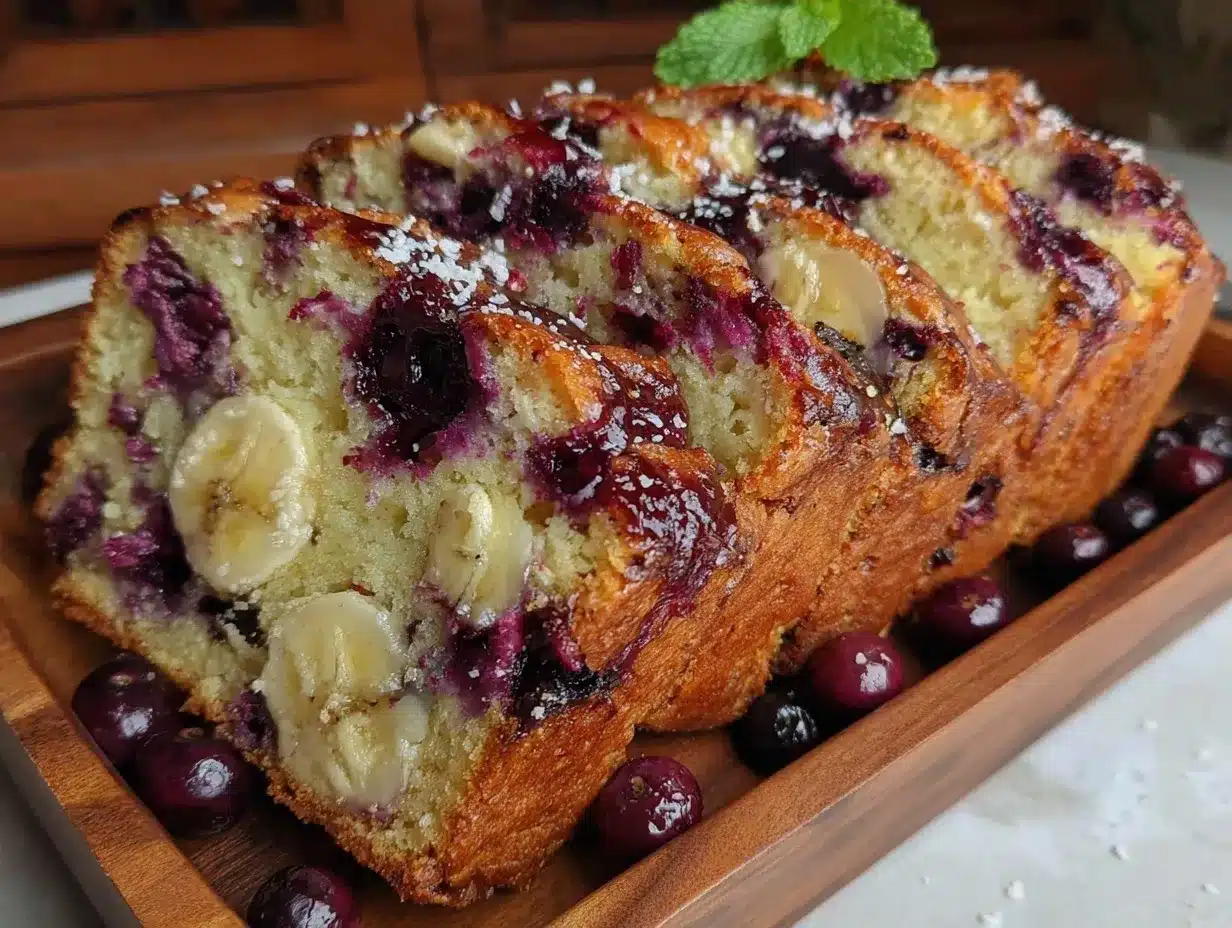
It’s Actually Moist — Most gluten-free breads dry out by noon. Not this one. The natural oils in the almond flour keep the crumb tender for days. I’ve had leftovers on my counter for three days, and they’re still soft enough to squish. The bananas add natural moisture that keeps it from ever feeling dry or chalky.
Rich, Nutty Flavor — Almond flour brings a subtle, buttery nuttiness that wheat flour just doesn’t have. It makes the bread taste expensive. When you add the sweetness of ripe bananas and the tart pop of blueberries, it creates a flavor profile that feels like a dessert but works as breakfast. It’s the perfect balance of sweet and savory.
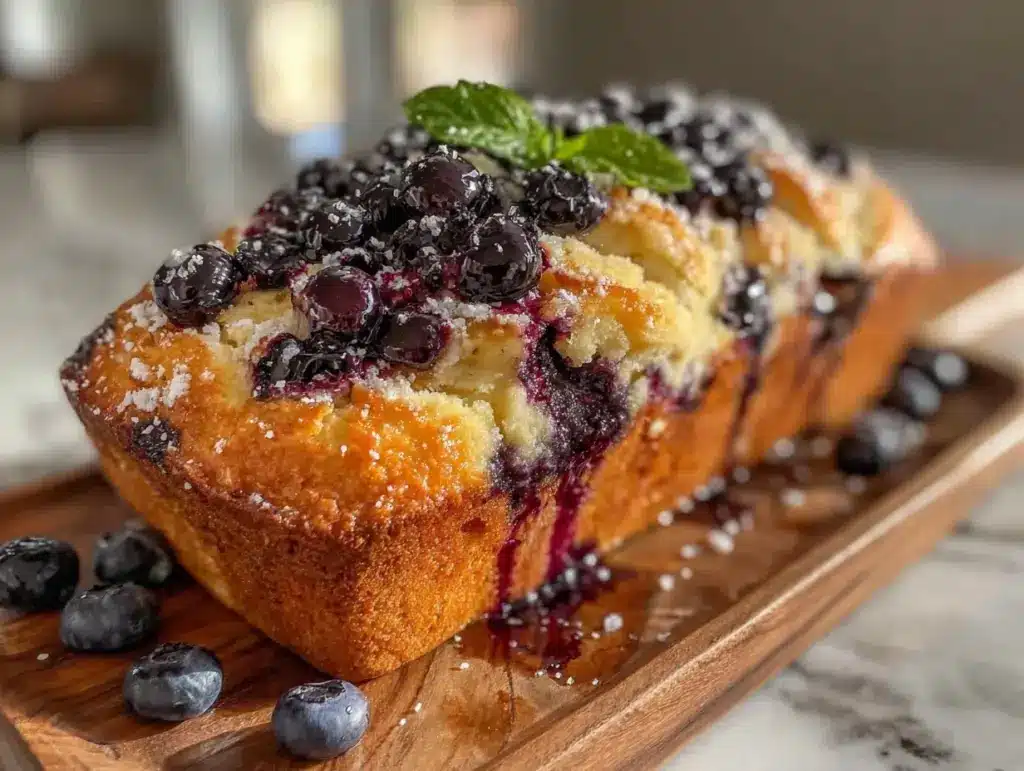
Beautifully Golden — Let’s be honest, we eat with our eyes first. This loaf bakes up with a gorgeous, deep golden crust. The almond flour browns beautifully, giving it that professional bakery look. It’s photogenic enough for Pinterest (which I know many of you are pinning this for right now) and elegant enough to serve at a holiday brunch.
Grain-Free & Gluten-Free — By using almond flour instead of a heavy blend of rice and tapioca starches, you avoid that gritty aftertaste that plagues so many gluten-free products. The texture is fine and tender, almost like a dense cake. It’s naturally gluten-free, grain-free, and dairy-free (if you skip the butter topping), making it safe for a wider range of dietary needs.
Simple Ingredients — You don’t need fancy xanthan gum or obscure flours. You need bananas, eggs, almond flour, honey or maple syrup, and blueberries. If you can peel a banana and whisk an egg, you can make this. It’s foolproof comfort food that happens to be incredibly healthy.
Ingredients You’ll Need
I’m particular about three things in this recipe: the ripeness of the bananas, the quality of the almond flour, and the temperature of your eggs. Get these right, and you’ll get a loaf that rivals any bakery version. Here’s exactly what I use.
Very Ripe Bananas (3 large / about 1 ½ cups mashed) — The riper, the better. I’m talking brown-spotted, almost black peels. These bananas are sweeter and mash easier, which helps with the texture. If they’re yellow, your bread will be bland and dense. Don’t skimp on ripeness.
Blanched Almond Flour (2 cups / 200g) — Use blanched, fine-ground almond flour. I buy mine from a reputable brand like Bob’s Red Mill or Honeyville. Do not use almond meal (which has skins in it) unless you want a gritty, speckled texture. The fine grind is what gives this bread its smooth, cake-like crumb.
Large Eggs (3 large / room temperature) — Eggs are the binder here since there’s no gluten. Room temperature eggs mix more evenly into the batter, creating a uniform rise. If you forget to take them out, just crack them into a bowl of warm water for five minutes.
Honey or Maple Syrup (½ cup / 170g) — I prefer honey for its floral notes, but pure maple syrup works beautifully too. Both add moisture and natural sweetness. Avoid artificial sweeteners here; they don’t provide the same texture or moisture retention.
Melted Coconut Oil or Butter (¼ cup / 60g) — Coconut oil adds a subtle sweetness, while butter adds richness. I use coconut oil to keep it dairy-free, but if you’re not concerned about that, butter makes it taste more like traditional banana bread. Melt it first—don’t add it solid.
Vanilla Extract (1 teaspoon) — Pure vanilla is non-negotiable. It ties the banana and almond flavors together. I use McCormick or Nielsen-Massey. Skip the imitation stuff.
Baking Soda (1 teaspoon) — This helps the bread rise. Make sure it’s fresh! If your baking soda is more than six months old, it might not work, and you’ll end up with a flat brick.
Salt (½ teaspoon) — Just a pinch to balance the sweetness. It’s easy to forget, but it makes the banana flavor pop.
Fresh or Frozen Blueberries (1 ½ cups) — Fresh is nice, but frozen works perfectly and is often cheaper. If using frozen, do not thaw them first. Toss them in a little almond flour (from the 2 cups) before adding to the batter. This prevents them from sinking to the bottom while baking.
Equipment Needed
You don’t need a fancy stand mixer or a dozen gadgets. Here’s what I actually use in my kitchen.
9×5 Loaf Pan — Standard size. I use a metal pan, which conducts heat evenly. Dark non-stick pans might brown the crust too quickly, so keep an eye on it. If you use glass, lower the oven temperature by 25°F.
Mixing Bowls — One large bowl for wet ingredients, one smaller one for dry. I like stainless steel because they’re durable and easy to clean.
Fork or Potato Masher — For mashing the bananas. I use a fork because it gives me more control over the texture. I like a few small lumps, not a completely smooth puree.
Whisk — For beating the eggs and mixing the dry ingredients. A balloon whisk works best to incorporate air.
Parchment Paper — This is your best friend. Line the loaf pan with parchment paper, leaving an overhang on the long sides. This makes it incredibly easy to lift the loaf out once it’s cooled. No stuck sides, no broken tops.
Cooling Rack — Let the bread cool completely on a rack. This prevents the bottom from getting soggy from trapped steam. I know it’s tempting to slice it hot, but patience pays off.
How to Make It: Step-by-Step
Alright, let’s bake this beauty. It’s straightforward, but there are a few tricks to ensure that perfect texture. I’m walking you through exactly how I do it.
Step 1: Prep Your Oven and Pan (5 minutes)
Preheat your oven to 350°F (175°C). This is a moderate temperature that allows the bread to bake through without burning the outside. Line your 9×5 loaf pan with parchment paper. Lightly grease the parchment with a little coconut oil or butter spray. This ensures nothing sticks.
Step 2: Mash the Bananas (2 minutes)
Peel your very ripe bananas and place them in a large mixing bowl. Mash them with a fork until they’re mostly smooth, with a few small chunks remaining. You should have about 1 ½ cups of mashed banana. If you’re short, add a slightly less ripe banana. If you have too much, save the extra for smoothies.
Step 3: Mix the Wet Ingredients (3 minutes)
To the mashed bananas, add the melted coconut oil (or butter), honey (or maple syrup), beaten eggs, and vanilla extract. Whisk everything together vigorously until it’s well combined and looks glossy. The mixture should be smooth and uniform. This step is crucial for distributing the sweetness and fat evenly.
Step 4: Combine the Dry Ingredients (2 minutes)
In a separate bowl, whisk together the almond flour, baking soda, and salt. Make sure there are no lumps in the almond flour. If your almond flour is clumpy, sift it. This ensures a fine, even crumb in your final bread.
Step 5: Fold It Together (2 minutes)
Pour the dry ingredients into the wet ingredients. Use a spatula to gently fold them together. Do not overmix! Stop as soon as you no longer see streaks of almond flour. Overmixing can make the bread dense. The batter will be thick and sticky. That’s exactly what we want.
Step 6: Add the Blueberries
If you’re using frozen blueberries, toss them in 1 tablespoon of almond flour (taken from your measured amount) in a small bowl. This coating helps them suspend in the batter. Gently fold the blueberries into the batter. Be gentle so you don’t crush them. You want beautiful bursts of berry in every slice.
Step 7: Bake to Golden Perfection (50-60 minutes)
Pour the batter into your prepared loaf pan. Smooth the top with a spatula. Bake for 50-60 minutes. Start checking at 50 minutes. The top should be deeply golden brown, and a toothpick inserted into the center should come out clean or with just a few moist crumbs (not wet batter). If the top is browning too quickly, tent it loosely with aluminum foil for the last 10 minutes.
Step 8: Cool Completely (1 hour)
Remove the loaf from the oven and let it cool in the pan for 10 minutes. Then, use the parchment paper overhang to lift the loaf out onto a cooling rack. Let it cool completely before slicing. This is the hardest part, I know. But slicing it hot will make it gummy and fall apart. Wait for that satisfying slice.
Expert Tips for the Perfect Loaf
Here’s everything I’ve learned from baking this loaf until my neighbors started bringing me empty containers. These tips will save you from my mistakes.
The Banana Rule
I cannot stress this enough: use overripe bananas. Green bananas have no sweetness and a starchy texture. Yellow bananas are okay, but brown-spotted bananas are sweet, aromatic, and mash easily. If you’re in a pinch, you can bake yellow bananas on a sheet pan at 300°F for 15 minutes to speed up the ripening process. They’ll turn black and sweet.
Don’t Skip the Parchment
Almond flour loaves can be delicate. Without parchment paper, you risk breaking the bottom or sides when trying to remove it. The overhang acts as handles. It’s a game-changer for presentation.
Watch Your Oven Temperature
Every oven is different. If your bread is browning on top but the center is still wet, cover it with foil. Conversely, if the top is pale after 50 minutes, it might need a few more minutes. The toothpick test is your best friend.
Freezing Tips
This bread freezes beautifully. Wrap the cooled loaf tightly in plastic wrap, then in foil. It will keep for up to 3 months. Thaw it overnight in the fridge or at room temperature. It tastes almost as good fresh. I often bake two loaves at once and freeze one for later.
Storage
Store leftovers in an airtight container at room temperature for up to 3 days. In the summer, or if your kitchen is humid, store it in the fridge to prevent mold. It will keep for up to a week in the fridge. Bring it to room temperature before serving for the best texture.
Variations & Substitutions
Once you’ve mastered the basic version, here’s how you can mix it up. I’ve tried all of these, and they all work.
Chocolate Chip Version
Swap the blueberries for dark chocolate chips. The combination of banana, almond, and chocolate is divine. I use semi-sweet chocolate chips for a balanced sweetness.
Walnut or Pecan Twist
Add ½ cup of chopped walnuts or pecans to the batter. Toast them first for extra flavor. The crunch contrasts beautifully with the soft crumb.
Lemon Zest
Add the zest of one lemon to the wet ingredients. The citrus brightens the flavor and pairs wonderfully with the blueberries. It’s like a lemon-blueberry-almond bread.
Coconut Flour Adjustment
If you want to reduce the almond flour, you can substitute up to ¼ cup with coconut flour. However, coconut flour is highly absorbent, so you may need to add an extra egg or a splash of almond milk to keep the batter moist.
Dairy-Free
This recipe is naturally dairy-free if you use coconut oil instead of butter. It’s perfect for those with dairy sensitivities.
Serving & Presentation
This bread is versatile enough for any occasion. Here’s how I serve it to make it look and feel special.
For Brunch
Serve warm slices with a dollop of whipped cream or Greek yogurt. A drizzle of honey and a sprinkle of powdered sugar adds a festive touch. Pair it with fresh coffee or mimosas.
For Afternoon Tea
Cut into small, elegant squares. Serve on a tiered stand with other pastries. The golden crust looks stunning against white porcelain.
For Gifts
Wrap a whole loaf in cellophane with a ribbon and a tag. It makes a thoughtful, healthy gift for friends with dietary restrictions. Everyone loves receiving food that’s made with care.
Side Dishes
Pair with a simple fruit salad or a bowl of berries. The bread is sweet enough that it doesn’t need much accompaniment, but a side of butter or jam adds a nice touch.
Nutrition Information
I’m not a nutritionist, but here’s the breakdown if you’re tracking. This is per slice (1/10 of the loaf).
| Nutrient | Amount |
|---|---|
| Calories | 180 |
| Protein | 6g |
| Carbs | 12g |
| Fiber | 3g |
| Sugar | 8g |
| Fat | 14g |
| Saturated Fat | 2g |
| Cholesterol | 35mg |
| Sodium | 120mg |
What’s Good: High in healthy fats from almonds, good source of fiber, naturally sweetened.
What to Know: Higher in calories due to almond flour and honey. Contains nuts. Not suitable for those with nut allergies.
Final Thoughts
So that’s my gluten-free blueberry banana bread with almond flour! I’ve probably talked your ear off at this point, but when you make a recipe this often, you have a lot to say about it. This loaf has saved so many brunches and tea parties. It’s my answer to “what can I bring that everyone can eat?” when I’m hosting.
My friends who avoid gluten tell me it’s the best bread they’ve ever had. My kids love the blueberries. My husband asks me to make it every weekend. It’s comforting, it’s delicious, and it’s surprisingly healthy. Make it yours! Try different nuts, swap the berries for raspberries, or add a streusel topping. The best recipes are the ones you adapt to your family’s tastes.
If you make this, drop a comment and let me know what you think! I love hearing how recipes turn out in your kitchen. And if something doesn’t work, tell me that too—I’m here to help troubleshoot. Happy baking! And I hope your kitchen smells half as good as mine does right now.
Frequently Asked Questions
Can I use almond meal instead of almond flour?
You can, but the texture will be different. Almond meal has the skins on, so it’s coarser and will give the bread a speckled, gritty appearance. Almond flour is blanched and finely ground, resulting in a smoother, more cake-like texture. If you must use almond meal, sift it first to remove some of the larger pieces.
Why did my bread sink in the middle?
This usually happens if the bread is underbaked or if the oven temperature was too high. Almond flour doesn’t have the structure of wheat flour, so it’s more delicate. Make sure you’re baking for the full 50-60 minutes and testing with a toothpick. If the center is still wet, bake for another 5-10 minutes.
Can I use dried blueberries?
Yes, but they won’t burst with juice like fresh or frozen ones. You might want to soak them in warm water for 10 minutes before adding them to the batter to plump them up. They’ll add sweetness but less moisture.
How do I know when the bread is done?
The top should be deep golden brown, and the edges should pull away slightly from the pan. A toothpick inserted into the center should come out clean or with a few moist crumbs. If it comes out with wet batter, it needs more time.
Can I freeze this bread?
Absolutely! Wrap the cooled loaf tightly in plastic wrap and then in foil. It will keep for up to 3 months. Thaw it overnight in the fridge or at room temperature. It tastes almost as good fresh.
Is this bread safe for nut allergies?
No, this recipe contains almond flour, which is a tree nut. It is not suitable for those with nut allergies. If you need a nut-free version, you can try sunflower seed flour, but the texture and flavor will be different.
Can I double the recipe?
You can, but you’ll need two loaf pans. The baking time might be slightly longer, so keep an eye on it. I recommend baking them separately to ensure even heat distribution.
Pin This Recipe!

Gluten-Free Blueberry Banana Bread: Perfect Almond Flour Recipe
- Total Time: 1 hour 12 minutes
- Yield: 10 servings 1x
Description
A moist, rich, and grain-free banana bread made with almond flour, ripe bananas, and blueberries. This dairy-free loaf is naturally gluten-free and tastes like indulgence without compromise.
Ingredients
- 3 large very ripe bananas (about 1 ½ cups mashed)
- 2 cups blanched almond flour (200g)
- 3 large eggs (room temperature)
- ½ cup honey or pure maple syrup (170g)
- ¼ cup melted coconut oil or butter (60g)
- 1 teaspoon vanilla extract
- 1 teaspoon baking soda
- ½ teaspoon salt
- 1 ½ cups fresh or frozen blueberries
Instructions
- Preheat oven to 350°F (175°C). Line a 9×5 loaf pan with parchment paper and lightly grease.
- Mash the ripe bananas in a large bowl until mostly smooth with a few small chunks.
- Whisk in the melted coconut oil (or butter), honey (or maple syrup), beaten eggs, and vanilla extract until well combined and glossy.
- In a separate bowl, whisk together the almond flour, baking soda, and salt to remove lumps.
- Pour dry ingredients into wet ingredients and gently fold with a spatula until just combined. Do not overmix.
- Toss frozen blueberries in 1 tablespoon of almond flour (from the measured amount) to prevent sinking, then gently fold them into the batter.
- Pour batter into the prepared pan and smooth the top. Bake for 50-60 minutes, or until a toothpick inserted in the center comes out clean.
- Cool in the pan for 10 minutes, then lift out using the parchment overhang and cool completely on a wire rack before slicing.
Notes
Use very ripe bananas for maximum sweetness and moisture. If using frozen blueberries, do not thaw them; toss in a little flour first to prevent sinking. Almond flour must be blanched and fine-ground for best texture. Store leftovers in an airtight container at room temperature for 3 days or freeze for up to 3 months.
- Prep Time: 12 minutes
- Cook Time: 50-60 minutes
- Category: Breakfast
- Cuisine: American
Nutrition
- Serving Size: 1 slice (1/10 of the
- Calories: 180
- Sugar: 8
- Sodium: 120
- Fat: 14
- Saturated Fat: 2
- Carbohydrates: 12
- Fiber: 3
- Protein: 6
Keywords: gluten-free, almond flour, banana bread, blueberry, dairy-free, grain-free, healthy baking, paleo-friendly


