
I remember the first time I ate authentic beef pho in a tiny, steam-fogged shop in Houston’s Chinatown. It was raining sideways, I was soaked to the bone, and I just wanted something warm. The bowl they set in front of me wasn’t just soup. It was this deep, amber-colored broth that smelled like a spice cabinet exploded in the best way possible. Star anise. Cinnamon. Ginger. Charred onion. It was complex, comforting, and completely unlike anything I’d ever made at home.
For years after that, I tried to recreate it. And honestly? I failed. A lot. My first few attempts tasted like sweetened vegetable stock with a ghost of anise hiding in the back. My second batch was too salty. The third was just… bland. I almost gave up and stuck to the instant packets from the Asian grocery store (don’t judge me, they have their place). But then, about two years ago, I finally cracked the code. I realized that pho isn’t about the beef. It’s about the broth. And the broth requires patience, specific techniques, and a willingness to burn your tongue a few times.
This authentic beef pho recipe with star anise is the result of dozens of failed batches. It’s the one that finally made my skeptical husband stop scrolling on his phone and ask for seconds. It’s the one that smells like a Vietnamese restaurant the moment it starts simmering. It takes four hours, yes. But most of that is hands-off simmering while you go live your life. The payoff? A soul-warming, deeply flavorful soup that tastes like you spent all day on it (even if you only spent 45 minutes active).
If you’re looking for a quick 15-minute meal, look elsewhere. But if you want a dinner that impresses every time, feeds a crowd, and makes your kitchen smell like heaven, this is it. I’ve tested this beef pho recipe so many times that I can probably make it in my sleep. And I’m going to walk you through exactly how to do it, so you can finally get that restaurant-quality broth at home.
Why You’ll Love This Homestyle Pho
There are a lot of soup recipes out there. Chicken noodle. Tomato basil. But nothing compares to the ritual of pho. Here’s why this specific version has earned a permanent spot in my weekly rotation:
It’s a Flavor Bomb — Seriously, the combination of charred ginger, caramelized onion, and toasted spices creates a depth of flavor that you just can’t get from a jar. I’ve served this to friends who swear they’re “pho experts,” and they always ask for the recipe. It’s that good.
It’s a Weekend Project, Not a Chore — Yes, it takes four hours. But you spend maybe 30 minutes of active prep time. The rest is just simmering. I usually make this on a Saturday when I want to be in the kitchen but not stress. It’s meditative. The house smells amazing, the kids are playing, and I’m just stirring occasionally. It’s the opposite of stressful.
It’s Highly Customizable — One person wants it spicy. Another wants it mild. Someone else wants extra lime. Pho is the ultimate customizable meal. I set up a “pho bar” with all the condiments, and everyone builds their own perfect bowl. It’s great for picky eaters because they get to control the flavor.
It Uses Affordable Ingredients — Despite looking fancy, the main components are cheap. Beef bones, rice noodles, basic vegetables, and a handful of dried spices. You don’t need expensive cuts of meat for the broth (in fact, cheap bones work best). The real cost is time, not money.
It Freezes Beautifully — I almost always make double batches. The broth freezes perfectly for up to three months. When I’m too tired to cook on a Tuesday night, I pull out a container of homemade pho broth, boil some noodles, and I’m done in 20 minutes. It tastes just as good as fresh.
Ingredients You’ll Need
Before we get into the steps, let’s talk about what’s going into this pot. This looks like a long list, but most of it is pantry staples or easy-to-find Asian grocery items. I’m particular about a few things here, so pay attention.
For the Broth Base
Beef Bones (5-6 pounds / 2.5 kg) — This is the most important part. You want a mix. Use oxtails for richness, beef marrow bones for flavor, and beef knuckles for gelatin (which gives that silky mouthfeel). Ask your butcher to cut them into smaller pieces so the flavors release faster. If you can find them, beef feet add incredible body. Don’t skip the variety.
Yellow Onions (3 large, unpeeled) — Yes, leave the skins on. They caramelize and give the broth that beautiful golden-brown color. You’ll char them later, so the outer layer protecting them is helpful.
Fresh Ginger (5-inch piece, unpeeled) — Again, don’t peel it. The skin helps it char evenly. Look for firm ginger, not shriveled old roots.
Rock Sugar (1 tablespoon) — This is traditional and preferred over white sugar. It has a milder, less sweet flavor. If you can’t find it, brown sugar or regular white sugar works, but rock sugar is the authentic choice.
Water (12-14 cups) — You’ll need a lot. Bones expand and evaporate happens. Start with more than you think you need.
For the Spice Blend

Star Anise (3-4 whole stars) — This is the signature flavor of pho. Buy whole stars, not ground. Ground anise tastes dusty. Whole stars infuse slowly and cleanly. Look for large, dark brown stars—they’re fresher.
Coriander Seeds (1 tablespoon) — Whole seeds, not powder. They add a citrusy, nutty note that balances the anise.
Fennel Seeds (1 teaspoon) — Optional but recommended. Adds a subtle sweetness and complexity. If you hate licorice flavor, skip it, but I think it rounds out the spice blend nicely.
Cinnamon Stick (1 small stick) — Use Vietnamese cinnamon (cinnamomum loureiroi) if you can find it. It’s sweeter and more aromatic than the common cassia cinnamon. If not, regular cinnamon works fine.
Black Peppercorns (1 teaspoon) — Whole peppercorns. Adds a gentle heat and aroma.
Fish Sauce (4-5 tablespoons) — This is the saltiness and umami backbone. Use a good quality brand like Red Boat or Squid Brand. It smells strong raw but mellows out beautifully in the soup.
Salt (to taste) — You’ll add this at the end. Don’t salt the broth early, or it might get too salty as it reduces.
For the Noodles & Toppings
Rice Noodles (Banh Pho) (1 pound / 450g) — Look for flat, wide rice noodles, about 1/4 inch wide. They’re often found in the dried noodle aisle. Don’t use thin vermicelli; they’ll get soggy. Fresh noodles work too but dry noodles have a better chew.
Beef Slices (1 pound / 450g) — Use very thinly sliced sirloin or flank steak. You want it paper-thin. If you can’t find it pre-sliced, freeze the meat for an hour until firm, then slice against the grain.
Beef Meatballs (optional) — If you want extra protein, make some simple beef meatballs with minced beef, fish sauce, and pepper. They’re a great addition for kids or bigger appetites.
The Garnish Bar
This is where the magic happens. Set out small bowls with:
- Bean Sprouts (1 cup) — Fresh, crisp white sprouts. They add crunch.
- Thai Basil Leaves (1 bunch) — Specifically Thai basil, which has purple stems and a licorice-like scent. Regular basil is too sweet.
- Lime Wedges (2 limes) — Acid cuts through the richness.
- Jalapeño Slices (1-2) — Thinly sliced, seeds included for heat.
- Hoisin Sauce (1 small bowl) — Sweet and savory.
- Sriracha (1 small bowl) — For spicy kick.
- Green Onions (2 stalks, sliced) — For fresh onion flavor.
- Cilantro (1 bunch, chopped) — Bright and herbal.
Equipment Needed
You don’t need fancy gear, but you do need the right pots. Here’s what I actually use:
Large Stockpot or Dutch Oven — You need something that holds at least 12-14 quarts. My old 12-quart stockpot works perfectly. If you have a smaller pot, you might need to make two batches of broth, but one big batch is easier. A heavy-bottomed pot is best to prevent scorching.
Slotted Spoon or Ladle — For skimming the foam and removing bones later.
Charcoal Grill or Broiler — For charring the ginger and onions. If you don’t have a grill, you can use a dry skillet over high heat, but the grill gives a nicer smoky flavor. I usually just broil them on a baking sheet.
Strainer or Cheesecloth — To remove the spices and bones at the end. A fine-mesh strainer works well.
Noodle Strainer Basket — Like a small pasta basket. Essential for blanching the noodles and beef quickly.
Sharp Knife — For slicing the beef and chopping aromatics.
Measuring Spoons — For the spices.
How to Make It: Step-by-Step
Alright, let’s make this! I’m walking you through exactly how I do it. It’s a process, but each step is simple. The key is not rushing.
Step 1: Prep the Bones (15 minutes)
Place your beef bones in a large pot and cover with cold water. Bring to a boil. Once boiling, let it boil for 5-10 minutes. You’ll see gray foam scum rising to the top. This is impurities and blood. Drain the bones and rinse them thoroughly under cold water. This step is crucial for a clear, clean-tasting broth. Don’t skip it. Scrub the pot clean too.
Step 2: Char the Aromatics (10 minutes)
Preheat your broiler or grill to high. Place the unpeeled onions and ginger directly on the rack or on a foil-lined baking sheet. Broil/grill for 5-7 minutes, turning occasionally, until they are charred black on all sides. The skins should be blackened and the ginger slightly collapsed. This charring adds that deep, savory, smoky flavor that defines authentic pho. Let them cool, then peel off the blackened skin from the ginger. Cut the onions in half.
Step 3: Toast the Spices (5 minutes)
In a dry skillet over medium heat, add the star anise, coriander seeds, fennel seeds, cinnamon stick, and peppercorns. Toast them for 2-3 minutes, stirring constantly, until they are fragrant. Be careful not to burn them. You’ll smell that incredible pho aroma filling the kitchen. Remove from heat and tie them in a piece of cheesecloth or put them in a spice infuser bag so they’re easy to remove later.
Step 4: Start the Simmer (30 minutes + 3.5 hours)
In your clean large stockpot, combine the rinsed bones, charred onions, charred ginger, and spice bag. Add the rock sugar and cover with 12-14 cups of water. Bring to a boil over high heat, then immediately reduce to a low simmer. You want a gentle bubble, not a rolling boil. A rolling boil will make the broth cloudy and greasy.
Skim off any foam that rises to the top during the first hour. This ensures a clear broth. Once it’s simmering, partially cover the pot and let it cook for 3.5 to 4 hours. Stir occasionally. The longer it simmers, the richer the flavor. If the water level drops too low, add more hot water.
Step 5: Season the Broth (10 minutes)
After 4 hours, remove the spice bag and the bones. You can discard the bones or pick off any remaining meat. Taste the broth. It should be rich and savory. Now, add the fish sauce and salt. Start with 4 tablespoons of fish sauce and 1 teaspoon of salt. Stir and taste. Add more fish sauce if it needs umami, or more salt if it needs seasoning. The broth should be slightly saltier than you want the final soup to be, because the noodles and toppings will dilute it.
Keep the broth hot on low heat while you prep the noodles and beef.
Step 6: Prep the Noodles and Beef (10 minutes)
Soak the dried rice noodles in warm water for 20 minutes to soften them. This reduces the cooking time and prevents them from breaking. Drain and set aside. Slice the beef sirloin as thinly as possible against the grain. If you’re making meatballs, shape them now.
Step 7: Assemble the Bowls (5 minutes)
To serve, place a portion of drained noodles in a deep bowl. Arrange slices of raw beef on top of the noodles. If using meatballs, place them in the bowl too. Ladle the boiling hot broth directly over the beef and noodles. The heat of the broth will cook the thin beef slices in seconds. They should turn from red to pink to brown instantly. Add sliced green onions.
Serve immediately with the garnish bar on the side. Let everyone customize their own bowl.
Expert Tips & Tricks
Here’s everything I’ve learned from making this dozens of times. These tips will save you from my mistakes.
Skim Like a Pro
The gray foam is the enemy of clear broth. Spend the first hour skimming diligently. It’s tedious, but it makes a huge difference in the final clarity and taste.
Don’t Rush the Simmer
I know it’s tempting to boil it to get it done faster. Don’t. Low and slow extracts the collagen and flavor. High heat makes it greasy and cloudy. Set a timer and go read a book.
Balance is Key
The magic of pho is the balance of sweet (rock sugar), savory (fish sauce), and aromatic (spices). If it tastes flat, it probably needs more fish sauce or salt. If it’s too salty, add a little more water or a slice of lime. Taste as you go.
Keep the Broth Hot
The beef needs boiling broth to cook properly. Keep the pot on the burner until you’re ready to ladle. If the broth cools down, the beef won’t cook correctly.
Use Good Fish Sauce
Cheap fish sauce can taste ammonia-like. Invest in a decent brand. It’s the backbone of the flavor, and bad fish sauce ruins the whole dish.
Variations & Substitutions
Once you’ve nailed the basic version, here’s how you can mix it up. I’ve tried all of these.
Vietnamese Beef Pho (Bo)
This is the standard version with raw beef slices that cook in the broth. It’s the most common style.
Well-Done Pho (Tai)
Instead of raw beef, use fully cooked beef brisket or meatballs. Slice the cooked beef thinly and add it to the bowl before ladling broth. This is great for people who don’t like raw meat.
Chicken Pho (Ga)
Substitute beef bones with whole chicken or chicken wings. Use the same spice blend but reduce the simmer time to 2-3 hours. Add lemongrass to the spice bag for a brighter flavor.
Vegetarian Pho
Skip the bones and use vegetable broth. Add mushrooms (shiitake or king oyster) and extra rock sugar for depth. Use soy sauce or mushroom sauce instead of fish sauce. It’s surprisingly satisfying.
Spicy Pho
Add more jalapeños or a dash of chili oil to your bowl. Or stir sriracha directly into the broth before serving.
Serving & Storage
How to Serve:
I usually serve this straight from the pot at the dinner table. It’s interactive and fun. Set out all the garnishes in small bowls so everyone can build their own. Don’t stir the garnishes in immediately—let people add what they want.
Side Dishes:
Pho is a complete meal, so you don’t need much else. But if you want sides:
- Spring Rolls (fresh or fried)
- Banh Mi (Vietnamese sandwich)
- Fried Egg (crispy edges, runny yolk)
Storage:
Refrigerator: Store broth and noodles separately. The broth lasts 4-5 days. The noodles will get soggy if stored in the broth, so keep them apart.
Freezing: The broth freezes beautifully for up to 3 months. Noodles do not freeze well. Freeze the broth in quart-sized bags or containers.
Reheating: Thaw broth overnight in the fridge. Reheat gently on the stove. Do not boil vigorously. Cook fresh noodles and beef when serving.
Nutrition Information
I’m not a nutritionist, but here’s the breakdown if you’re tracking. This is per serving (based on 6 servings), including beef, noodles, and broth, but excluding garnishes.
| Nutrient | Amount |
|---|---|
| Calories | 450 |
| Protein | 25g |
| Carbs | 55g |
| Fiber | 2g |
| Sugar | 4g |
| Fat | 12g |
| Sodium | 900mg |
What’s Good: High protein from the beef. Complex carbs from rice noodles.
What to Know: Sodium can be high due to fish sauce. Use low-sodium fish sauce if needed. The broth is relatively low in fat if you skim well.
Final Thoughts
So that’s my authentic beef pho with star anise recipe. I know it’s a lot of steps, and I know it takes four hours. But I promise you, the smell alone is worth it. There’s something deeply comforting about sitting down to a steaming bowl of pho on a cold day. It’s like a warm hug in a bowl.
This recipe has saved me from takeout countless times. It’s my go-to when I want to impress guests or just treat myself to something special. My family loves it, and I hope you will too. Make it yours! Add more spice, less lime, extra beef. The best pho is the one that tastes like home.
If you make this, drop a comment and let me know how it turned out! I love hearing your stories. And if you have questions, ask away. I’m here to help.
Happy cooking! I hope your kitchen smells amazing.
Frequently Asked Questions
Can I make this in a slow cooker?
Yes! After the initial boil and skim, transfer everything to a slow cooker. Cook on low for 8-10 hours. It’s easier but doesn’t give you the control over simmering. I prefer the stove top for better clarity, but slow cooker works in a pinch.
Why is my broth cloudy?
Usually means you boiled it too hard. Keep it at a gentle simmer. Also, make sure you rinsed the bones thoroughly after the initial boil. Cloudy broth isn’t bad, just not traditional.
Can I use ground star anise?
You can, but it’s not ideal. Ground anise releases flavor too quickly and can make the broth bitter or dusty. Whole stars infuse slowly and cleanly. If you must use ground, use half the amount and strain very well.
How do I slice beef so thinly?
Partially freeze the beef for 30-60 minutes until it’s firm but not solid. Then slice against the grain with a sharp knife. Thin slices cook instantly in the hot broth.
Can I freeze the noodles?
No. Rice noodles don’t freeze well. They become mushy and break apart when thawed. Always cook fresh noodles when serving.
What if I don’t have fish sauce?
You can use soy sauce or tamari, but the flavor will be different. Fish sauce adds a unique umami depth that soy sauce can’t replicate. I don’t recommend skipping it entirely.
Can I make this ahead for a dinner party?
Absolutely. Make the broth a day or two ahead. It actually tastes better the next day as flavors meld. Reheat gently, cook noodles fresh, and assemble bowls right before serving.
Pin This Recipe!
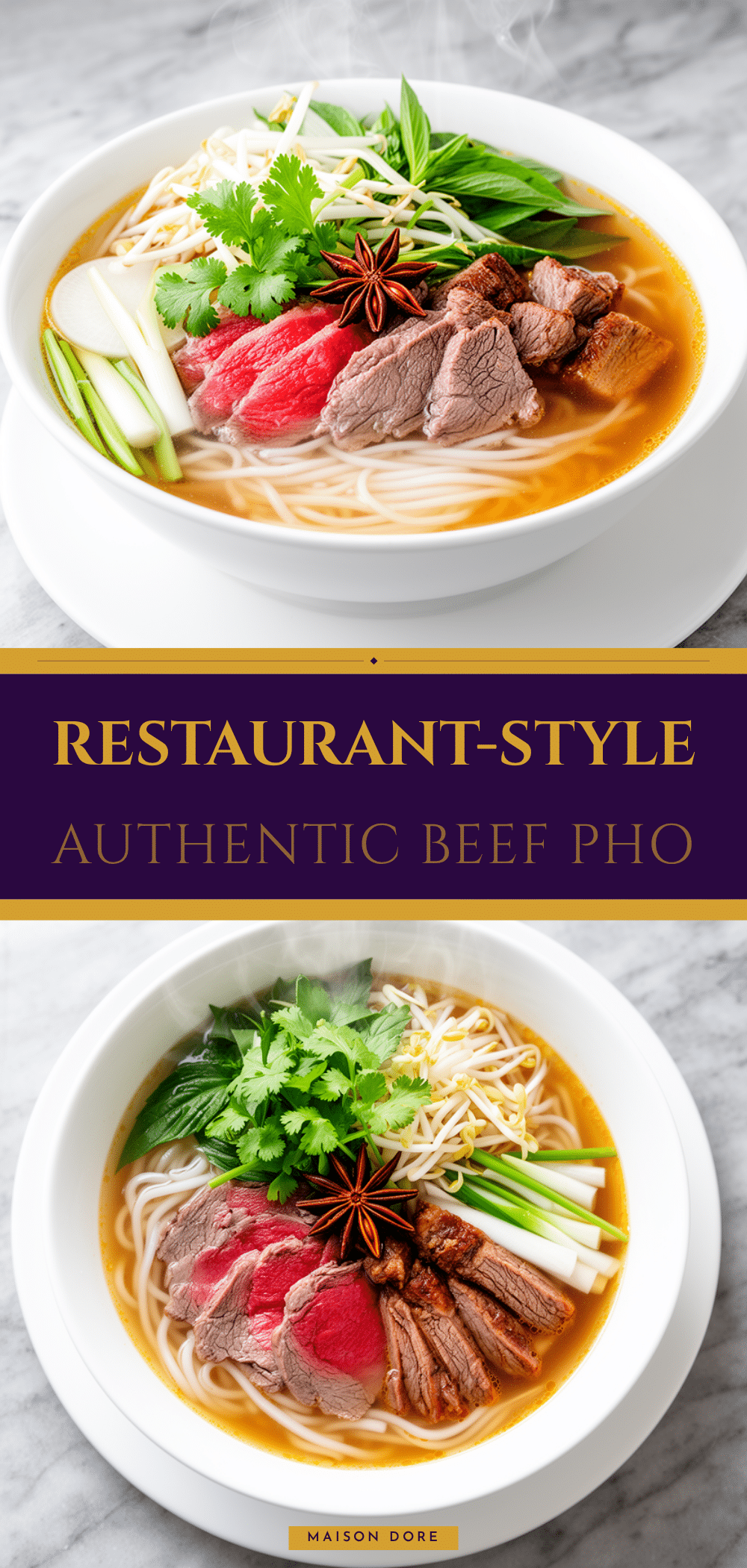
Authentic Beef Pho: Best 4-Hour Homestyle Soup
- Total Time: 4 hours 45 minutes
- Yield: 6 servings 1x
Description
A deeply flavorful, restaurant-quality beef pho recipe that focuses on a rich, amber-colored broth made with charred aromatics and toasted spices. This authentic Vietnamese soup takes four hours to simmer but offers a customizable, soul-warming meal perfect for impressing guests.
Ingredients
- 5–6 pounds beef bones (mix of oxtails, marrow bones, and knuckles)
- 3 large yellow onions (unpeeled)
- 5-inch piece fresh ginger (unpeeled)
- 1 tablespoon rock sugar
- 12–14 cups water
- 3–4 whole star anise
- 1 tablespoon coriander seeds
- 1 teaspoon fennel seeds
- 1 small cinnamon stick
- 1 teaspoon black peppercorns
- 4–5 tablespoons fish sauce
- Salt to taste
- 1 pound rice noodles (Banh Pho, flat and wide)
- 1 pound beef sirloin or flank steak (thinly sliced)
- 1 cup bean sprouts
- 1 bunch Thai basil leaves
- 2 limes (cut into wedges)
- 1–2 jalapeños (sliced)
- Hoisin sauce
- Sriracha
- 2 stalks green onions (sliced)
- 1 bunch cilantro (chopped)
Instructions
- Place beef bones in a large pot, cover with cold water, and bring to a boil. Boil for 5-10 minutes to release impurities (foam). Drain, rinse bones and pot thoroughly.
- Preheat broiler or grill to high. Char unpeeled onions and ginger directly on the rack or a baking sheet for 5-7 minutes until blackened. Peel charred skin from ginger and cut onions in half.
- Toast star anise, coriander seeds, fennel seeds, cinnamon stick, and peppercorns in a dry skillet over medium heat for 2-3 minutes until fragrant. Tie spices in cheesecloth or place in an infuser bag.
- In a clean large stockpot, combine rinsed bones, charred onions, charred ginger, spice bag, and rock sugar. Add 12-14 cups of water.
- Bring to a boil, then immediately reduce to a low simmer. Skim off foam during the first hour. Partially cover and simmer for 3.5 to 4 hours, adding hot water if needed.
- Remove spice bag and bones. Taste broth and season with 4-5 tablespoons fish sauce and salt. Adjust to taste; broth should be slightly saltier than desired final flavor.
- Soak dried rice noodles in warm water for 20 minutes to soften. Drain and set aside.
- Slice beef sirloin as thinly as possible against the grain.
- To serve, place drained noodles in a deep bowl. Arrange raw beef slices on top. Ladle boiling hot broth over the beef and noodles to cook the beef instantly.
- Serve immediately with garnishes (bean sprouts, Thai basil, lime, jalapeños, hoisin, sriracha, green onions, cilantro) on the side for customization.
Notes
Skim foam diligently for the first hour to ensure a clear broth. Do not rush the simmer; low and slow extracts collagen and flavor. Keep the broth boiling hot when serving to cook the raw beef slices. Fish sauce is essential for umami; use a good quality brand. Noodles do not freeze well, so freeze only the broth.
- Prep Time: 45 minutes
- Cook Time: 4 hours
- Category: Main Course
- Cuisine: Vietnamese
Nutrition
- Serving Size: 1 bowl with noodles,
- Calories: 450
- Sugar: 4
- Sodium: 900
- Fat: 12
- Carbohydrates: 55
- Fiber: 2
- Protein: 25
Keywords: beef pho, vietnamese soup, homestyle pho, star anise, pho broth, authentic pho recipe, comfort food, soup recipe


