
Last Mother’s Day, I was determined to host the most impressive brunch imaginable. I had the prosecco chilled, the table set with my good linen napkins, and my mother-in-law was coming over. I thought I had it all figured out. I even bought those fancy ramekins specifically for the eggs benedict. The only thing missing was the star of the show: hollandaise sauce.
I had watched enough YouTube videos to think I was a natural. I melted the butter, whisked the yolks, and poured it all in with confidence. What came out of that whisk was not the silky, golden emulsion I had envisioned. It was a curdled, yellow soup. It looked like scrambled eggs that had given up on life. My mother-in-law arrived, saw my face, and I had to admit defeat before she even took a sip of her mimosa.
That was three years ago. I’ve since made hollandaise dozens of times—some successful, some disastrous, and many that have won over skeptical relatives. I’ve learned that hollandaise isn’t about fancy technique; it’s about patience, temperature control, and a few non-negotiable rules. This foolproof hollandaise sauce is the result of all those lessons. It’s rich, it’s creamy, and it holds its structure beautifully on top of a poached egg. It’s the kind of sauce that makes people ask, “Wait, you made this yourself?” And the answer is always yes.
If you’ve been intimidated by the reputation of hollandaise, let me put your fears to rest. Once you master this method, you’ll never buy a jar again. Takeout versions are often thin, greasy, and lacking the bright lemon kick that makes this sauce truly special. This version is better than anything you’ll get at a diner, and it’s surprisingly easy to pull together.
Why You’ll Love This Hollandaise Sauce
There are a few reasons this sauce has become my secret weapon for weekend brunches and special dinners. It’s not just about the taste, though that’s definitely the biggest part.
- Restaurant-Quality Texture — This isn’t the runny, separated mess you sometimes get at breakfast spots. This hollandaise is thick, glossy, and coats the back of a spoon perfectly. It feels luxurious on the palate.
- Rich, But Not Heavy — I’ve dialed in the butter-to-yolk ratio so it’s incredibly rich without feeling like you just swallowed a stick of butter. The lemon juice and a touch of white wine vinegar cut through the fat, keeping it bright and balanced.
- Works for More Than Eggs Benedict — Sure, it’s perfect for eggs benedict, but this sauce is a chameleon. Pour it over roasted asparagus, grilled steak, or even steamed broccoli. It transforms simple vegetables into something celebratory.
- Impresses Without the Stress — You can make this while your eggs are poaching. It comes together in about 15 minutes, and the smell alone will have your guests thinking you’re a master chef.
I use this sauce when I want to feel fancy but don’t want to spend hours in the kitchen. It’s the ultimate shortcut to sophistication. Whether you’re hosting a Sunday brunch or just treating yourself to a lazy weekend breakfast, this hollandaise sauce is the upgrade your morning deserves.
Ingredients You’ll Need
The beauty of hollandaise is its simplicity. You don’t need a pantry full of exotic spices. You just need high-quality basics and a little bit of attention to detail. Here’s what you’ll need for this best creamy eggs benedict sauce:
Egg Yolks (3 large, room temperature) — This is the base. Room temperature yolks emulsify much easier than cold ones. If you’re short on time, just place the yolks in a bowl of warm water for 5 minutes before starting. Trust me, it makes a huge difference.
Unsalted Butter (1 cup / 225g, melted) — Use good butter. Since it’s the main flavor, cheap butter will show. I like European-style butter with a higher fat content because it makes the sauce even richer. Melt it completely and let it cool slightly so it’s warm, not hot.
Lemon Juice (2 tablespoons, fresh) — Never use bottled lemon juice here. The acidity is crucial for breaking the richness and stabilizing the emulsion. Squeeze it fresh and strain out any seeds.
White Wine Vinegar (1 tablespoon) — This adds a subtle depth that lemon alone can’t provide. It’s traditional and pairs beautifully with the eggs.
Cayenne Pepper (¼ teaspoon) — Just a pinch. It doesn’t make the sauce spicy; it adds a warm background note that enhances the other flavors. If you’re sensitive to heat, skip it, but I recommend keeping it.
Salt (½ teaspoon, or to taste) — Kosher salt is best because it’s easier to control. Taste as you go. The sauce should be slightly salty to balance the butter.
Water (2 tablespoons) — This goes into the double boiler with the yolks. It helps create steam, which gently cooks the yolks without scrambling them.
Optional: Paprika or Chives — For garnish. A tiny dusting of paprika adds color, and chopped chives add a fresh oniony bite.
Equipment Needed
You don’t need a lot of fancy gadgets, but having the right tools makes this process much smoother.
Double Boiler or Heatproof Bowl — This is non-negotiable. You need indirect heat. A glass or stainless steel bowl resting over a pot of simmering water works perfectly. Do not use a plastic bowl; it might melt or warp.
Whisk — A balloon whisk is ideal because it incorporates air and helps with emulsification. A fork works in a pinch, but a whisk is much faster.
Small Saucepan — For the simmering water. It just needs to be wide enough to support your heatproof bowl.
Immersion Blender (Optional) — If you’re feeling lazy or want extra insurance against curdling, an immersion blender can make this foolproof. I’ll show you how to use it in the steps below.
Strainer — Optional, but I like to strain the sauce at the end to remove any bits of cooked egg white or undissolved lemon seeds. It ensures that silky-smooth texture.
How to Make It: Step-by-Step

Alright, let’s make this foolproof hollandaise sauce. I’m going to walk you through the stovetop method, which gives you the most control. If you prefer the blender method, I’ve included notes on that too.
Step 1: Set Up Your Double Boiler
Fill a saucepan with about an inch of water and bring it to a gentle simmer. You don’t want a rolling boil—just small bubbles. Place your heatproof bowl on top. The bottom of the bowl should not touch the water. If it does, lower the heat or add more water. This gentle steam is what cooks the yolks safely.
Step 2: Whisk Yolks, Lemon, and Vinegar
Crack your egg yolks into the bowl. Add the fresh lemon juice, white wine vinegar, and cayenne pepper. Whisk them together vigorously. You want to incorporate air right from the start. This mixture should look pale and frothy after about a minute of whisking.
Step 3: Cook the Yolks Gently
Place the bowl over the simmering water. Continue whisking constantly. This is the most important part. You need to keep the yolks moving so they don’t scramble. After about 3-5 minutes, the mixture will start to thicken and lighten in color. It should look like a thick custard. If it gets too hot, lift the bowl off the water for a few seconds. The goal is to cook the yolks just enough to thicken, not to scramble them.
Step 4: Emulsify the Butter
Remove the bowl from the heat. This is crucial. You want the bowl to be warm, but not hot. Slowly drizzle in the melted butter, a few drops at a time at first, then in a thin, steady stream. Keep whisking furiously as you pour. If you pour too fast, the sauce will break. If you whisk constantly, the butter will emulsify into the yolks, creating a thick, creamy sauce.
Pro Tip: If you’re worried about breaking the sauce, use an immersion blender. Place the blender at the bottom of the bowl, turn it on, and slowly pull it up while pouring the butter. It’s almost impossible to mess up this way.
Step 5: Season and Adjust
Once all the butter is incorporated, the sauce should be thick and glossy. Taste it. Add salt to taste. If it’s too thick, whisk in a teaspoon of warm water. If it’s too thin, you can try whisking in another egg yolk (though this is rare if you followed the steps). The consistency should be like warm honey.
Step 6: Serve Immediately
Hollandaise is best served fresh. Spoon it over your poached eggs and toasted English muffins. If you need to hold it for a short time, cover the surface directly with plastic wrap (to prevent a skin from forming) and keep it in a warm spot, not the fridge. It will thicken as it cools.
Expert Tips & Tricks
Here’s everything I’ve learned from making this sauce dozens of times. These tips will save you from my mistakes.
Temperature is Key
The biggest mistake people make is letting the yolks get too hot. If you see little white bits forming, you’ve scrambled them. Keep the heat low and whisk constantly. If the bowl feels too hot to touch, take it off the water for a moment.
Melted Butter, Not Hot
Your melted butter should be warm, around 120°F (49°C). If it’s boiling hot, it will cook the yolks instantly. If it’s cold, it will seize up the sauce. Aim for warm, not hot.
Emulsify Slowly
When adding the butter, start drop by drop. Once the sauce starts to thicken and look creamy, you can increase the stream to a thin, steady drizzle. Rushing this step is the most common cause of broken sauce.
Use a Thermometer (If You Have One)
If you want to be precise, keep the yolk mixture between 140°F and 160°F (60°C – 71°C). This is the safe zone for cooking eggs without scrambling them.
Serve Warm
Hollandaise is best when it’s warm. If it sits out too long, it will thicken into a solid mass. If it gets too thick, whisk in a teaspoon of warm water to loosen it up.
Variations & Substitutions
Once you’ve mastered the basic version, here’s how you can mix it up. I’ve tried all of these.
Tartar Sauce Hollandaise
Stir in 1 tablespoon of chopped pickles, capers, and a teaspoon of Dijon mustard. Perfect for fish.
Spicy Chipotle Hollandaise
Add 1 teaspoon of adobo sauce from a can of chipotles. Great for breakfast tacos or grilled shrimp.
Herb Hollandaise
Whisk in 1 tablespoon of finely chopped fresh tarragon or chives at the end. Elegant and fresh.
Blender Method
Combine yolks, lemon, vinegar, and cayenne in a blender. Blend on low. With the motor running, slowly pour in the melted butter through the lid opening. Blend until thick. This is the easiest method and least likely to break.
Vegetarian Option
This recipe is naturally vegetarian. Just ensure your butter is high quality.
Serving & Storage
How to Serve:
I usually serve this straight from the bowl, spooning it generously over the eggs benedict. It looks rustic and stays warm. But here are other ways I’ve enjoyed it:
- Asparagus — Steamed asparagus spears drizzled with hollandaise is a classic side dish.
- Steak — A dollop of hollandaise on a ribeye is decadent.
- Broccoli — Simple steamed broccoli with hollandaise is a crowd-pleaser.
Storage Instructions:
Hollandaise is best made fresh. If you must store it, place it in an airtight container and refrigerate for up to 2 days. Reheat gently in a double boiler, whisking constantly, and add a splash of water if needed. Do not microwave, as it will likely break.
Pro Tip:
If you’re serving a crowd, make the sauce in batches. It’s better to have fresh sauce than to try to hold a large batch for hours.
Nutrition Information
I’m not a nutritionist, but here’s the breakdown if you’re tracking. Keep in mind that hollandaise is rich and calorie-dense, so a little goes a long way.
Per Serving (based on 6 servings):
| Nutrient | Amount |
|---|---|
| Calories | 280 |
| Protein | 3g |
| Carbs | 1g |
| Fat | 30g |
| Saturated Fat | 18g |
| Cholesterol | 180mg |
| Sodium | 120mg |
What’s Good:
It’s low in carbs and sugar. It provides some protein from the egg yolks.
What to Know:
It’s high in saturated fat and cholesterol due to the butter and eggs. It’s a treat, not a daily staple. When I want to make it lighter, I reduce the butter slightly, but I won’t lie—it’s not the same richness.
Final Thoughts
So that’s my foolproof hollandaise sauce! I’ve probably talked your ear off at this point, but when you make a recipe this often, you have a lot to say about it. This sauce has saved my brunches more times than I can count. It’s my answer to “what’s for dinner” when I want to feel fancy but don’t want to stress.
My family is happy, my guests are impressed, and I’m happy because I know exactly what’s in it. No weird preservatives, no greasy diner leftovers. Just pure, creamy, buttery goodness.
Make it yours! Try different herbs, add some spice, or serve it over your favorite vegetables. The best recipes are the ones you adapt to your family’s tastes. If you make this, drop a comment and let me know what you think! I love hearing how recipes turn out in your kitchen. And if something doesn’t work, tell me that too—I’m here to help troubleshoot.
Happy cooking! And I hope your kitchen smells half as good as mine does right now.
Frequently Asked Questions
Can I make hollandaise ahead of time?
You can, but it’s best fresh. If you must make it ahead, store it in an airtight container in the fridge for up to 2 days. Reheat gently in a double boiler, whisking constantly, and add a splash of warm water to loosen it. It won’t be quite as light as fresh, but it’s close.
Why did my hollandaise break?
Usually, this happens because the heat was too high, or you added the butter too fast. If it breaks, you can try to rescue it by whisking in a teaspoon of warm water or another egg yolk slowly. If using a blender, blend in a splash of water to re-emulsify.
Can I use salted butter?
You can, but unsalted is better so you can control the saltiness. If you use salted butter, reduce the added salt in the recipe to avoid it being too salty.
What if I don’t have a double boiler?
You can make one! Just use a heatproof bowl (glass or stainless steel) resting over a pot of simmering water. Make sure the bottom of the bowl doesn’t touch the water.
Can I freeze hollandaise?
Honestly, no. Hollandaise doesn’t freeze well. The texture will become grainy and separated when thawed. It’s best made fresh and served immediately.
Why does my hollandaise taste bland?
Hollandaise needs plenty of salt and acid to balance the rich butter. Taste it and add more salt and lemon juice as needed. It should taste bright and tangy, not just buttery.
Can I use olive oil instead of butter?
You can, but it won’t be traditional hollandaise. The flavor will be different, and the texture might not be as rich. I recommend sticking to butter for the classic taste.
Pin This Recipe!
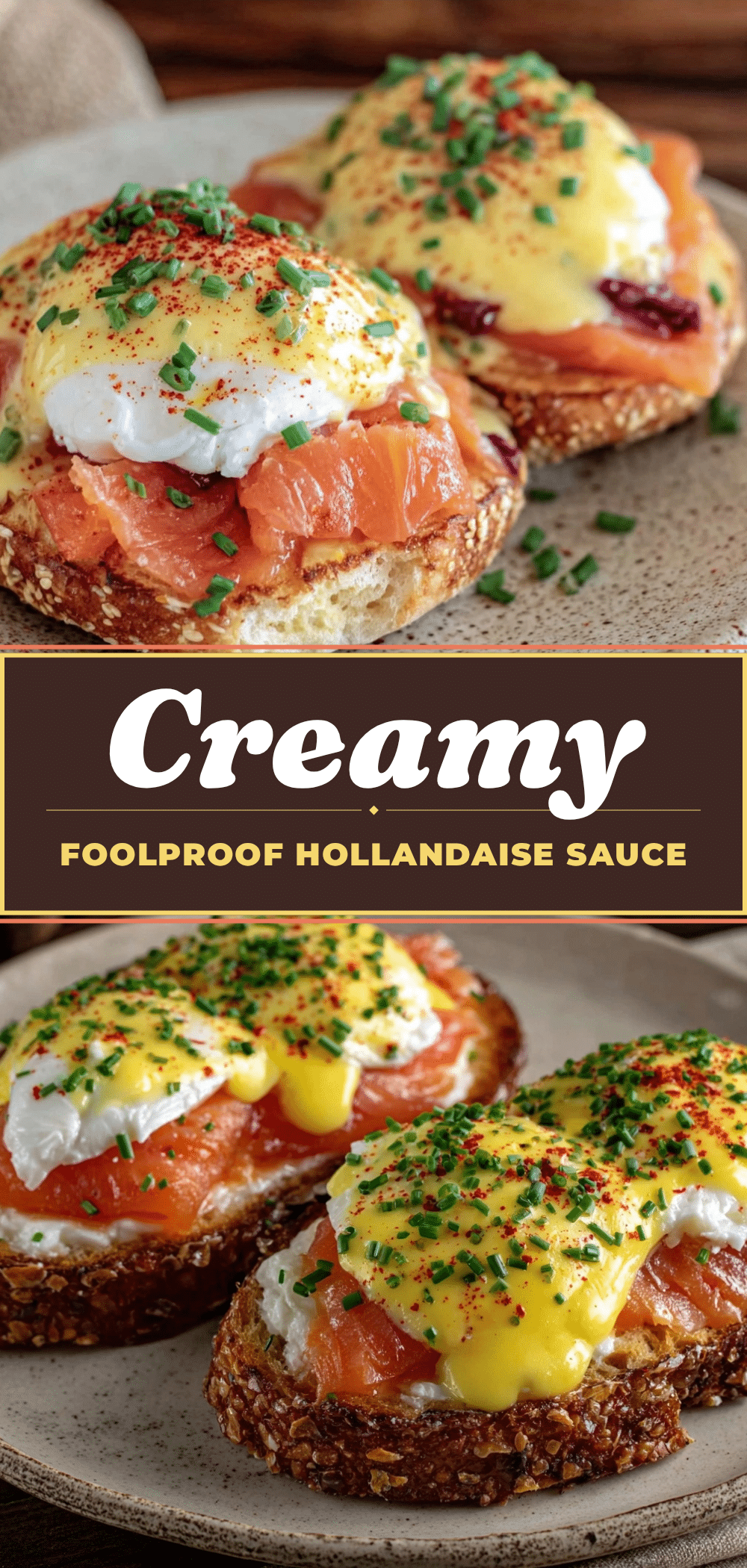

Foolproof Hollandaise Sauce: Best Rich, Creamy Eggs Benedict
- Total Time: 15 minutes
- Yield: 6 servings 1x
Description
A rich, creamy, and foolproof hollandaise sauce that is perfect for Eggs Benedict, roasted asparagus, or grilled steak. This method ensures a silky emulsion without the stress of curdling.
Ingredients
- 3 large egg yolks, room temperature
- 1 cup (225g) unsalted butter, melted and slightly cooled
- 2 tablespoons fresh lemon juice
- 1 tablespoon white wine vinegar
- 1/4 teaspoon cayenne pepper
- 1/2 teaspoon salt (or to taste)
- 2 tablespoons water
- Paprika or chives for garnish (optional)
Instructions
- Fill a saucepan with about an inch of water and bring to a gentle simmer. Place a heatproof bowl on top, ensuring the bottom does not touch the water.
- Crack egg yolks into the bowl. Add lemon juice, white wine vinegar, and cayenne pepper. Whisk vigorously until the mixture is pale and frothy.
- Place the bowl over the simmering water and whisk constantly for 3-5 minutes until the mixture thickens like a thick custard. If it gets too hot, lift the bowl off the heat briefly.
- Remove the bowl from the heat. Slowly drizzle in the melted butter, starting drop by drop, then in a thin, steady stream while whisking furiously to emulsify.
- Taste and add salt. If the sauce is too thick, whisk in a teaspoon of warm water. The consistency should be like warm honey.
- Serve immediately over poached eggs, asparagus, steak, or broccoli.
Notes
Temperature is key; keep the yolk mixture between 140°F and 160°F to avoid scrambling. The melted butter should be warm, not hot. If the sauce breaks, try whisking in a teaspoon of warm water or another egg yolk. Hollandaise is best served fresh but can be stored in the fridge for up to 2 days and gently reheated.
- Prep Time: 5 minutes
- Cook Time: 10 minutes
- Category: Sauce
- Cuisine: French
Nutrition
- Serving Size: Approximately 2-3 ta
- Calories: 280
- Sodium: 120
- Fat: 30
- Saturated Fat: 18
- Carbohydrates: 1
- Protein: 3
Keywords: hollandaise sauce, eggs benedict, brunch, breakfast sauce, creamy sauce, egg yolk sauce, butter sauce, vegetarian


