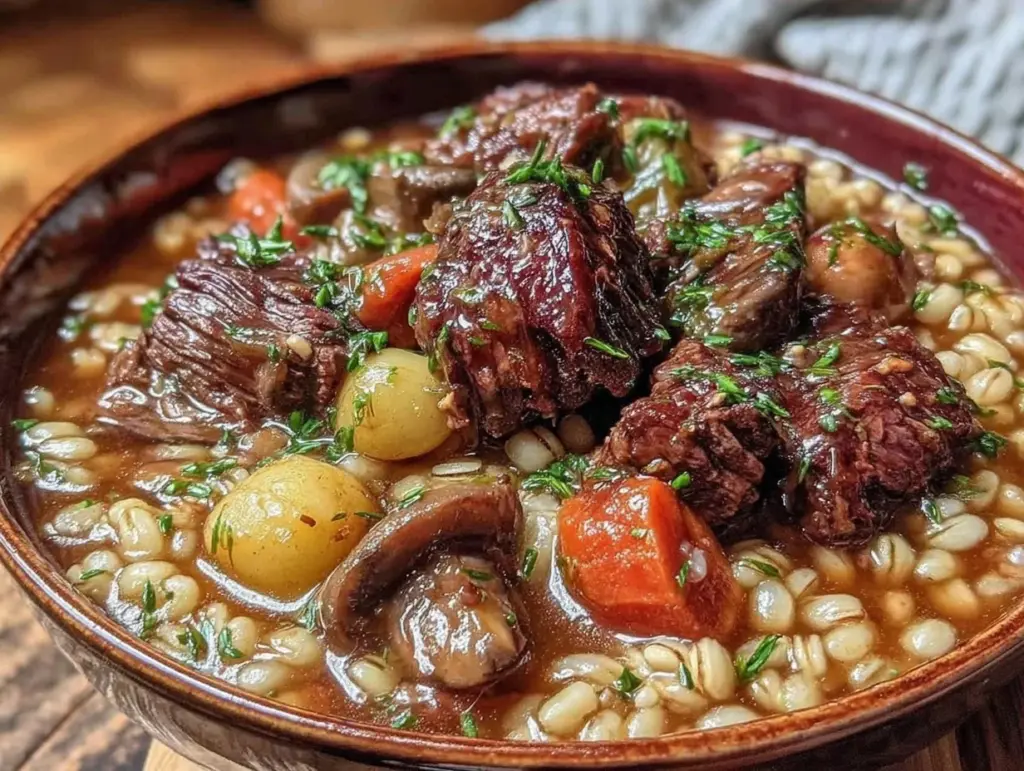
I still remember the first time I served this stew to a group of friends. It was a particularly brutal November evening, the kind where the wind howls against the windows and the temperature drops fast. I had invited six people over for what I hoped would be a memorable gathering, but I was running late from work and panicked. I didn’t have time to stand over a stove stirring a pot. So, I threw everything into the slow cooker before I left the office and came home to a house that smelled like a warm hug.
When I finally pulled the lid off, the steam hit us like a wave. The beef was falling apart, the barley had thickened the broth into something silky and rich, and the root vegetables were glazed with caramelized edges. My friends didn’t even notice I was late. They just grabbed bowls, sat down, and stayed there for hours, talking and laughing, fueled by that incredible, comforting warmth. That is the power of a good slow cooker meal.
This Slow Cooker Beef and Barley Stew has become my secret weapon for both intimate dinner parties and lazy weekend nights. It’s not just about convenience; it’s about creating an atmosphere. There’s something deeply satisfying about coming home to a kitchen that smells like thyme, garlic, and seared meat. It signals to your guests (and yourself) that dinner is going to be special. Over the years, I’ve tweaked this recipe dozens of times, experimenting with different cuts of beef and types of barley, until I landed on this perfect balance of rustic charm and restaurant-quality depth. It’s hearty enough to satisfy the hungriest eater but elegant enough to serve in a beautiful ceramic bowl at a dinner party.
Why You’ll Love This Slow Cooker Beef and Barley Stew
There are a hundred reasons to make this stew, but here’s why it keeps showing up on my menu week after week:
It’s a Showstopper That Does the Work — Seriously, the slow cooker does all the heavy lifting. You spend about 20 minutes browning and chopping, then you just walk away. When you return, you have a restaurant-quality meal ready to serve. I’ve hosted dinner parties where I used this recipe, and my guests always assume I spent hours in the kitchen. The truth? I was probably reading a book or drinking wine.
It Gets Better with Time — Unlike many stews that peak at hour two, this one actually improves as it sits. The barley absorbs the flavors, the beef tenderizes further, and the broth deepens in color and taste. If you make it ahead for a dinner party, you can actually make it the night before. Reheat it gently, and it tastes even more complex and savory.
It’s Visually Stunning — I’m a sucker for a pretty dish, and this one delivers. The deep mahogany color of the beef contrasts beautifully with the bright orange of the carrots and the pale, creamy chunks of parsnips. The barley gives it a luxurious, thickened texture that looks incredibly rich on the plate. It’s the kind of dish that looks like you cared deeply, even if you were just waiting for a timer.
It’s Incredibly Filling and Satisfying — This isn’t a light soup. It’s a meal. The combination of tender beef, chewy barley, and dense root vegetables keeps you full for hours. It’s perfect for cold weather, but honestly, I crave it even in mild autumn weather. It feels like comfort food in its purest form.
It’s Flexible — Running late? No problem. Out of barley? Try farro or pearl couscous. Don’t like parsnips? Swap them for turnips. The base recipe is forgiving and adaptable, making it a reliable go-to for any occasion.
This stew is my answer to “I want to impress but I’m tired.” It’s indulgent, it’s warm, and it brings people together. It’s the ultimate cozy dinner party recipe.
Ingredients You’ll Need
Here’s the thing about this stew: the quality of your ingredients matters, but you don’t need anything exotic. Most of this is pantry staples and good-quality butcher items. I’m particular about a few things, though, and I’ll tell you exactly why.
For the Beef and Base
Beef Chuck Roast (3 pounds / 1.4 kg) — This is non-negotiable. You want a cut with good marbling. Chuck roast has enough fat to stay moist during long cooking and enough connective tissue to break down into tender, fall-apart pieces. Look for a roast that’s well-marbled, not lean. Lean cuts will turn dry and tough. Trim the excess hard fat, but leave the marbling.
Beef Broth (4 cups / 950ml) — Use a low-sodium version so you can control the saltiness. I prefer homemade stock if I have it, but a good quality store-bought broth works fine. Avoid the low-fat versions; you want that richness.
Red Wine (1 cup / 240ml) — I use a dry red like Cabernet Sauvignon or Merlot. You don’t need to buy an expensive bottle, but don’t use anything you wouldn’t drink. The wine adds depth, acidity, and a lovely color to the stew. If you don’t drink alcohol, substitute with extra beef broth and a tablespoon of balsamic vinegar for acidity.
Tomato Paste (2 tablespoons) — This adds umami and helps thicken the sauce. It’s the secret ingredient that makes the flavor taste “cooked” and deep rather than raw.
For the Vegetables
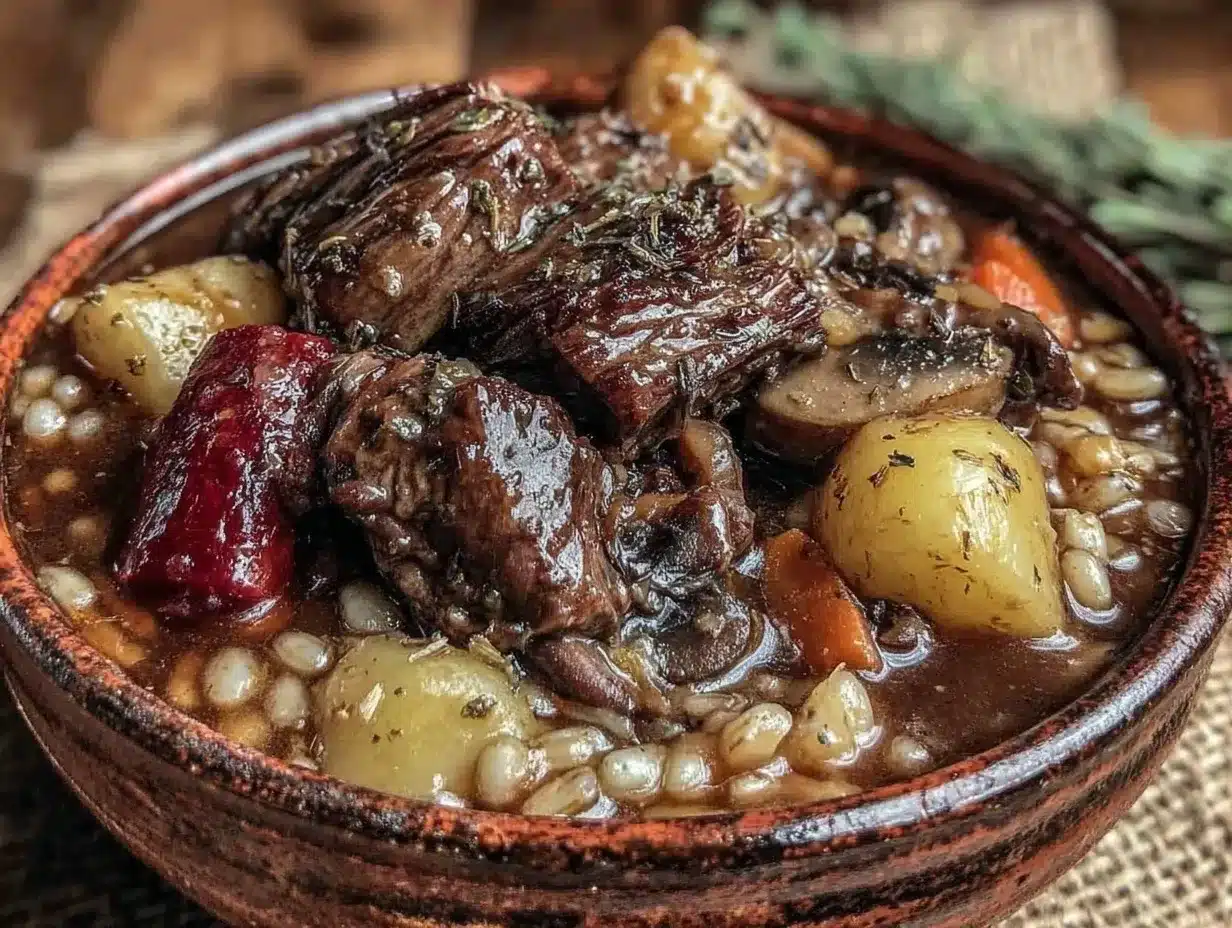
Yellow Onions (2 medium, diced / about 300g) — Sweet onions work too, but yellow onions give a better savory base. Dice them evenly so they cook at the same rate.
Carrots (4 large, peeled and chopped / about 400g) — Use large carrots for chunks that hold their shape. Smaller carrots can get mushy. Cut them into 1-inch chunks.
Parsnips (2 medium, peeled and chopped / about 200g) — These add a subtle sweetness and earthiness that balances the savory beef. If you hate parsnips, use rutabaga or extra carrots.
Potatoes (2 medium Yukon Gold, cubed / about 400g) — Yukon Golds are perfect because they hold their shape well and have a buttery flavor. Russets will fall apart and make the stew muddy. Cut them into 1-inch cubes.
Garlic (6 cloves, minced / about 2 tablespoons) — Fresh garlic only. Jarred garlic has a different flavor profile that doesn’t work as well here. Mince it finely so it distributes evenly.
For the Grain and Seasoning
Pearl Barley (1 cup / 200g) — This is the heart of the stew. Pearl barley is hulled and polished, so it cooks faster and has a chewy, satisfying texture. Do not use hulled barley (which takes forever) or quick-cooking barley (which turns to mush). Pearl barley is the sweet spot.
Dried Thyme (1 teaspoon) — Thyme is the classic herb for beef stew. It’s earthy and aromatic. Fresh thyme works too, but use twice as much.
Dried Rosemary (½ teaspoon) — A little goes a long way. Rosemary is potent and piney. Don’t overdo it, or it will overpower the beef.
Bay Leaves (2 leaves) — These infuse the broth with a subtle background note. Remove them before serving.
Salt and Black Pepper — To taste. I usually start with 1 teaspoon salt and ½ teaspoon pepper, then adjust at the end.
Flour (2 tablespoons) — Used to coat the beef before browning. This helps create a nice crust and thickens the stew slightly.
Butter (2 tablespoons) — For browning the beef. Olive oil works too, but butter adds a richer flavor.
Equipment Needed
You don’t need fancy gadgets for this. Here’s what I actually use:
Slow Cooker (Crock-Pot) — A 6-quart slow cooker is ideal. It gives enough room for all the ingredients without overcrowding, which ensures even cooking. I use a heavy-duty ceramic insert because it heats evenly and retains heat well.
Large Skillet or Dutch Oven — You need this for browning the beef. A cast-iron skillet is perfect because it holds heat well and creates a great sear. This step is crucial for flavor development.
Sharp Chef’s Knife — For chopping the vegetables and beef. A sharp knife makes prep faster and safer.
Measuring Cups and Spoons — Standard stuff. Accuracy matters here, especially for the barley and herbs.
Wooden Spoon — For stirring the stew. It won’t scratch your slow cooker insert.
Strainer or Ladle — To serve the stew. A ladle with a deep bowl works best to get all the solids and broth.
How to Make It: Step-by-Step
Alright, let’s make this! I’m walking you through exactly how I do it, including the little tricks I’ve picked up over the years. This process is straightforward, but each step builds flavor.
Step 1: Prep the Beef (5 minutes)
Cut the beef chuck roast into 1-inch cubes. Pat them dry with paper towels—this is important. Dry meat browns better. Toss the beef cubes in a bowl with 2 tablespoons of flour, salt, and pepper. Coat them evenly. The flour will help thicken the stew later and create a nice crust when searing.
Step 2: Brown the Beef (10-15 minutes)
Heat the butter (or oil) in a large skillet over medium-high heat. Once the butter is foaming, add the beef cubes in a single layer. Do not overcrowd the pan; work in batches if needed. You want a good sear on all sides. This step takes about 3-4 minutes per batch. Do not rush this. Browning the beef creates Maillard reactions, which are the chemical reactions that give browned food its distinctive flavor. If you skip this, the stew will taste flat. Once browned, remove the beef and set it aside on a plate.
Step 3: Sauté the Aromatics (5 minutes)
In the same skillet, add the diced onions. Cook them in the beef drippings for 3-4 minutes until they start to soften. Add the minced garlic and cook for another minute until fragrant. Don’t let the garlic burn—it will turn bitter. Scrape up any browned bits from the bottom of the pan with a wooden spoon. These bits are pure flavor.
Step 4: Deglaze and Combine (5 minutes)
Pour in the red wine to deglaze the pan. Let it simmer for 2 minutes to let the alcohol cook off and the flavors concentrate. Scrape up any remaining bits. Pour this mixture into your slow cooker. Add the browned beef, beef broth, tomato paste, dried thyme, dried rosemary, and bay leaves. Stir well to combine.
Step 5: Add Vegetables and Barley (2 minutes)
Add the chopped carrots, parsnips, and potatoes to the slow cooker. Finally, add the pearl barley. Stir everything together. The liquid should cover the vegetables and barley. If it doesn’t, add a little more broth or water. The barley will absorb liquid as it cooks, so make sure there’s enough.
Step 6: Cook (6-8 hours on Low or 3-4 hours on High)
Cover the slow cooker and cook on Low for 6-8 hours or High for 3-4 hours. The stew is done when the beef is tender and the vegetables are cooked through. The barley should be chewy but not mushy. If you’re cooking on Low, I recommend 7 hours. This gives the flavors time to meld and the beef to become fork-tender.
Step 7: Final Adjustments (5 minutes)
Once the cooking time is up, remove the bay leaves. Taste the stew. Add more salt and pepper if needed. If the stew is too thin, you can leave the lid off and cook on High for another 30 minutes to reduce the liquid. If it’s too thick, add a splash of broth. Stir in a tablespoon of butter for extra richness if you want to be fancy.
Expert Tips & Tricks
Here’s everything I’ve learned from making this stew dozens of times. These tips will save you from common pitfalls.
Brown the Beef Properly — I cannot stress this enough. Taking the time to brown the beef in batches is the difference between a good stew and a great one. If you just dump raw beef into the slow cooker, it will boil rather than sear, resulting in a bland, gray meat. The sear adds depth and color.
Don’t Overcrowd the Pan — When browning beef, if you put too many pieces in the pan, they’ll steam instead of brown. Work in small batches. It takes a little longer, but it’s worth it.
Use Pearl Barley — Make sure you use pearl barley, not hulled or quick-cooking. Pearl barley has the right texture and cooking time. If you use hulled barley, it will take much longer to cook and might not be tender in the allotted time. Quick-cooking barley will turn to mush.
Acidity is Key — Stews can sometimes taste flat after long cooking. A splash of acid at the end, like a teaspoon of balsamic vinegar or lemon juice, can brighten the flavors and make them pop. I always taste and adjust at the end.
Make It Ahead — This stew tastes even better the next day. The flavors have more time to meld. If you’re making it for a dinner party, consider making it the night before. Reheat it gently on the stove or in the slow cooker.
Thicken if Needed — If your stew is too thin after cooking, you can make a slurry with 1 tablespoon of cornstarch and 1 tablespoon of cold water. Stir it into the stew and cook on High for 15-20 minutes until thickened. Or, simply leave the lid off for the last 30 minutes to let the liquid reduce.
Variations & Substitutions
Once you’ve mastered the basic version, here’s how you can mix it up. I’ve tried all of these, and they all work.
Mushroom Lovers — Add 8 ounces of sliced mushrooms (cremini or button) when you add the vegetables. They add an earthy, umami flavor that pairs beautifully with beef. Sauté them in the skillet before adding to the slow cooker for extra flavor.
Potato-Free — If you’re avoiding potatoes, use extra parsnips or rutabaga. They have a similar texture and sweetness. Or add celery root for a different flavor profile.
Gluten-Free — This recipe is naturally gluten-free if you use gluten-free beef broth and ensure your barley is certified gluten-free (some barley is processed in facilities with wheat). Alternatively, substitute the barley with gluten-free pearl couscous or quinoa (though quinoa will change the texture slightly).
Spicy Kick — Add a teaspoon of red pepper flakes or a dash of hot sauce when you add the broth. It adds a nice warmth that cuts through the richness.
Different Herbs — If you don’t have thyme or rosemary, use Italian seasoning or Herbs de Provence. Fresh herbs can be used, but add them in the last hour of cooking to preserve their flavor.
Vegetarian Version — Substitute the beef with hearty mushrooms (like portobello or king oyster) and use vegetable broth. Add extra barley and root vegetables. It’s surprisingly satisfying.
Serving & Storage
How to serve this stew so it looks as good as it tastes:
Plating — Serve the stew in wide-rimmed bowls or rustic ceramic dishes. The deep color of the stew looks beautiful against white or light-colored bowls. Garnish with fresh chopped parsley or thyme leaves for a pop of green. A drizzle of good olive oil on top adds a final touch of richness.
Side Dishes — This stew is hearty on its own, but it pairs beautifully with crusty bread, garlic bread, or dinner rolls. A simple green salad with a tangy vinaigrette cuts through the richness of the stew. Mashed potatoes are also an option if you want to double down on comfort.
Storage — Store leftovers in an airtight container in the refrigerator for up to 4 days. The stew will thicken in the fridge as the barley absorbs more liquid. This is normal.
Reheating — Reheat gently on the stove over low heat, adding a splash of broth or water if it’s too thick. Stir frequently to prevent sticking. You can also reheat in the microwave, but do it in intervals and stir in between. Avoid high heat, which can make the beef tough.
Freezing — This stew freezes well for up to 3 months. Let it cool completely, then transfer to freezer-safe containers. Leave some headspace for expansion. Thaw in the refrigerator overnight before reheating. Note that the barley may become softer after freezing, but the flavor remains excellent.
Nutrition Information
I’m not a nutritionist, but here’s the breakdown if you’re tracking. This is per serving (based on 6 servings).
Calories: 450
Protein: 30g
Carbs: 45g
Fiber: 8g
Fat: 15g
Saturated Fat: 6g
Cholesterol: 75mg
Sodium: 600mg
This stew is a good source of protein and fiber from the beef and barley. The root vegetables add vitamins and minerals. It’s a balanced, filling meal. If you’re watching sodium, use low-sodium broth and control the salt added during cooking.
Final Thoughts
So that’s my go-to Slow Cooker Beef and Barley Stew. It’s my answer to “I want to eat well but I don’t have the energy to cook.” It’s rich, it’s comforting, and it’s perfect for sharing with people you love. Whether you’re hosting a dinner party or just having a quiet night in, this stew will make your kitchen smell amazing and your heart feel full.
Make it yours! Add your favorite vegetables, adjust the herbs, or serve it with your favorite bread. The best recipes are the ones you adapt to your tastes. If you make this, I’d love to hear how it turns out. Drop a comment below with your tips or variations.
Happy cooking! And I hope your kitchen smells half as good as mine does right now.
Frequently Asked Questions
Can I use frozen beef instead of fresh?
You can, but I don’t recommend it. Frozen beef releases more water as it thaws, which can make the stew watery. It also doesn’t brown as well. If you must use frozen, thaw it completely and pat it dry before browning. Fresh beef gives the best results.
Why is my stew too thin?
This usually happens if you didn’t brown the beef properly or if you added too much liquid. To fix it, remove the lid and cook on High for 30-60 minutes to reduce the liquid. Or, make a cornstarch slurry (1 tbsp cornstarch + 1 tbsp water) and stir it in. Cook for another 15 minutes until thickened.
Can I make this in a pressure cooker?
Yes! This recipe works well in an Instant Pot. Sear the beef and sauté the aromatics using the Sauté function. Then, add all ingredients and cook on High Pressure for 35 minutes. Let the pressure release naturally for 10 minutes, then quick release. The barley may cook faster, so check the texture before serving.
What kind of red wine should I use?
Use a dry red wine like Cabernet Sauvignon, Merlot, or Pinot Noir. Avoid sweet wines or cooking wines. You don’t need to spend a lot—just pick a bottle you’d enjoy drinking. The alcohol cooks off, leaving behind flavor and acidity.
Can I add other vegetables?
Absolutely. Celery, green beans, peas, or corn all work well. Add delicate vegetables like peas or green beans in the last 30 minutes of cooking so they don’t get mushy. Harder vegetables like carrots and parsnips can go in at the beginning.
How do I reheat leftovers without it getting dry?
Add a splash of broth or water when reheating. The barley absorbs liquid, so the stew will thicken in the fridge. Heating it gently on the stove with a little extra liquid brings it back to its original creamy consistency. Microwave reheating can dry it out, so stir in a splash of milk or broth if using the microwave.
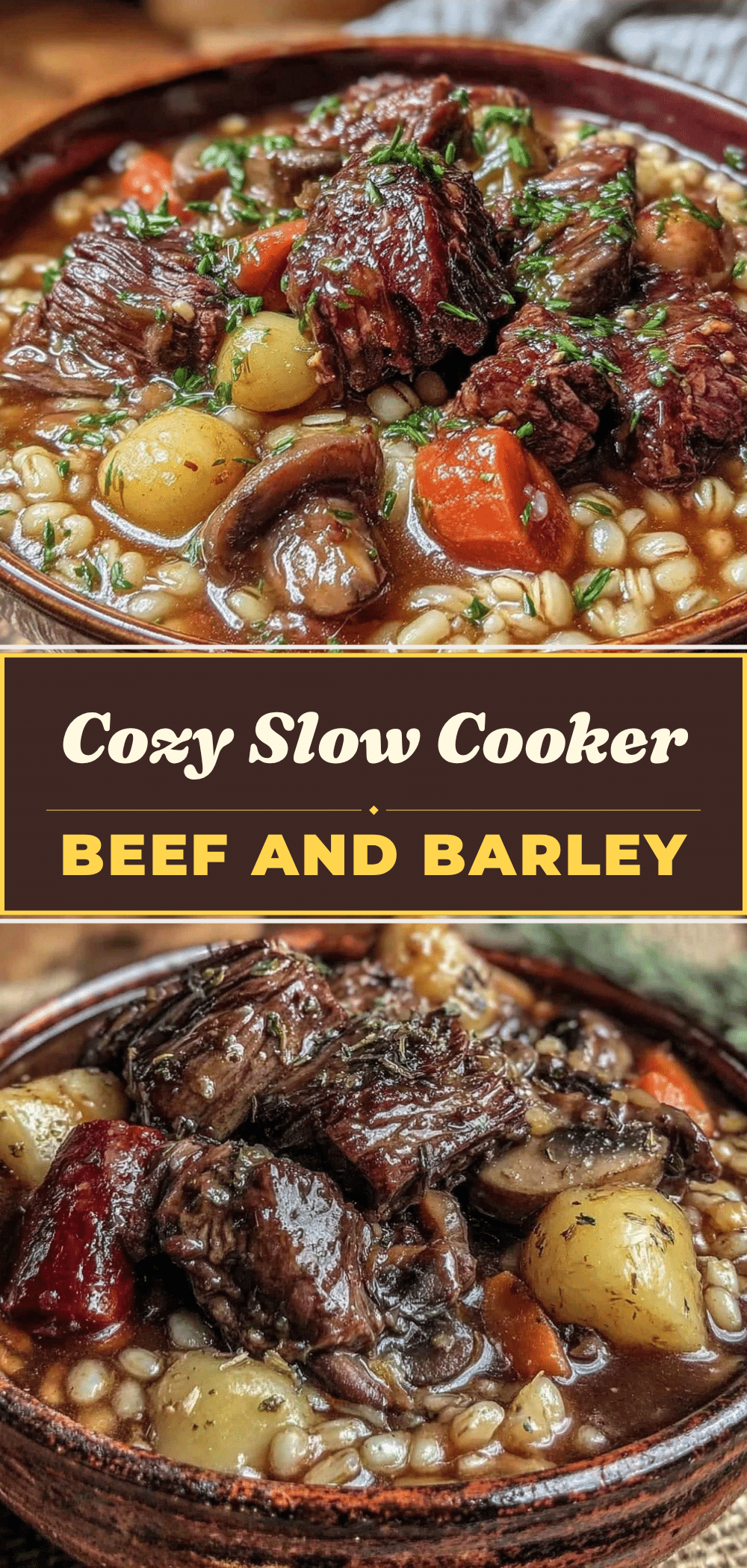
Pin This Recipe!
Slow Cooker Beef and Barley Stew
- Total Time: 6 hours 20 minutes
- Yield: 6 servings 1x
Description
A hearty, cozy slow cooker stew featuring tender beef chuck, pearl barley, and root vegetables. This recipe is perfect for dinner parties or lazy weekends, offering rich flavor with minimal active effort.
Ingredients
- 3 pounds beef chuck roast, cut into 1-inch cubes
- 2 tablespoons flour
- Salt and black pepper, to taste
- 2 tablespoons butter
- 2 medium yellow onions, diced
- 6 cloves garlic, minced
- 1 cup red wine (dry red like Cabernet Sauvignon or Merlot)
- 4 cups beef broth (low-sodium)
- 2 tablespoons tomato paste
- 1 teaspoon dried thyme
- ½ teaspoon dried rosemary
- 2 bay leaves
- 4 large carrots, peeled and chopped into 1-inch chunks
- 2 medium parsnips, peeled and chopped
- 2 medium Yukon Gold potatoes, cubed
- 1 cup pearl barley
Instructions
- Cut the beef chuck roast into 1-inch cubes and pat dry. Toss with flour, salt, and pepper to coat evenly.
- Heat butter in a large skillet over medium-high heat. Brown the beef cubes in batches, ensuring not to overcrowd the pan. Remove beef and set aside.
- In the same skillet, sauté diced onions in beef drippings for 3-4 minutes until softened. Add minced garlic and cook for 1 minute until fragrant.
- Pour in red wine to deglaze the pan, scraping up browned bits. Simmer for 2 minutes.
- Transfer the wine mixture to a slow cooker. Add the browned beef, beef broth, tomato paste, dried thyme, dried rosemary, and bay leaves. Stir to combine.
- Add chopped carrots, parsnips, potatoes, and pearl barley to the slow cooker. Stir well. Ensure liquid covers the ingredients.
- Cover and cook on Low for 6-8 hours or on High for 3-4 hours, until beef is tender and vegetables are cooked through.
- Remove bay leaves. Taste and adjust seasoning with salt and pepper. If too thin, cook uncovered on High for 30 minutes or use a cornstarch slurry. Stir in butter for extra richness if desired.
Notes
Brown the beef in batches to ensure a good sear and avoid steaming. Use pearl barley, not hulled or quick-cooking. The stew improves in flavor if made ahead and reheated. For a vegetarian version, substitute beef with hearty mushrooms and use vegetable broth.
- Prep Time: 20 minutes
- Cook Time: 6-8 hours
- Category: Main Course
- Cuisine: American
Nutrition
- Serving Size: 1 bowl
- Calories: 450
- Sodium: 600
- Fat: 15
- Saturated Fat: 6
- Carbohydrates: 45
- Fiber: 8
- Protein: 30
Keywords: slow cooker, beef stew, barley stew, dinner party, cozy dinner, comfort food, one pot meal


