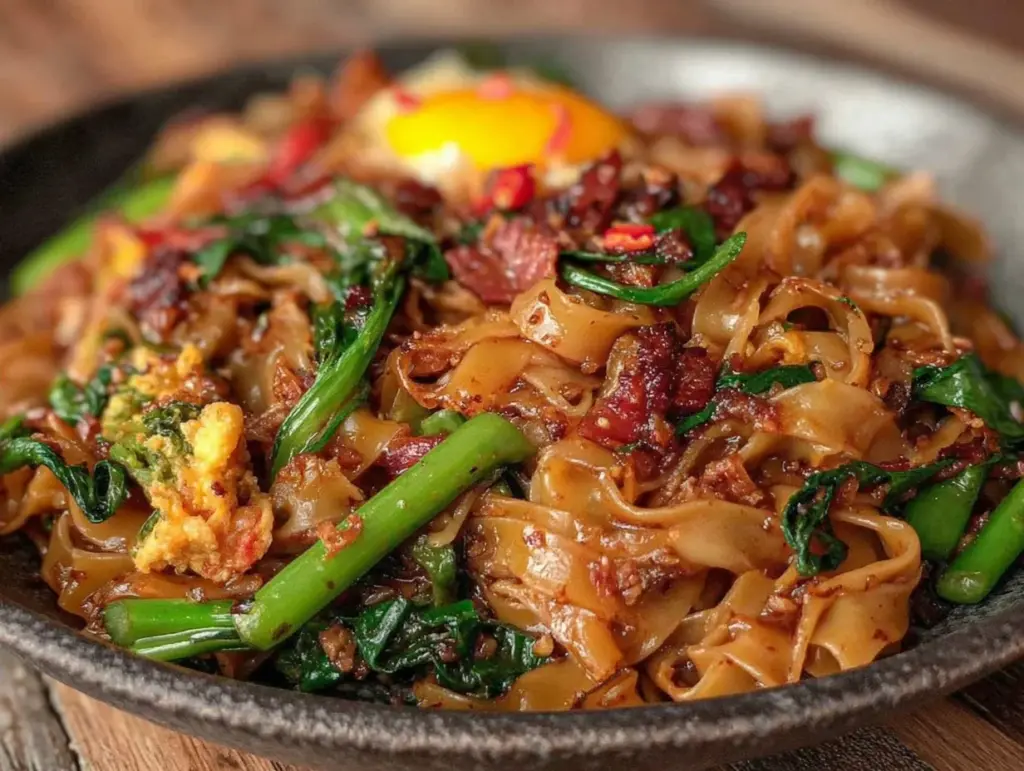
There is a specific moment when the wok hits the flame, and suddenly, your kitchen transforms into a bustling street stall in Bangkok. It’s that sharp hiss of oil meeting hot noodles, the sweet-salty aroma of soy sauce caramelizing instantly, and the smoky char that clings to every strand. I had my first bowl of authentic Pad See Ew in a tiny, plastic-chair-only eatery in Chinatown, sitting on a wobbly stool while dodging tourists. I was covered in sweat, my chopsticks were slipping, and it was the most incredible meal I’d ever had. Since then, I’ve tried to recreate that magic in my own home, and honestly? It’s been a journey of trial, error, and a lot of smoke alarms.
But here’s the thing: Traditional Thai Pad See Ew doesn’t have to be complicated. In fact, some of the best versions I’ve seen rely on just a few key ingredients to get that perfect balance of sweet, savory, and smoky. This isn’t just about boiling noodles and dumping sauce on top. It’s about understanding the wok hei—the breath of the wok—and how to get that distinct char without burning your dinner. When I serve this to friends, they always ask if I’m taking cooking classes. I just smile and say I’ve finally cracked the code on getting those wide rice noodles to stay tender but not mushy.
I’ve tested this recipe dozens of times, tweaking the sauce ratios and experimenting with different types of Chinese broccoli. The result is a dish that’s rich, comforting, and deeply satisfying. It’s the kind of meal that makes people lean in closer to the plate, stealing bites before you’ve even finished serving. Whether you’re hosting a weekend dinner party or just craving a night in that feels a little more special than usual, this pad see ew with Chinese broccoli is your ticket to restaurant-quality comfort food. It’s indulgent, it’s flavorful, and it’s surprisingly easy to pull off once you know the tricks.
Why You’ll Love This Recipe
There are about ten reasons I keep coming back to this dish, but let’s be real—you’re probably here because you want dinner to feel like a treat, not a chore. Here’s why this pad see ew with Chinese broccoli has earned a permanent spot in my weekly rotation.
- Restaurant-Quality Char — Seriously, you can get that smoky wok flavor at home. It’s not about having a industrial wok burner; it’s about high heat and not overcrowding the pan. I’ve learned this the hard way with soggy noodles, and now I never skip this step.
- Simple, Pantry-Friendly Sauce — You don’t need a trip to the Asian grocery store for exotic ingredients. The sauce is just a mix of dark soy, light soy, oyster sauce, and a touch of sugar. If you have these in your fridge, you’re already halfway there.
- Velvety Texture — The wide rice noodles absorb the sauce beautifully, becoming silky and soft without falling apart. It’s a texture that’s incredibly satisfying to eat. I always make sure to soak them properly so they cook evenly.
- Perfect for Sharing — This dish looks stunning served family-style. The dark, glossy noodles contrast beautifully with the bright green Chinese broccoli. It’s visually impressive, which is great when you want to impress your guests without stressing in the kitchen.
- Quick Weeknight Winner — Despite looking fancy, it comes together in under 20 minutes. I make this on nights when I want something that feels special but I don’t have hours to cook. It’s the ultimate “I’m tired but I still want to eat well” meal.
This is my go-to when I need dinner to just work, but I also want it to taste like I put in extra effort. No complicated techniques, no weird ingredients, just reliable, delicious food that makes everyone happy. It’s comfort food at its finest.
Ingredients You’ll Need
Here’s the best part: you probably have most of this already. I’m particular about a few things, though, and I’ll tell you exactly why they matter for getting that authentic flavor.
Rice Noodles (8 oz / 225g) — Look for flat, wide rice noodles, often labeled as “sen lek” or just “wide rice sticks.” They need to be wide enough to hold the sauce. Avoid the thin vermicelli; it just won’t give you the right mouthfeel. Soak them in warm water for 20-30 minutes before cooking. This is non-negotiable for tender noodles.
Chinese Broccoli (2 bunches / about 400g) — Also known as gai lan. It has thicker stems and bitter leaves that stand up to high heat. If you can’t find it, regular broccoli florets or kale are okay substitutes, but the flavor profile changes slightly. I love the slight bitterness it adds to balance the sweet sauce.
Eggs (2 large) — Scrambled softly into the noodles. They add richness and protein. Don’t overcook them; you want them creamy and just set.
Garlic (4 cloves, minced) — Fresh garlic is key. I mince it finely so it distributes evenly. If you’re not a garlic fan, use less, but it really drives the flavor here.
White Pepper (1 teaspoon) — This is the secret weapon. Black pepper is fine, but white pepper gives that distinct, earthy heat that you get in Thai restaurants. It’s subtle but essential for authenticity.
Dark Soy Sauce (2 tablespoons) — This is what gives pad see ew its signature dark color and slightly sweet, molasses-like flavor. Don’t skip it for regular soy sauce; the color and depth won’t be the same. Look for “thick dark soy sauce” in the Asian aisle.
Light Soy Sauce (2 tablespoons) — For saltiness without the heavy color. This balances the dark soy.
Oyster Sauce (2 tablespoons) — Adds umami and depth. It’s not fishy; it’s savory and slightly sweet. If you’re vegetarian, use mushroom sauce.
Sugar (1 tablespoon) — Just a touch to balance the saltiness of the soy sauces. Palm sugar is traditional, but white sugar works fine.
Vegetable Oil (3 tablespoons) — You need enough oil to prevent sticking and help with the char. Canola or peanut oil works well.
Pro Tip — I always keep a bottle of dark soy sauce on hand now. It’s used in so many Thai dishes, and having it ready makes cooking so much faster. I’ve also learned to prep all my veggies before I start cooking, because once the wok is hot, things move fast.
Equipment Needed
You don’t need fancy equipment for this. Here’s what I actually use.
Wok — A carbon steel wok is ideal because it gets hot quickly and distributes heat evenly. I use a 14-inch wok. If you don’t have one, a large cast-iron skillet or a heavy-bottomed stainless steel pan works too. The key is surface area; you need room to toss the noodles.
Large Bowl — For soaking the noodles. Make sure it’s big enough to hold the noodles and water comfortably.
Chopsticks or Tongs — Essential for tossing the noodles. Forks just don’t work well here. I use long chopsticks to stir and tongs to toss.
Sharp Knife — For chopping the Chinese broccoli. You want to cut the stems on the bias for even cooking.
Measuring Spoons — For the sauce. Consistency is key to getting the balance right.
Optional but nice — A ladle for pouring the sauce evenly. And a paper towel for wiping the wok if it gets too sticky.
How to Make It: Step-by-Step
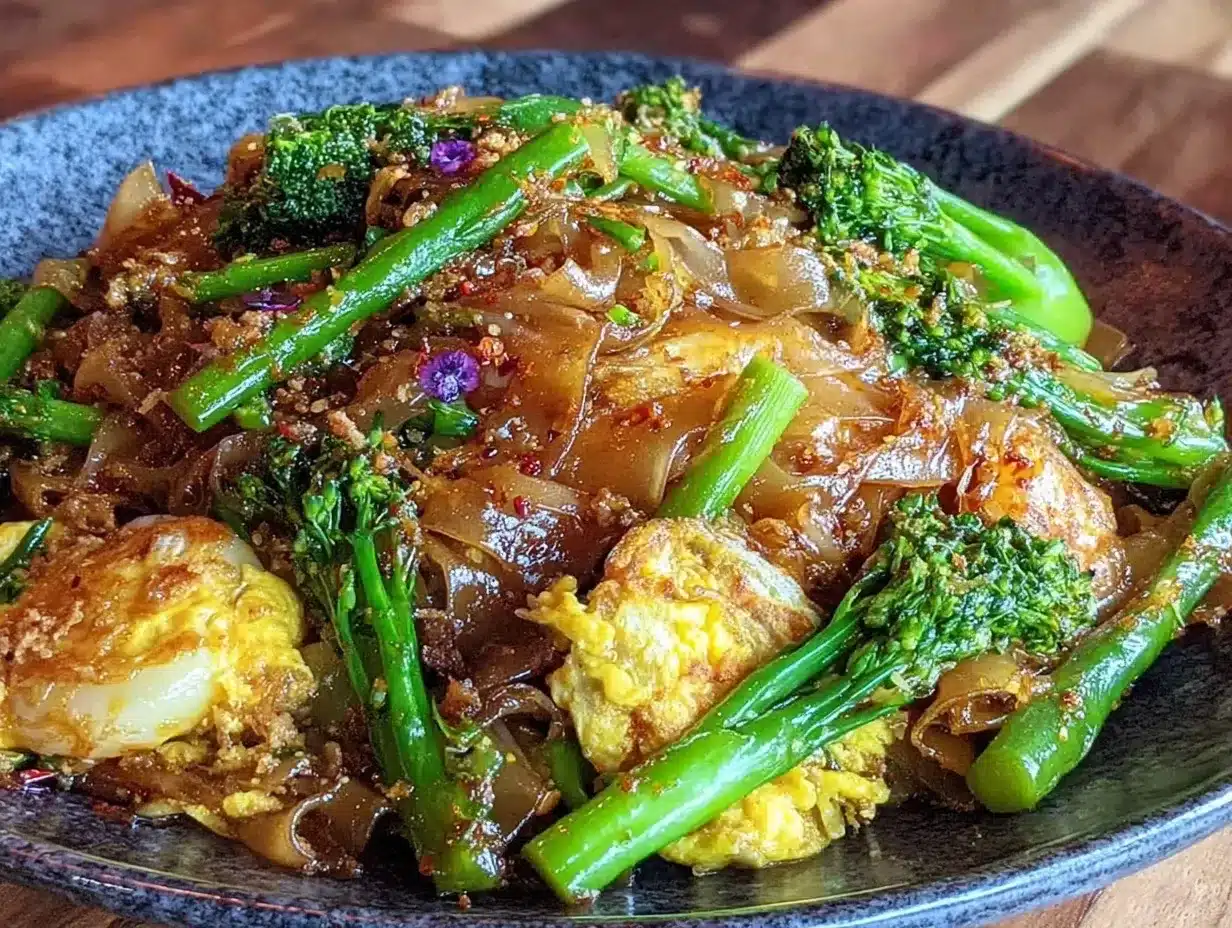
Alright, let’s make this! I’m walking you through exactly how I do it, including the little tricks I’ve picked up.
Step 1: Prep the Noodles
Place the dry rice noodles in a large bowl and cover with warm (not boiling) water. Let them soak for 20-30 minutes until they are pliable but still firm. Drain well and toss with a teaspoon of oil to prevent sticking. This step is crucial; it ensures the noodles cook evenly and don’t clump together.
Step 2: Make the Sauce
In a small bowl, whisk together the dark soy sauce, light soy sauce, oyster sauce, sugar, and white pepper. Set aside. Having the sauce ready before you start cooking is vital because you’ll need it at the last minute.
Step 3: Prep the Vegetables
Wash the Chinese broccoli and cut it into 2-inch pieces, separating the stems from the leaves. The stems take longer to cook, so you might want to add them first. Mince the garlic and have your eggs ready to go.
Step 4: Scramble the Eggs
Heat 1 tablespoon of oil in your wok over high heat. Pour in the beaten eggs and scramble them quickly until just set. Remove them from the wok and set aside on a plate. Don’t overcook them; they’ll be added back in later.
Step 5: Stir-Fry the Aromatics and Veggies
Add another tablespoon of oil to the wok. Once it’s smoking hot, add the garlic and stir-fry for 10 seconds until fragrant. Add the Chinese broccoli stems first and stir-fry for 1 minute, then add the leaves. Cook for another minute until the greens are wilted but still vibrant green. Remove everything from the wok and set aside with the eggs.
Step 6: Cook the Noodles
Add the remaining tablespoon of oil to the wok. Add the soaked and drained noodles. Toss them in the hot oil, letting them sit for a few seconds to get a little char before tossing again. This is where the wok hei comes from. Cook for 2-3 minutes, tossing constantly.
Step 7: Combine and Sauce
Pour the sauce mixture over the noodles. Toss vigorously to coat every strand. Add the cooked eggs and Chinese broccoli back into the wok. Toss everything together for another minute until the noodles are heated through and glossy. Taste and adjust seasoning if needed.
Step 8: Serve
Serve immediately while hot. Garnish with a sprinkle of white pepper or chopped cilantro if you like. This pad see ew with Chinese broccoli is best eaten fresh, right off the heat.
Expert Tips & Tricks
Here’s everything I’ve learned from making this dozens of times. These tips will save you from my mistakes.
Soak, Don’t Boil
Soaking the noodles in warm water is better than boiling them. Boiling can make them mushy and hard to control. Soaking hydrates them evenly, so they cook quickly in the wok without breaking.
High Heat is Your Friend
To get that smoky flavor, your wok needs to be hot. Don’t be afraid of the smoke. If your kitchen gets too smoky, turn on the exhaust fan and open a window. The char is what makes pad see ew special.
Don’t Overcrowd the Wok
If you’re cooking for a large group, cook in batches. Overcrowding lowers the temperature, leading to steamed noodles instead of fried ones. It’s better to cook two smaller batches than one big soggy one.
Fresh Garlic Matters
Pre-minced garlic in a jar can have a metallic taste. Freshly minced garlic gives a brighter, more authentic flavor. Take the extra minute to mince it yourself.
Balance the Sauce
Taste your sauce before adding it to the wok. It should be slightly salty and sweet. If it’s too salty, add a bit more sugar. If it’s too sweet, add a splash of light soy sauce. Adjusting the sauce beforehand ensures a better final dish.
Variations & Substitutions
Once you’ve nailed the basic version, here’s how you can mix it up. I’ve tried all of these.
Protein Additions
Add chicken, shrimp, or beef. Sauté the protein first, remove it, then proceed with the recipe. Add it back in at the end. I love adding sliced pork belly for extra richness.
Vegetarian Version
Replace oyster sauce with mushroom sauce or soy sauce. Add tofu for protein. The dish is naturally vegetarian without the oyster sauce, but the umami depth changes slightly.
Substitute Greens
If you can’t find Chinese broccoli, use regular broccoli florets, kale, or bok choy. Bok choy is quicker to cook, so add it at the very end.
Spicy Kick
Add chili flakes or sliced fresh chilies when stir-frying the garlic. This adds a nice heat that complements the sweetness of the sauce.
Noodle Swap
If you can’t find wide rice noodles, use thin rice noodles (sen lek) or even spaghetti in a pinch. The texture won’t be the same, but it’ll still taste good.
Serving & Storage
How to Serve:
I usually serve this straight from the wok at the dinner table—it looks rustic and stays warm. But here are other ways I’ve enjoyed it:
- With a side of cucumber salad for a refreshing crunch.
- With a wedge of lime on the side for a burst of acidity.
- With crispy pork belly on top for an extra indulgent treat.
Storage Instructions:
Store leftovers in an airtight container in the fridge for up to 3 days. The noodles will absorb more sauce, so they might look dry.
Reheating:
The best method is to reheat in a wok or skillet over medium heat with a splash of water or oil. This revives the texture. Microwave reheating can make the noodles rubbery, so if you must use the microwave, add a tablespoon of water and cover loosely.
Freezing:
This dish does not freeze well. The noodles become mushy upon thawing. It’s best eaten fresh.
Nutrition Information
I’m not a nutritionist, but here’s the breakdown if you’re tracking. Per serving (based on 4 servings):
| Nutrient | Amount |
|---|---|
| Calories | 450 |
| Protein | 12g |
| Carbs | 65g |
| Fat | 15g |
| Fiber | 3g |
| Sodium | 800mg |
Look, this is comfort food with rice noodles and soy sauce. It’s not a diet recipe. But it’s way better than takeout, costs less, and I know exactly what’s in it. When I want to make it lighter, I add more vegetables and use less oil. But usually? I just eat a reasonable portion and enjoy it.
Final Thoughts
So that’s my go-to traditional Thai pad see ew with Chinese broccoli! I’ve probably talked your ear off at this point, but when you make a recipe this often, you have a lot to say about it. This has saved weeknight dinners more times than I can count. It’s my answer to “what’s for dinner” when I’m tired, don’t want takeout, and still want something that tastes really good. My family is happy, my guests are impressed, and I’m happy because I’m not stressed about cooking.
Make it yours! Try different add-ins, swap in your favorite vegetables, adjust the garlic (though more is always better in my opinion). The best recipes are the ones you adapt to your family’s tastes. If you make this, drop a comment and let me know what you think! I love hearing how recipes turn out in your kitchen. And if something doesn’t work, tell me that too—I’m here to help troubleshoot.
Happy cooking! And I hope your kitchen smells half as good as mine does right now.
Frequently Asked Questions
Q: Can I use fresh rice noodles instead of dried?
A: Yes, but you need to be careful. Fresh noodles are already hydrated and cook very quickly. You don’t need to soak them. Just rinse them under cold water to remove excess starch and add them to the wok at the end, tossing gently to avoid breaking them.
Q: Why did my noodles stick together?
A: This usually happens if they weren’t soaked properly or if you didn’t toss them enough in the wok. Soaking ensures they cook evenly. Tossing constantly prevents clumping. Also, adding a little oil to the soaked noodles before cooking helps keep them separate.
Q: Can I make this ahead for a dinner party?
A: Sort of. You can prep the noodles and sauce ahead of time. But cook the noodles and stir-fry right before serving. Pad see ew is best eaten fresh, and reheated noodles can become soggy. Prepping ahead saves you stress during the party.
Q: Why did my sauce get too dark?
A: Dark soy sauce is very potent. If you used too much, it can overpower the dish. Use it sparingly; its main purpose is color and a hint of sweetness. Balance it with light soy sauce for saltiness. If the sauce is too dark, add a bit more water or oyster sauce to dilute it.
Q: Can I use regular soy sauce instead of dark soy sauce?
A: You can, but the dish will look pale and lack the characteristic sweet, molasses flavor. Dark soy sauce is key to authentic pad see ew. If you can’t find it, look for “thick soy sauce” in the Asian section.
Q: How do I reheat leftovers without it getting dry?
A: Add a splash of water or broth to a skillet, add your leftover pasta, and heat gently over low heat, stirring frequently. The extra liquid brings back the creamy texture. Microwave sort of works but tends to dry it out.
Q: Can I double this recipe?
A: Absolutely! Double everything and use your biggest wok. The cooking times stay the same. I do this when I’m meal-prepping or feeding a crowd. Just make sure your wok is big enough for the noodles—you might need to cook in batches.
Pin This Recipe!
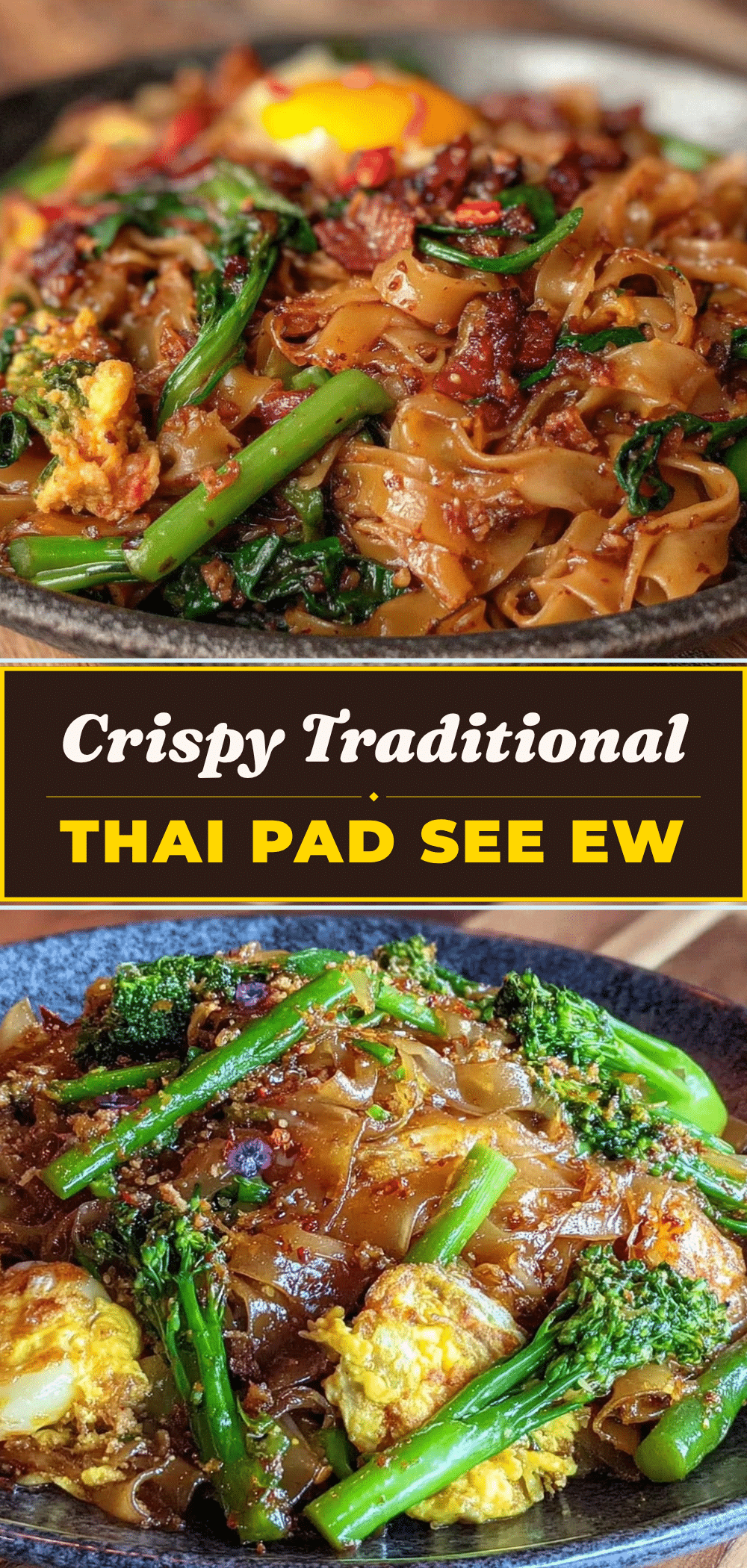
Traditional Thai Pad See Ew: 3-Ingredient Noodles
- Total Time: 40 minutes
- Yield: 4 servings 1x
Description
A restaurant-quality Thai stir-fry featuring wide rice noodles, Chinese broccoli, and eggs, cooked with high heat to achieve a smoky ‘wok hei’ flavor using simple pantry ingredients.
Ingredients
- 8 oz (225g) wide rice noodles (sen lek)
- 2 bunches Chinese broccoli (gai lan), approx 400g
- 2 large eggs
- 4 cloves garlic, minced
- 1 teaspoon white pepper
- 2 tablespoons dark soy sauce
- 2 tablespoons light soy sauce
- 2 tablespoons oyster sauce
- 1 tablespoon sugar
- 3 tablespoons vegetable oil (canola or peanut)
Instructions
- Place dry rice noodles in a large bowl and cover with warm water. Soak for 20-30 minutes until pliable but firm. Drain well and toss with a teaspoon of oil to prevent sticking.
- In a small bowl, whisk together dark soy sauce, light soy sauce, oyster sauce, sugar, and white pepper. Set aside.
- Wash Chinese broccoli and cut into 2-inch pieces, separating stems from leaves. Mince garlic and beat eggs.
- Heat 1 tablespoon of oil in a wok over high heat. Pour in beaten eggs and scramble quickly until just set. Remove eggs from wok and set aside.
- Add another tablespoon of oil to the wok. Once smoking hot, add garlic and stir-fry for 10 seconds. Add Chinese broccoli stems and stir-fry for 1 minute, then add leaves and cook for another minute until wilted. Remove vegetables and set aside with eggs.
- Add remaining tablespoon of oil to the wok. Add soaked noodles and toss in hot oil, letting them sit briefly to char before tossing. Cook for 2-3 minutes, tossing constantly.
- Pour sauce mixture over noodles and toss vigorously to coat. Add cooked eggs and vegetables back into the wok. Toss for another minute until heated through and glossy.
- Serve immediately while hot, garnished with white pepper or cilantro if desired.
Notes
Soak noodles in warm water rather than boiling to prevent mushiness. Ensure high heat for proper char (wok hei). Do not overcrowd the wok; cook in batches if necessary. Fresh garlic is preferred over jarred. Dark soy sauce provides color and sweetness, while light soy sauce provides saltiness.
- Prep Time: 30 minutes
- Cook Time: 10 minutes
- Category: Main Course
- Cuisine: Thai
Nutrition
- Serving Size: 1 serving
- Calories: 450
- Sugar: 12
- Sodium: 800
- Fat: 15
- Saturated Fat: 3
- Carbohydrates: 65
- Fiber: 3
- Protein: 12
Keywords: Thai food, Pad See Ew, rice noodles, stir fry, wok hei, Chinese broccoli, weeknight dinner, comfort food


