
There is a specific smell that hits you every November in my house, and it has nothing to do with pumpkin spice candles or that overly sweet air freshener my kids keep buying. It’s the scent of caramelizing plums and brown butter wafting through the hallway. It’s warm, it’s heavy, and it instantly makes everyone in the house slow down and breathe a little deeper. That smell belongs to this traditional German plum cake, and if you’ve never made it, you are missing out on the single best way to welcome autumn into your kitchen.
I learned to make this cake from my neighbor, Frau Schmidt, back when we lived in a drafty apartment in Chicago. She was a woman who didn’t believe in measuring cups, but she did believe in butter. Lots of it. She would hand me a slice of this dense, fruit-laden cake with a cup of strong black coffee and tell me, “This is for Sunday. This is for waiting. This is for life.” I didn’t quite get it then. I was too busy trying to make quick, trendy baked goods that looked good on Instagram. But now? Now I get it. This isn’t about speed. It’s about texture. It’s about that contrast between the crumbly, buttery shortbread base and the soft, tart-sweet plum topping.
I’ve made this traditional German plum cake dozens of times over the last five years. I’ve tried it with different plums, different sugars, even different flours. And while I’ve tweaked a few things along the way, the core technique remains exactly what Frau Schmidt taught me. It’s forgiving, it’s incredibly delicious, and it requires zero special skills. You just need patience for the cooling time (which is the hard part) and a good eye for when the crust turns golden brown.
Whether you’re hosting a fall gathering, bringing something to a neighbor, or just want to feel like you’re sitting in a Bavarian café on a rainy afternoon, this recipe is your ticket there. It’s not fussy. It doesn’t require a stand mixer. And honestly? It tastes better than anything you’ll buy at a bakery. Let’s get baking.
Why You’ll Love This Recipe
Look, I know there are a million dessert recipes out there. But this German plum cake with buttery shortbread holds a special place in my rotation for reasons that go beyond just “it tastes good.” Here’s why this specific cake has earned a permanent spot in my weekly baking schedule.
- Texture Perfection — This is the main draw. You get two distinct textures in one bite. The bottom is a shortbread crust that’s sandy, crisp, and rich with butter. The top is tender, almost like a soft cake or a thick crumble, studded with juicy plums. The contrast is addictive. I’ve made brown sugar pecan baked oatmeal before, and while that’s great, nothing beats the buttery snap of this shortbread base.
- Zero Fancy Equipment — You don’t need a food processor or a mixer. I use a wooden spoon and a mixing bowl. If you can cream butter and sugar by hand, you can make this. It’s rustic cooking at its finest.
- Uses Seasonal Fruit — Plums are cheap and abundant in the fall. Using fresh, seasonal fruit makes the cake taste vibrant and bright, cutting through the richness of the butter. It feels like eating the season itself.
- Make-Ahead Friendly — Unlike a soufflé or fresh bread, this cake actually improves as it sits. The flavors meld overnight. I often make it on Saturday evening for a Sunday brunch, or bake it on Sunday and serve it Monday. It stays moist for days.
- Perfect for Sharing — It’s not too sweet, which makes it a sophisticated dessert that adults love without being cloying for kids. I’ve served this to my husband’s German relatives, and they gave it the ultimate seal of approval: they asked for the recipe before they left.
So basically, it’s easy, it’s seasonal, and it makes your house smell like heaven. What more could you want?
Ingredients You’ll Need
One of the best things about this recipe is how simple the ingredient list is. You probably have most of this already in your pantry. The quality of your ingredients matters here, especially the butter and the plums, because there aren’t a dozen other flavors to hide behind.
For the Buttery Shortbread Crust
Unsalted butter (1 cup / 226g) — This is the star. Use high-quality European-style butter if you can find it (like Plugrá or Kerrygold). It has a higher fat content and a richer flavor that makes the crust taste incredible. Bring it to room temperature so it creams easily.
Granulated sugar (½ cup / 100g) — Just standard white sugar. It helps create that crisp, sandy texture in the crust. Don’t substitute with brown sugar here; you want that classic shortbread snap.
All-purpose flour (2 cups / 250g) — Regular flour works perfectly. Sift it if you’re feeling fancy, but it’s not strictly necessary. Make sure your flour is fresh; old flour can make the crust dense.
Salt (½ teaspoon) — Essential for balancing the sweetness. Don’t skip it.
Vanilla extract (1 teaspoon) — Adds a warm, aromatic background note. Use pure vanilla, not imitation.
For the Plum Topping

Plums (1.5 to 2 pounds / 680g to 900g) — This is crucial. You want plums that are firm but ripe. If they’re too soft, they’ll turn to mush. If they’re too hard, they won’t cook through. Look for varieties like Santa Rosa, D’Anjou, or French Prunes. They should yield slightly to gentle pressure but not feel squishy.
Granulated sugar (½ cup / 100g) — To sweeten the plums and help them caramelize.
Cornstarch (2 tablespoons) — Plums release a lot of juice. The cornstarch thickens that juice into a glossy, jam-like sauce that coats the fruit. Without it, you’ll end up with a soggy bottom.
Lemon juice (1 tablespoon) — Just a squeeze. It brightens the flavor and prevents the plums from browning too much.
Ground cinnamon (½ teaspoon) — Optional, but I love the warmth it adds. It bridges the gap between the fruit and the buttery crust.
Equipment Needed
You don’t need much for this, which is part of why it’s so approachable. Here’s what I actually use.
9×9 inch baking pan — A square pan is traditional for this cake because it makes cutting squares easy. You can use a 9×13 pan if you want thinner slices, but you’ll need to double the recipe. Make sure to grease it well.
Mixing bowl — A medium-sized bowl for the crust. I use a large ceramic one because it’s heavy and doesn’t slide around.
Fork — For pressing the crust. You don’t need a roller or anything fancy.
Measuring cups and spoons — Standard stuff.
Knife and cutting board — For slicing the plums.
Pastry brush or spoon — Optional, but helpful for brushing the crust with milk or egg wash if you want extra browning.
How to Make It: Step-by-Step
Alright, let’s make this! I’m walking you through exactly how I do it, including the little tricks I’ve picked up over the years.
Step 1: Prep Your Oven and Pan (5 minutes)
Preheat your oven to 350°F (175°C). Grease your 9×9 inch baking pan generously with butter or non-stick spray. I like to line the bottom with parchment paper for easy removal, though it’s not strictly necessary if you grease it well. This step is crucial because if the cake sticks, you’ll ruin the beautiful crust.
Step 2: Make the Shortbread Crust (5 minutes)
In your mixing bowl, combine the room-temperature butter, sugar, salt, and vanilla. Mix by hand with a wooden spoon or spatula until it’s well combined and looks like wet sand. It won’t be perfectly smooth like cookie dough; that’s okay. Add the flour and mix until just combined. Don’t overmix, or the crust will become tough.
Press this mixture firmly and evenly into the bottom of your prepared pan. Use the bottom of a measuring cup or a fork to pack it down tight. You want a solid base. This is what gives the cake its structure.
Step 3: Bake the Crust (10 minutes)
Place the pan in the oven and bake the crust for 10 minutes. It should just start to turn golden around the edges. This pre-baking step is key—it prevents the crust from getting soggy when you add the juicy plums later.
Step 4: Prepare the Plums (10 minutes)
While the crust bakes, wash your plums and slice them in half, removing the pits. Slice each half into thin wedges. You want them thin enough to cook through but thick enough to hold their shape. In a large bowl, toss the plum wedges with the ½ cup sugar, cornstarch, lemon juice, and cinnamon. Let them sit for a few minutes so the sugar starts to draw out some of the juices.
Step 5: Assemble and Bake (30-35 minutes)
Remove the partially baked crust from the oven. Arrange the plum wedges on top in a single layer. Try to overlap them slightly so they cover most of the surface. It doesn’t need to be perfect—rustic is good. Pour any excess juice from the bowl over the plums.
Return the pan to the oven and bake for 30-35 minutes. You’re looking for the plums to be tender and bubbly, and the crust edges to be deep golden brown. The sugar on top will caramelize and create a slight crunch.
Step 6: Cool Completely (At least 1 hour)
This is the hardest part. Remove the cake from the oven and let it cool in the pan on a wire rack. Do not cut into it while it’s hot. The filling needs time to set. If you cut it too soon, it will be a mess. Let it cool for at least an hour, preferably two. The longer it cools, the easier it is to cut into clean squares.
Expert Tips & Tricks
Here’s everything I’ve learned from making this dozens of times. These tips will save you from my mistakes.
Choose the Right Plums
This is the most common mistake. If you use watery plums, your cake will be soup. If you use rock-hard plums, they’ll be inedible. Look for plums that smell fragrant at the stem end. If they don’t smell like anything, they’re not ripe enough. I usually buy them a few days before I plan to bake so they ripen on my counter.
Don’t Skimp on the Cornstarch
I know, cornstarch sounds weird in a cake. But plums are juicy. The cornstarch absorbs that juice and turns it into a glossy glaze. Without it, you’ll have a puddle at the bottom of the pan. Two tablespoons is the sweet spot.
Press the Crust Firmly
When you’re pressing the shortbread into the pan, go hard. Use the bottom of a glass. If the crust is loose, the plums will sink into it, and you’ll end up with a dense, doughy bottom instead of a crisp shortbread layer. A tight crust is a good crust.
Let It Cool
I cannot stress this enough. Let it cool. I’ve been impatient before and tried to slice it warm. It looked terrible. But if you wait an hour, it slices like a dream. The texture sets, and the flavors meld.
Storage is Simple
Store leftovers in an airtight container at room temperature for up to 3 days. You can refrigerate it, but the crust might soften slightly. If you refrigerate it, let it come to room temperature before serving for the best texture.
Variations & Substitutions
Once you’ve nailed the basic version, here’s how you can mix it up. I’ve tried all of these.
Nectarine Variation
Swap the plums for nectarines in late summer. They have a similar texture and sweetness. Just make sure they’re ripe. This is a great way to use up summer stone fruit.
Apple Cinnamon Version
Thinly slice apples and toss them with cinnamon and sugar. They take a bit longer to cook, so you might need to bake for 5 extra minutes. This version tastes a bit like a deconstructed apple pie.
Add Nuts
Sprinkle ½ cup of chopped walnuts or pecans over the shortbread crust before adding the plums. It adds a nice crunch and pairs beautifully with the fruit. I love this with walnuts.
Dairy-Free Option
Use a high-quality vegan butter stick instead of regular butter. It works surprisingly well in shortbread crusts. Just make sure it’s solid at room temperature, not melted.
Gluten-Free
Swap the all-purpose flour for a 1-to-1 gluten-free flour blend. The texture will be slightly more delicate, but it still tastes great. I’ve used Bob’s Red Mill with good results.
Serving & Storage
How to serve this cake depends on your mood. I usually serve it straight from the pan, cut into squares, on a simple white plate. It looks rustic and inviting.
Side Dishes
This cake is rich, so it pairs well with something light. A dollop of whipped cream is classic. A scoop of vanilla ice cream is even better. If you want to keep it lighter, just serve it with a cup of black coffee or tea. The tannins in the tea cut through the butter perfectly.
Storage Instructions
Room Temperature: Store in an airtight container for up to 3 days. The plums will keep the cake moist.
Refrigerator: Store for up to 5 days. Let it come to room temperature before serving. The crust will soften a bit, but the flavor remains strong.
Freezing: You can freeze this cake! Wrap individual squares tightly in plastic wrap and then in foil. Freeze for up to 3 months. Thaw at room temperature. The texture might be slightly softer, but it’s still delicious.
Pro Tip: If you’re bringing this to a gathering, cut it into small squares. It’s easy to eat with one hand and looks elegant on a dessert table. It travels well, too.
Nutrition Information
I’m not a nutritionist, but here’s the breakdown if you’re tracking. Keep in mind this is an estimate based on standard ingredients.
Per Serving (based on 16 squares):
- Calories: 180
- Protein: 2g
- Carbs: 24g
- Fiber: 1g
- Sugar: 16g
- Fat: 9g
- Saturated Fat: 5g
- Cholesterol: 20mg
- Sodium: 120mg
What’s good: It’s not overly sweet, and the plums add some fiber. What to know: It’s rich in butter, so portion control is key. It’s a treat, not a health food. But compared to a slice of brown butter chocolate chip cookies, it’s actually relatively light on the sugar front.
Final Thoughts
So that’s my go-to traditional German plum cake! I’ve probably talked your ear off at this point, but when you make a recipe this often, you have a lot to say about it. This cake has saved me more times than I can count. It’s my answer to “what do I bring to the party?” when I don’t have much time but want to look like I tried hard.
It’s comforting, it’s seasonal, and it tastes like home. My family asks for it every fall, and I love that it’s become our own little tradition. Make it yours! Try different plums, add nuts, or serve it with different toppings. The best recipes are the ones you adapt to your family’s tastes.
If you make this, drop a comment and let me know what you think! I love hearing how recipes turn out in your kitchen. And if something doesn’t work, tell me that too—I’m here to help troubleshoot. Happy baking! And I hope your kitchen smells half as good as mine does right now.
Frequently Asked Questions
Can I use canned plums instead of fresh?
You can, but fresh is much better. If you must use canned, drain them very well and pat them dry with paper towels. Canned plums are softer and have more liquid, so you’ll need to increase the cornstarch to 3 tablespoons and bake for a few minutes longer to evaporate the extra moisture. But honestly, fresh plums in season are worth the effort.
Why did my crust turn out soggy?
Usually, this happens for one of three reasons: 1) The crust wasn’t pre-baked long enough. 2) The plums were too watery. 3) The cake was cut while still hot. Make sure you pre-bake the crust for the full 10 minutes, use firm plums, and wait at least an hour before slicing.
Can I double this recipe?
Yes, but you’ll need a 9×13 inch pan. Double all the ingredients. The baking time for the crust will stay the same, but the final bake might take 5-10 minutes longer because the cake is deeper. Keep an eye on the top—it should be golden brown and bubbling.
What if I don’t have cornstarch?
You can use all-purpose flour instead, but you’ll need 4 tablespoons instead of 2. Cornstarch is more effective at thickening without making the sauce cloudy, but flour works in a pinch. Just know the texture might be slightly less glossy.
How do I know when the plums are done?
Insert a knife into the center of a plum wedge. It should slide in easily, like butter. The plums will also look slightly shriveled and the juices around them will be bubbling thickly. If they’re still firm, give them 5 more minutes.
Can I make this gluten-free?
Absolutely. Use a 1-to-1 gluten-free flour blend for the crust. The rest of the ingredients are naturally gluten-free. The texture will be slightly more tender, but it’s still delicious. I’ve made this with Bob’s Red Mill and King Arthur with great results.
Pin This Recipe!

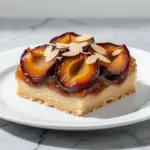
Traditional German Plum Cake: Best Easy Fall Recipe
- Total Time: 1 hour 5 minutes
- Yield: 16 servings 1x
Description
A dense, fruit-laden cake featuring a crumbly, buttery shortbread base and a soft, tart-sweet plum topping. This traditional German dessert is easy to make with simple ingredients and improves in flavor as it sits.
Ingredients
- 1 cup (226g) unsalted butter, room temperature
- 1/2 cup (100g) granulated sugar
- 2 cups (250g) all-purpose flour
- 1/2 teaspoon salt
- 1 teaspoon vanilla extract
- 1.5 to 2 pounds (680g to 900g) firm but ripe plums
- 1/2 cup (100g) granulated sugar
- 2 tablespoons cornstarch
- 1 tablespoon lemon juice
- 1/2 teaspoon ground cinnamon
Instructions
- Preheat oven to 350°F (175°C). Grease a 9×9 inch baking pan generously and line with parchment paper if desired.
- In a mixing bowl, combine room-temperature butter, 1/2 cup sugar, salt, and vanilla. Mix by hand until combined and resembling wet sand.
- Add flour and mix until just combined. Do not overmix.
- Press the mixture firmly and evenly into the bottom of the prepared pan using a fork or measuring cup.
- Bake the crust for 10 minutes until it starts to turn golden around the edges. Remove from oven.
- While the crust bakes, wash plums, remove pits, and slice into thin wedges.
- In a large bowl, toss plum wedges with 1/2 cup sugar, cornstarch, lemon juice, and cinnamon. Let sit for a few minutes.
- Arrange plum wedges in a single layer on top of the partially baked crust, overlapping slightly. Pour any excess juice over the plums.
- Return to oven and bake for 30-35 minutes until plums are tender and bubbly, and crust edges are deep golden brown.
- Cool completely in the pan on a wire rack for at least 1 hour (preferably 2 hours) before cutting to allow filling to set.
Notes
Choose firm but ripe plums to prevent a soggy bottom. Do not skip the pre-baking of the crust. Allow the cake to cool completely before slicing to ensure clean cuts. Can be stored at room temperature for 3 days or frozen for up to 3 months.
- Prep Time: 20 minutes
- Cook Time: 45 minutes
- Category: Dessert
- Cuisine: German
Nutrition
- Serving Size: 1 square
- Calories: 180
- Sugar: 16
- Sodium: 120
- Fat: 9
- Saturated Fat: 5
- Carbohydrates: 24
- Fiber: 1
- Protein: 2
Keywords: German plum cake, fall baking, shortbread crust, plum dessert, easy baking, seasonal fruit, traditional recipe


